Quick Answer
Start with the puzzle pieces your child already knows, then build up to naming animals, making sounds, and inventing simple stories as they play.
Why a Wooden Wildlife Puzzle Works for Vocabulary
A wooden wildlife puzzle turns animal names into something your child can hold and see. Unlike flashcards, the puzzle requires your child to match each animal to its spot, which reinforces the name each time they place it correctly.
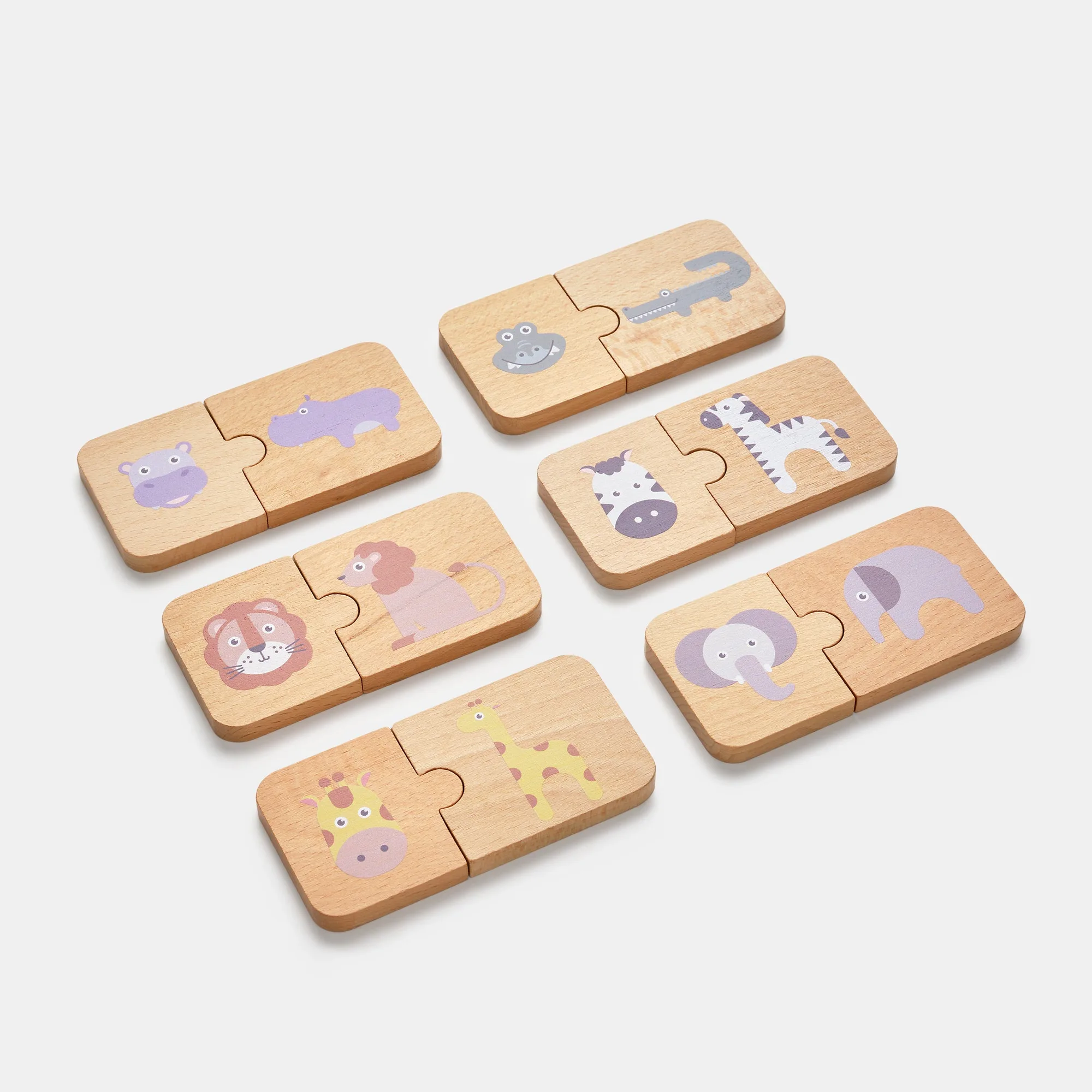
The Wild Life Puzzle from Moover Toys is made from MDF with environmentally friendly paint, so it's safe for little hands. It's designed for children 12 months and up, making it a great first puzzle for toddlers who are just starting to talk.
Step-by-Step Activities to Teach Animal Names
- Start with Familiar Animals: Choose two or three animal pieces your child already recognizes from books or toys. Name each one clearly as you place it in the puzzle, then encourage your child to repeat the name after you. Common mistake: introducing too many new names at once can overwhelm a toddler. Keep it to a few animals per session. Stick to a small set of animals and add new ones gradually.
- Add Sounds and Actions: As you place each animal, make its sound (e.g., 'roar' for lion) and a simple action (like stomping for elephant). Ask your child to make the sound with you. Common mistake: forgetting to pause for your child to respond. Give them time to imitate before moving on. Sounds and actions help anchor the animal name in memory.
- Play 'Find the Animal': Remove all pieces and place them in front of your child. Say, 'Find the zebra' and let them pick it up. If they choose the wrong piece, gently say the name of the piece they picked and guide them to the correct one. Common mistake: making it a test rather than a game. Keep the tone playful and celebrate every attempt. This game builds listening skills and reinforces name recognition.
- Create a Story: Once your child can name several animals, use the pieces to tell a short story: 'The lion is sleeping. The monkey is jumping.' Let your child move the pieces as you narrate. Common mistake: making the story too long or complex. Keep it to two or three sentences. Storytelling encourages your child to use animal names in context.
- Practice with Real-Life Connections: When you visit a zoo, watch a nature show, or see a pet, point out the animal and say its name, then relate it to the puzzle piece: 'That's a bear, just like in your puzzle.' Common mistake: missing these everyday opportunities. Use them to reinforce what your child learned. Connecting puzzle play to real life deepens understanding.
Product Spotlight
-
Wild life puzzle: The Wild Life Puzzle is an animal-shaped wooden puzzle made from MDF with environmentally friendly paint, designed for kids 12m+. Its durable, safe materials and simple shapes make it ideal for repeated toddler play while you practice animal names.
Wild life puzzle