Quick answer
Set up the doorbell first: plug the receiver near a central outlet, then pair the push button and mount it 4–5 feet high. Add the door alarm second, choosing Instant mode for exterior doors and Delayed mode for kids' room doors. Test both from the farthest corner of your home before you rely on them.
Pair the wireless doorbell receiver and push button
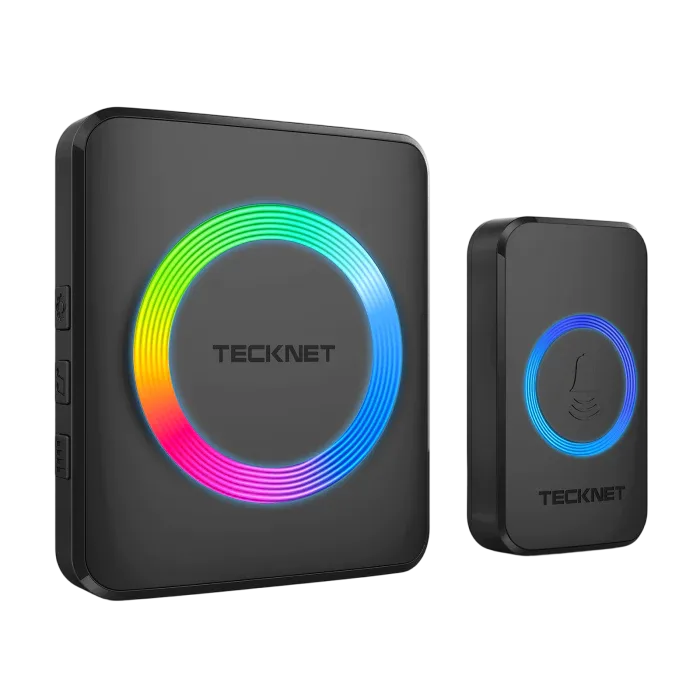
Plug the receiver into an outlet that sits roughly in the middle of your home, not against an exterior wall. The 1300-foot range rating assumes a clear path; every wall, steel door, and appliance between button and receiver cuts that number. Pairing is usually a short button-hold on the receiver followed by a press on the push button, and the receiver chimes once to confirm. If your model uses a different sequence, the manual that ships in the box is the authority.
Mount the push button where visitors actually stand
Mount the button 4–5 feet above the ground, on the latch side of the door rather than the hinge side. Avoid metal door frames and aluminum siding directly behind the button; both can weaken the signal. The TECKNET Waterproof Wireless Doorbell with 1300ft Range HWD01878 carries an IP65 rating, so it tolerates rain and splashes on a covered porch, but it is not designed to sit submerged or in direct sprinkler spray.
Choose the right alarm mode before you mount the door alarm
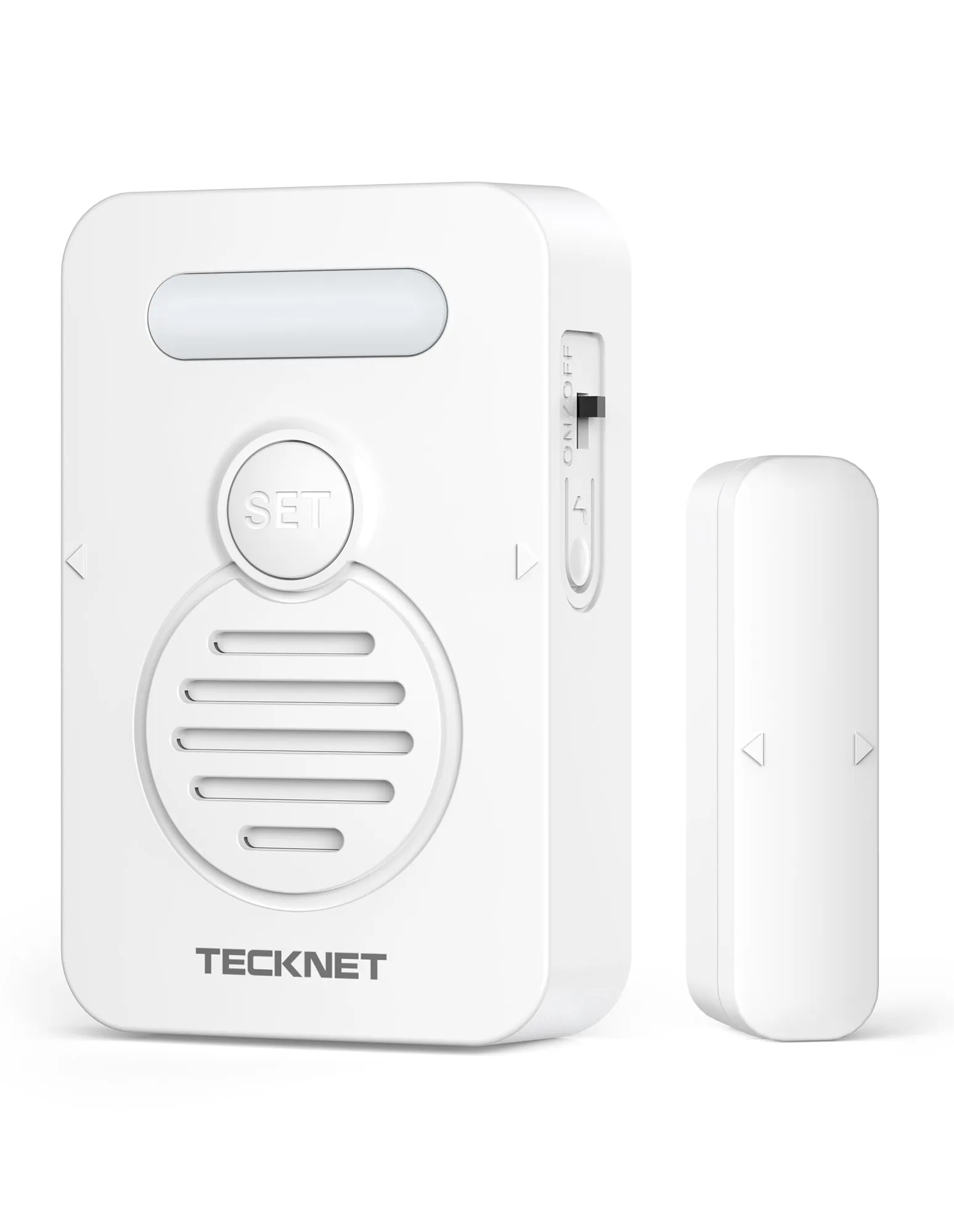
The door alarm's four modes change how it reacts to an open door, so pick one before attaching it. Instant alarm triggers a 110dB siren the moment the contact separates, which suits exterior doors and pool gates. Delayed alarm waits about one minute and then speaks a voice prompt, which gives a child time to close the door without a full siren. Loud alarm waits roughly four minutes before sounding at 110dB, and Chime plays a single ding-dong for shop or office doors where you want notification, not alarm. Switch modes with the SET button; count the clicks to confirm you landed on the right one.
Match volume to the room, not to the maximum
The four volume levels (65, 80, 95, and 110dB) exist so you can put an alarm in a bedroom without hurting small ears. Use 65 or 80dB for a child's bedroom door, and reserve 95 or 110dB for basement windows, garage doors, or a pool gate where distance and outdoor noise will swallow a quieter tone. At the top level the red light flashes along with the siren, which helps if someone in the house has hearing loss.
Install the window alarm and refrigerator sensor correctly
Window alarm installation follows the same contact logic as a door: one piece on the frame, one on the moving sash, aligned within the gap the sensor allows. Clean both surfaces with rubbing alcohol first; adhesive pads fail on dusty vinyl or oily wood. For a refrigerator sensor or pool alarm, mount the sensor on the fixed body and the magnet on the door or gate, then test that the gap closes fully. A sensor that never quite meets its magnet will chirp at random times, which is the most common complaint after a DIY install.
Setup steps in order
- 1. Plug in the doorbell receiver first: Choose a central outlet away from exterior walls and large appliances. This is the single biggest factor in whether the 1300ft doorbell range holds up in real rooms. Checkpoint: the receiver should be reachable from the farthest door you plan to cover.
- 2. Pair the push button: Follow the pairing sequence in your manual, then press the button from outside the front door to confirm the chime fires. Mistake to avoid: pairing from inside the house and assuming the outdoor signal will be equally strong.
- 3. Mount the push button at 4–5 feet: Place it on the latch side of the door, not the hinge side, and avoid mounting directly onto metal frames. Checkpoint: press the button with the door closed to confirm the signal still reaches the receiver.
- 4. Pick the door alarm mode before mounting: Use Instant for exterior doors and pool gates, Delayed for kids' room doors, Loud for doors you only need to know about after several minutes, and Chime for shop or office doors. Mistake to avoid: mounting first and then cycling modes, which can knock the sensor out of alignment.
- 5. Set the volume for the room: Use 65 or 80dB for bedrooms; reserve 95 or 110dB for windows, garages, and outdoor gates where background noise is high. Checkpoint: stand in the room where you want to hear it and confirm the level is audible but not startling.
- 6. Install window alarm sensors on clean, aligned surfaces: Wipe both surfaces with rubbing alcohol, then align the sensor and magnet within the gap the device allows. Do the same for a refrigerator sensor or pool alarm. Mistake to avoid: leaving a gap that never fully closes, which causes random chirps.
- 7. Run a full walk test: Open every protected door and window one at a time from the farthest point in the house and confirm the correct alarm fires at the right volume. Next step: note the date you installed the batteries so you can replace them before they fade.
Product facts that shape your setup
- TECKNET Door Alarms for Kids Safety, Door Alarms When Opened, Window Alarm with Smart Voice Alert, 4-Level Adjustable Volume, Refrigerator Sensor Pool Alarm for Home Security、Fridge、Garage and Window: Multi-mode intelligent alarm with four modes: Delayed alarm (voice prompt after 1 min open), Loud alarm (110dB after 4 min), Instant alarm (immediate 110dB), and Chime (single ding-dong), switched via SET button clicks. You can use one alarm for a toddler's bedroom door and a different mode for a pool gate without buying two devices.
- TECKNET Door Alarms for Kids Safety, Door Alarms When Opened, Window Alarm with Smart Voice Alert, 4-Level Adjustable Volume, Refrigerator Sensor Pool Alarm for Home Security、Fridge、Garage and Window: 4-level adjustable volume: 65/80/95/110dB, with up to 110dB plus flashing red light for windows, doors, and pools. Lowers the risk of startling a sleeping child while still giving you a loud option for outdoor or distant entry points.
- TECKNET Door Alarms for Kids Safety, Door Alarms When Opened, Window Alarm with Smart Voice Alert, 4-Level Adjustable Volume, Refrigerator Sensor Pool Alarm for Home Security、Fridge、Garage and Window: Powered by 3 AAA batteries (900mAh). No wiring needed, so you can mount it on a window or refrigerator door that has no outlet nearby; plan to replace batteries periodically.
- TECKNET Waterproof Wireless Doorbell with 1300ft Range HWD01878: 1300-foot long wireless range with enhanced antenna and super-penetrating FM signal that passes through steel doors, wooden doors, and walls. One receiver can cover a front door and a back gate in a typical single-family home, but thick masonry will still reduce the usable distance.