Quick answer
The Wish You Were Here tarot deck uses vintage British seaside imagery to create readings that are playful, nostalgic, and surprisingly insightful. Follow these steps to get the most from its unique deckchair-and-donkey symbolism.
Why this deck reads differently
Unlike traditional tarot decks that rely on medieval or esoteric symbols, Wish You Were Here draws on familiar British seaside scenes: deckchairs, seagulls, fish and chips, and rain arriving early. This makes it approachable for beginners while offering fresh layers for experienced readers.
Because the imagery is tied to specific cultural memories (the cold tea, the stolen lunch), the deck works best when you lean into those associations rather than forcing textbook meanings. A deckchair may not mean 'leisure' in every spread; it could mean temporary comfort or a precarious situation.
How to read with the Wish You Were Here deck
- Set the scene with a postcard question: Before shuffling, phrase your question as if writing a postcard: 'What should I know about...' or 'What's the real story behind...'. This primes your mind for the deck's nostalgic, storytelling tone. Common mistake: asking yes/no questions. The deck thrives on narrative, not binary answers.
- Read the image before the card name: Look at the illustration first and describe what you see in one sentence. For example, a deckchair on a windy beach might say 'temporary comfort, but hold on tight.' Then check the traditional tarot meaning for that card to see how they align. Checkpoint: If the image feels opposite to the traditional meaning, trust the image first—this deck prioritizes its own visual language.
- Use the 'seaside element' to clarify: Each card includes a specific seaside element: sand, sea, sky, or pier. If a reading feels unclear, ask: 'Is this about grounding (sand), emotions (sea), clarity (sky), or structure (pier)?' This adds a quick layer of interpretation. Common mistake: ignoring the element. It's not decorative; it's a built-in guide to the card's energy.
- Pair with a 'postcard message' for the final takeaway: After your spread, sum up the reading in one short sentence as if on a postcard: 'Having a lovely time, wish you were here... but watch out for seagulls.' This keeps the reading light while delivering the core message. Checkpoint: If your postcard message feels forced or generic, revisit the cards—you may have missed a key detail.
About this deck
-
Wish You Were Here? 🇬🇧 A charming British seaside tarot deck where deckchairs, donkeys, ice creams and old postcards bring the tarot to life.: Inspired by the great British seaside holiday and the humour of vintage postcards, each card blends seaside moments like deckchairs, donkey rides, and sandcastles. You can interpret each card by first asking what that seaside moment feels like in real life, then applying it to the querent's situation.
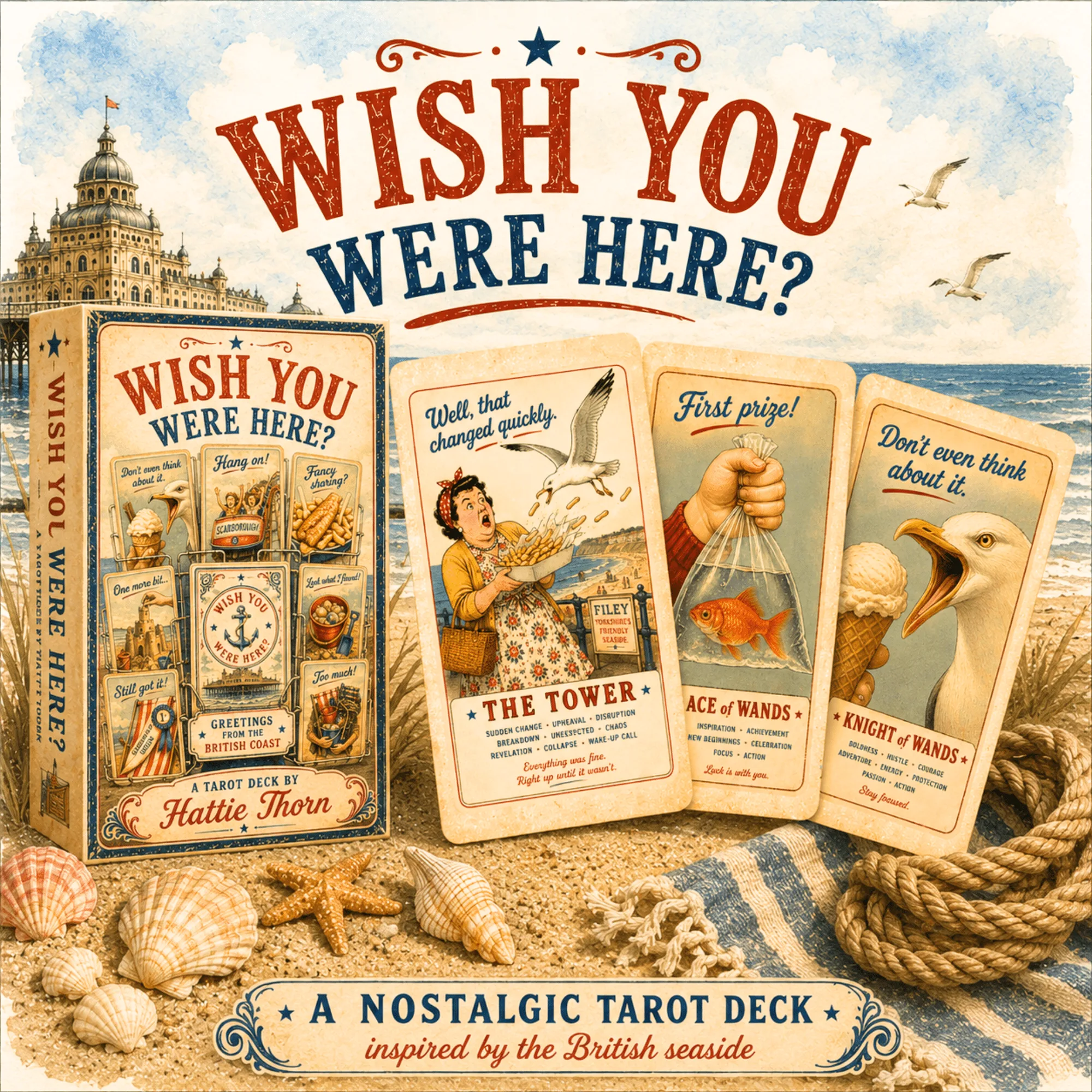
Wish You Were Here? 🇬🇧 A charming British seaside tarot deck where deckchairs, donkeys, ice creams and old postcards bring the tarot to life.