Quick Answer
A wooden rocking horse suits most children from around 18 months to about 4 years, once they can sit steadily and climb on with help. Check the rockers, joints, and paint monthly, wipe the frame with a damp cloth, and keep it on a flat, carpeted surface away from stairs. If your child is not ready to balance on a rocker, a four-wheel ride-on is a safer first step.
A rocking horse looks simple until you are the one choosing it, checking it, and keeping it in one piece. The questions parents send us tend to repeat: when is a child old enough, how much wobble is normal, and what does maintenance actually involve?
This FAQ answers those questions directly. Where a detail depends on your child or your specific horse, we say so instead of guessing. For children who are not ready to rock, we also point to sturdy wooden alternatives from the same catalog.
Safety Questions Parents Ask Most
The most common rocking horse safety questions are about tipping, pinched fingers, and paint. A well-made wooden horse has a wide base and a low seat, so it should not tip during normal rocking. Push down on one side while your child is not on it; if the opposite rocker lifts easily, the base is too narrow for your floor or the horse is too light for the rider.
Finger traps are the second concern. Check the gap between the rockers and the floor, and between any moving parts. If a small finger can slide in, it can get caught. Paint matters too: look for a stated child-safe or water-based finish rather than assuming all wooden toys are finished the same way.
- Test the horse on the surface it will actually live on, not just the showroom floor.
- Keep a 1-meter clear zone around the rockers, away from stairs, radiators, and hard furniture edges.
- Re-check screws and bolts after the first week, then monthly, because wood settles as it acclimates.
What Age Range Fits a Wooden Rocking Horse?
The practical rocking horse age range is roughly 18 months to 4 years, but readiness matters more than the number. A child needs enough core strength to sit upright without slumping and enough hip mobility to straddle the seat. If they still slide sideways on a chair, they will slide on a horse.
Supervision is not optional at the younger end. A 2-year-old can usually mount with a handhold but may not yet understand that leaning back is what makes the horse move. By 3 or 4, most children rock independently and start using the horse for pretend play, which is where the toy earns its keep.
- Under 18 months: choose a push-along or ride-on toy instead of a rocker.
- 18 months to 2.5 years: short supervised sessions, one hand on the horse.
- 3 years and up: independent rocking, but keep the clear zone in place.
Maintenance FAQ: Cleaning, Paint, and Storage
For routine cleaning, wipe the frame with a damp cloth and mild soap, then dry it immediately. Do not soak the wood or leave it wet; moisture swells the grain and can lift paint at the edges. Avoid solvent cleaners and abrasive pads, which dull the finish and remove the protection you are trying to preserve.
Inspect the paint at the rockers and the seat, where wear shows up first. Small chips expose bare wood, which can splinter, so touch up or retire the horse if the damage is deep. Store the horse indoors in stable humidity. A garage or damp basement causes more damage than daily riding ever will.
- Wipe, do not scrub. A soft cloth and a little dish soap are enough.
- Check rocker tips and joints monthly for cracks, loose screws, or lifted paint.
- Keep the horse out of direct sun, which fades paint and dries the wood unevenly.
When a Rocking Horse Is Not the Right First Toy
Not every toddler is ready to rock, and forcing it usually ends with a nervous child and a stored toy. If your child is still learning balance, a four-wheel ride-on gives the same sense of movement with a much lower tipping risk. The Ride-on Bike 4 wheels Light green is built for 18+ months and uses solid wood with environmentally-friendly, water-based, non-toxic paint.
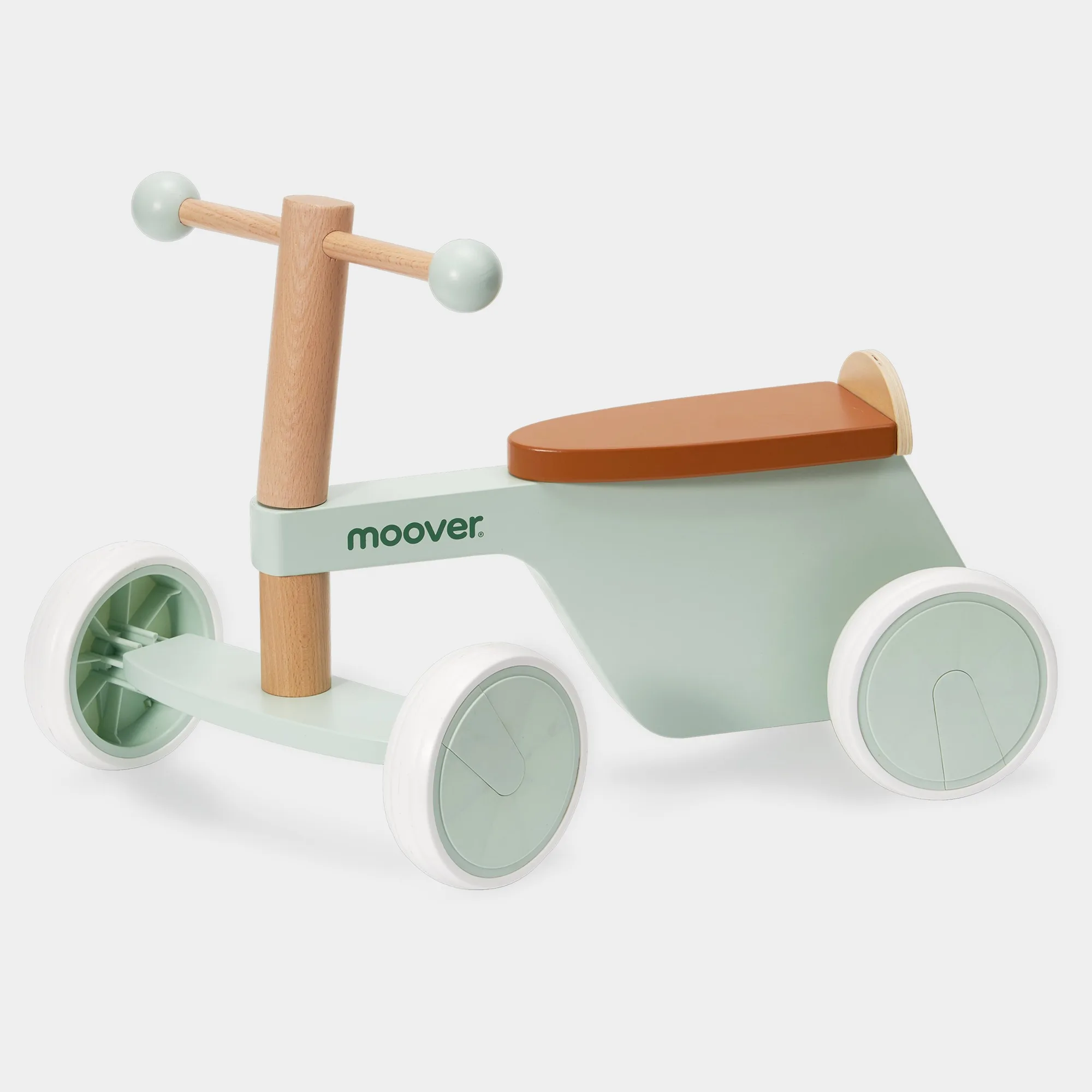
Ride-on Bike 4 wheels Light green
Another route is role-play rather than riding. The Traditional Doll Stroller Brown is a Danish-designed wooden stroller that keeps a child moving after their first steps, and it comes with free bedding. It builds the same pushing and steering confidence a rocker does, without requiring the child to balance on top of it.
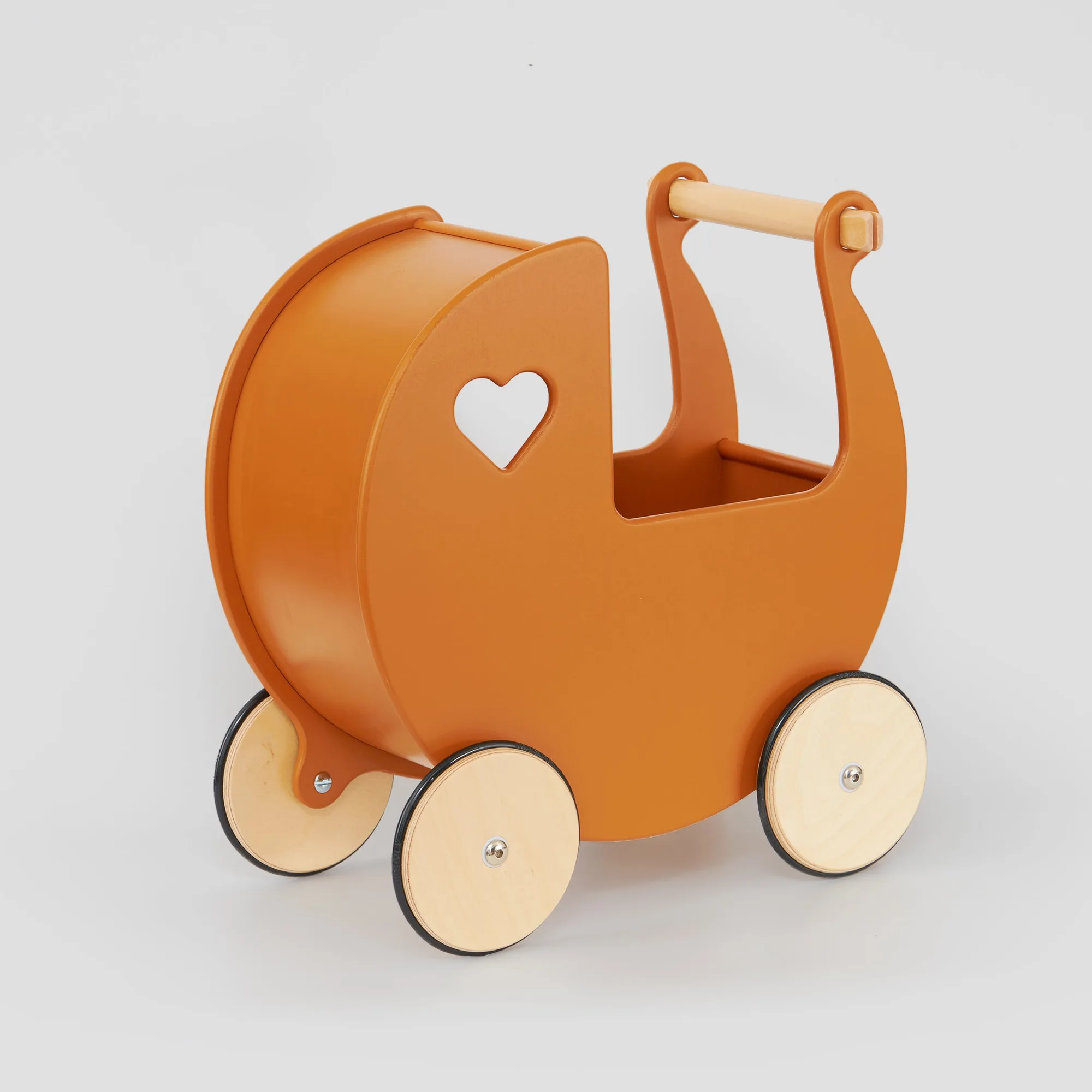
Traditional Doll Stroller Brown
- Choose a ride-on if your child still needs both feet on the ground for confidence.
- Choose a doll stroller if your child prefers pushing and caring for toys over riding.
- Revisit the rocking horse around age 3, when balance and pretend play usually click.
Quick Checks Before and After Every Ride
Is the base stable on this floor?
Press one rocker down and watch the other. If it lifts easily, move the horse to carpet or a flatter spot, or wait until your child is heavier. Stable on the real floor or it does not get ridden.
Are the joints and paint intact?
Run a hand along the rockers, seat, and screw heads once a month. Tighten loose hardware and treat deep paint chips before they splinter. Monthly two-minute check prevents most repairs.
Is your child ready for a rocker?
They should sit upright unsupported and mount with a handhold. If not, start with the Ride-on Bike 4 wheels Light green or the Traditional Doll Stroller Brown. Readiness beats birthday when choosing a riding toy.
Catalog Facts That Answer Common Questions
- Ride-on Bike 4 wheels Light green: Designed for 18+ months, made of solid wood, and finished with environmentally-friendly, water-based, non-toxic paint; it operates with no noise. A quiet, low-tipping first ride for toddlers who are not ready to balance on a rocking horse.
- Traditional Doll Stroller Brown: A Danish-designed wooden stroller from the original highest-quality line of luxury wooden mobility toys, sturdy and dependable for children moving after their first steps, and it includes free bedding. Gives a toddler the motion and role-play benefits of a riding toy without the balance demand of a rocker.
- IQ sorting House Brown: Made from FSC-certified bass plywood with child-safe paint, measures 17x17x17 cm, includes one sorting house and four shapes, requires assembly, and is designed by Kåre Tofte for ages 6M+. A calm, seated alternative for younger siblings who are too small for any riding toy.
Most rocking horse problems come down to timing and upkeep, not the toy itself. Match the horse to your child's balance, keep the riding zone clear, and spend two minutes a month on the joints and paint. If your child is not there yet, a quiet ride-on or a wooden doll stroller keeps them moving safely until they are.