Start with the light that reaches the taking lens
A twin lens reflex camera sends light through two lenses: the viewing lens on top and the taking lens below. The hood that matters for image quality is the one over the taking lens, because stray light hitting that front element can lower contrast and produce flare. A lens hood extends a short tube in front of the glass so off-axis light is blocked before it reaches the lens.
The Yashica Mat-124G is a medium format TLR, and the original hood for it is a dedicated accessory rather than a generic screw-in filter-thread hood. That matters when you are shopping: a hood made for a different camera may not seat correctly or may cover the viewing lens. The supplied catalog record for this used hood describes it as the original lens hood for the Yashica Mat-124G, which is the compatibility claim to rely on.
When a TLR lens hood earns its place in your bag
A hood is not a cure-all, but it is most useful in these situations:
- Bright sun or open sky in front of you: Side light and sky light are the classic causes of veiling flare. A hood shades the taking lens without you having to hold a hand or card over the camera.
- Shooting toward a window or open doorway: Indoor scenes with a bright background can still throw light across the front element. A hood helps keep that light off the glass.
- Working with a lens that has a large front element: The larger the glass, the more easily stray light reaches it. A hood is a simple physical barrier.
- Leaving the camera on a strap between shots: A hood adds a small buffer in front of the taking lens, though it is not a substitute for a proper case or cap.
How to fit and use the original hood
The supplied record confirms that this is the original hood for the Yashica Mat-124G, but it does not include mounting instructions, thread size, or bayonet details. Treat the following as a careful fitting routine rather than a manufacturer procedure.
First, remove any filter or step ring from the taking lens and inspect the front of the lens barrel for damage. Second, offer the hood up squarely and turn it gently; if it does not seat easily, stop rather than force it. Third, check that the hood does not intrude into the viewing lens path or block the shutter release or aperture controls. Fourth, look through the viewing screen with the hood fitted to confirm it is not visible in the frame. Finally, make a test exposure in bright light and compare it with one taken without the hood.
Because the catalog record does not list a filter thread or bayonet specification, do not assume the hood will accept filters or that it will fit any other TLR. If you need to stack a filter and a hood, test the combination before relying on it.
What the used listing confirms
-
Yashica Mat-124G Lens Hood - USED: Original lens hood for the Yashica Mat-124G, listed as used. The original designation is the strongest compatibility evidence in the record for this specific camera.
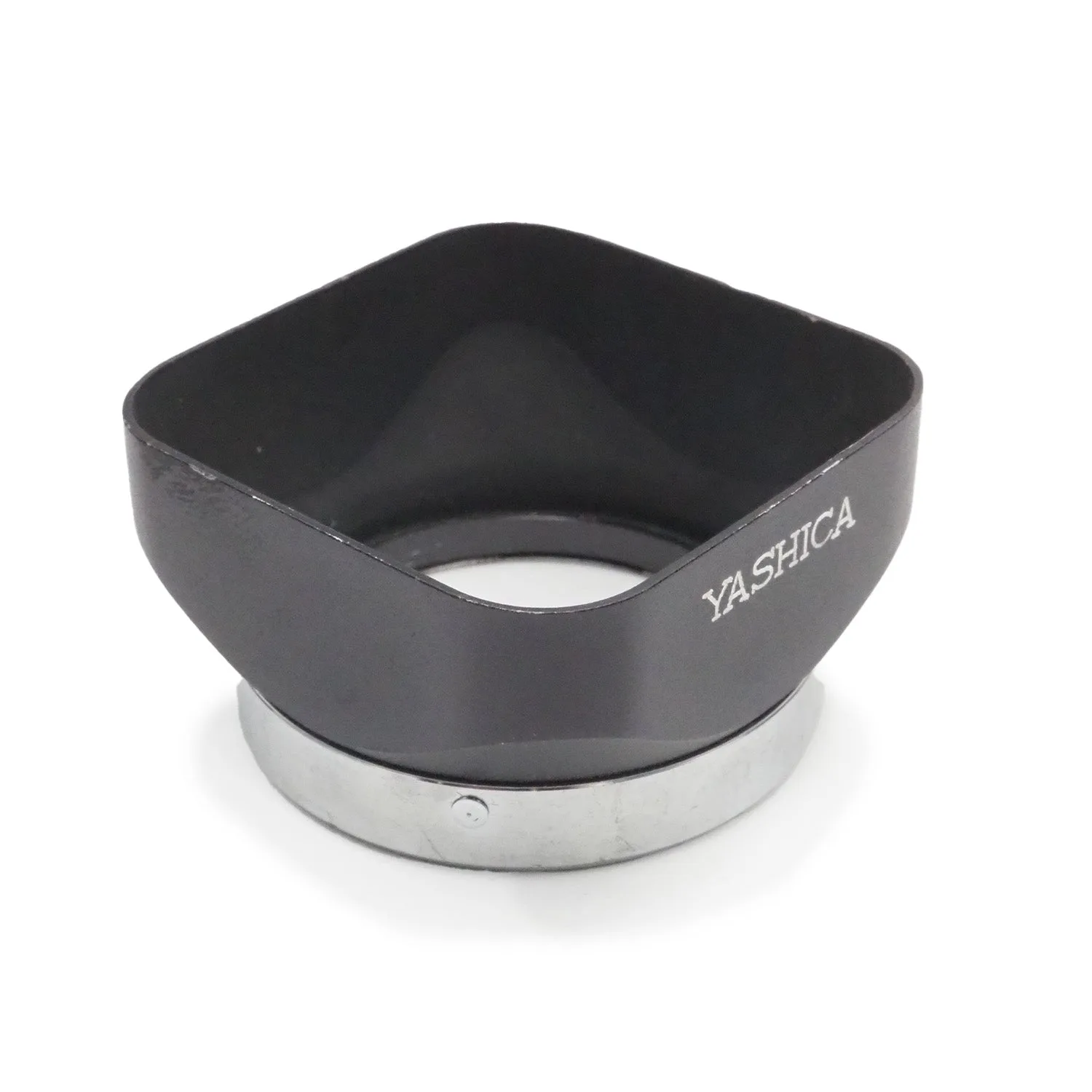
Yashica Mat-124G Lens Hood - USED
-
Yashica Mat-124G Lens Hood - USED: The camera has been fully tested as working and comes with a 90-day warranty. For a used accessory, a tested-working claim and a warranty period give you a defined window to check fit and function.
-
Yashica Mat-124G Lens Hood - USED: The listing notes that with older vintage items, a slight degree of imperfection is to be expected. Cosmetic marks are normal on vintage accessories; judge the hood on fit and light blocking, not on a flawless finish.
What a hood does not fix
A lens hood cannot correct a lens that is already hazy, scratched, or dirty. Clean the front element before you judge flare control. It also will not remove flare caused by a bright light source inside the frame; in that case, change your position or accept the flare as part of the image.
The supplied record does not include care instructions, storage guidance, or material details for this hood. Avoid inventing a cleaning routine: use the same conservative approach you would for any vintage optical accessory, and test the hood before you depend on it for a paid shoot.
A quick pre-shoot check for any TLR hood
Before you leave the house, run through these checks:
- Seat and security: The hood should sit squarely and not wobble. If it feels loose, do not rely on it outdoors.
- Viewfinder clearance: Confirm the hood does not appear in the viewing screen or block the viewing lens.
- Control access: Check that aperture, shutter speed, and focus controls remain reachable with the hood fitted.
- Frame edges: Shoot a test frame in bright conditions and inspect the corners for vignetting.