Quick Answer
Match zipper tape to your fabric's dominant color when you want the zipper to disappear, or choose a contrasting tape when the zipper is part of the design. For most bag projects, a #5 nylon coil zipper tape in a color pulled from the print gives the cleanest result. Metal finish — bronze, gold, or silver — should follow the bag's hardware, not the fabric.
Choosing zipper tape colors is less about finding an exact dye match and more about deciding how much you want the zipper to show. The right choice depends on your fabric, your hardware, and whether the zipper is a functional detail or a design feature.
This guide gives you concrete rules for matching zipper to fabric, explains how metal finishes change the read of a color, and shows how printed tapes behave differently from solids. You will also find fit guidance for common bag-making situations.
Start With the Fabric's Dominant Color
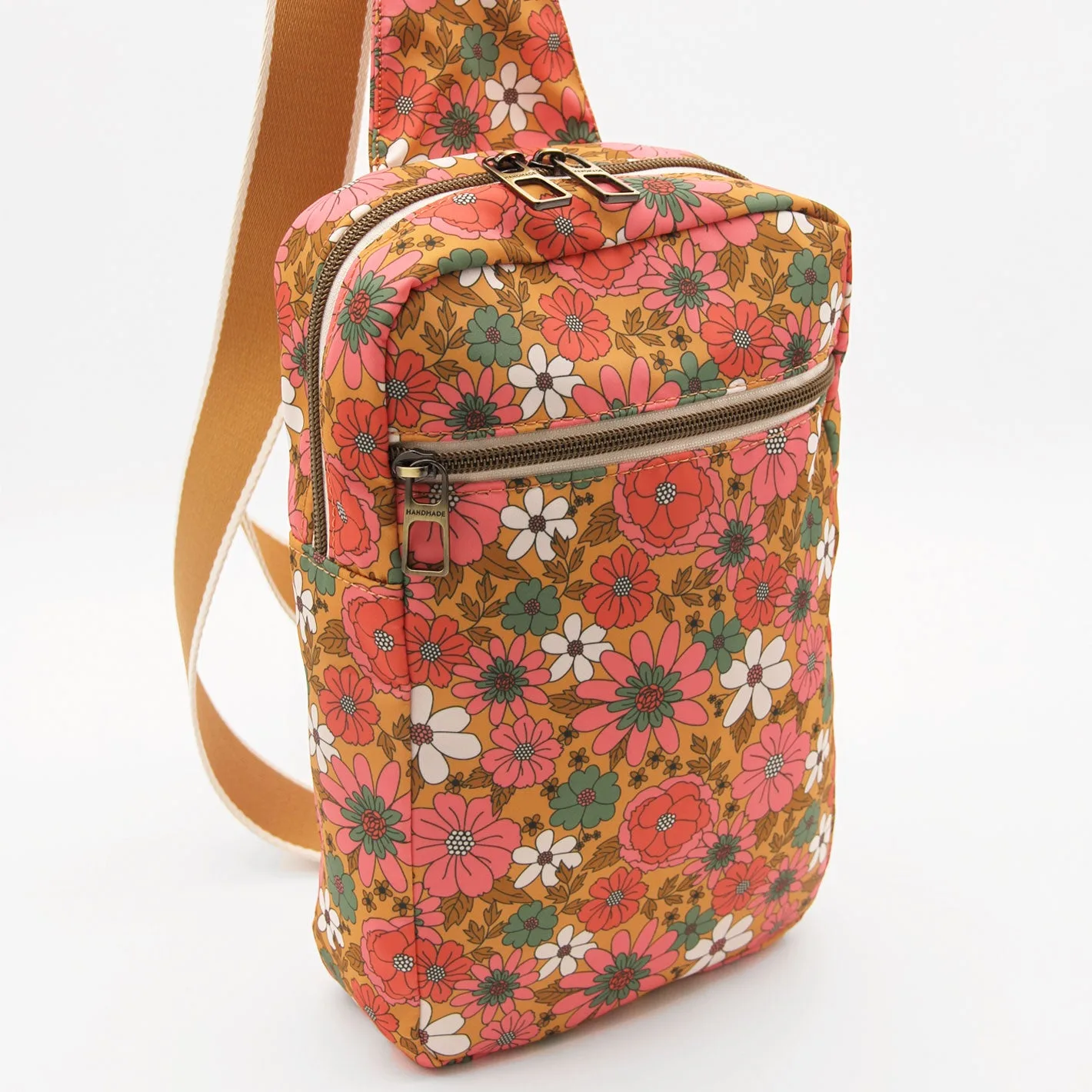
Squint at your fabric from a few feet away. The color you see first is the dominant color, and it is the safest anchor for zipper tape. A tape that matches this tone will recede, while a tape that matches a secondary color will read as a deliberate accent. If your fabric has a busy print, pull the quietest color rather than the loudest one so the zipper does not compete with the pattern.
For solids, exact matching is possible but not always necessary. A tape one shade darker than the fabric often looks more intentional than a near-match that falls slightly off. If you cannot find a close solid, choose a neutral tape — black, beige, or white — and let the hardware carry the color story.
- Hold the tape against the fabric in daylight, not under warm indoor lighting.
- Check the tape against both the right side and the wrong side of the fabric.
- For prints, pick a color that appears at least twice in the design.
Decide Whether the Zipper Should Disappear or Stand Out
A disappearing zipper uses tape that matches the fabric so the zipper channel looks like a seam. This works well on structured bags, wallets, and pouches where the fabric is the star. A standing-out zipper uses contrast — a bright tape on a neutral fabric or a metallic-finish tape on a solid — and turns the zipper into a design line. Both approaches are valid; the mistake is choosing contrast by accident.
If you want contrast but not chaos, use one contrasting element only. A colored tape with silver teeth on a neutral fabric is enough. Adding a printed tape, a novelty pull, and contrast stitching at the same time usually splits attention.
- Disappearing zipper: tape matches the dominant fabric color.
- Standing-out zipper: tape contrasts by at least two shades or uses a metallic finish.
- One contrast element per project keeps the bag looking intentional.
Match Metal Finish to Hardware, Not Fabric
Nylon coil zipper tape can have teeth that look like metal but are actually nylon, so the finish is a color choice rather than a material change. Bronze, gold, and silver finishes each shift how the tape color reads. Bronze warms nearby colors, gold brightens them, and silver cools them. The practical rule is to match the teeth finish to your bag's hardware — rings, sliders, and snaps — so the metal tones agree.
If your hardware is mixed or you are unsure, silver is the most neutral choice because it reads as a default metal. Bronze suits earthy, vintage, and autumn palettes. Gold works best on warm neutrals, pastels, and formal fabrics where a little shine is welcome.
- Silver teeth: neutral, works with most fabrics and mixed hardware.
- Bronze teeth: warm, pairs with browns, greens, and rust tones.
- Gold teeth: warm and bright, best on creams, pinks, and deep jewel tones.
Printed and Specialty Tapes Change the Rules
Printed tapes, stripes, and glitter finishes are designed to be seen, so matching them to fabric is less about blending and more about balancing. A printed tape already contains multiple colors, which means it will not match a solid fabric exactly. Instead, choose a print whose background or dominant stripe echoes the fabric, and let the other colors act as accents.
Specialty tapes also tend to cost more per roll, so it helps to plan how much you actually need. If the tape is the focal point, use it on the main opening and keep interior pockets plain. If you only want a hint of pattern, use the printed tape on a small pouch or a single accent zipper.
- Match the tape's background color to the fabric, not every stripe.
- Use printed tape on one visible zipper and solid tape inside.
- Buy the length you need; specialty tapes are priced higher than solids.
Test the Combination Before You Sew
Lay the tape on the fabric, step back, and look at the whole piece rather than the zipper alone. Distance reveals whether the contrast is balanced or whether one element dominates. If the zipper pulls your eye away from the bag's shape, the contrast is too strong; if you cannot find the zipper at all, the match may be too close for easy use.
Also consider how the zipper will be installed. A zipper that sits in a seam or under a flap shows less tape than one that runs across the front of a bag. The more visible the tape, the more the color choice matters. For hidden or recessed zippers, a close match is usually enough.
- View the fabric and tape from three feet away before cutting.
- More visible tape means more reason to choose the color carefully.
- Hidden zippers can use a close match rather than an exact one.
Decision Rules for Matching Zipper Tape to Fabric
- Solid fabric, zipper should disappear: Choose tape within one shade of the fabric's dominant color. If no close match exists, use black, beige, or white rather than a near-miss. Checkpoint: squint from three feet away; the zipper should read as a seam, not a stripe.
- Solid fabric, zipper should stand out: Pick a tape that contrasts by at least two shades, or use a metallic-finish tape on a neutral fabric. Match the teeth finish to your hardware. Checkpoint: if two or more elements compete, remove one contrast.
- Busy print: Pull the quietest color from the print for the tape, or use a printed tape whose background echoes the fabric. Avoid matching the loudest color. Checkpoint: the tape should not create a second pattern that fights the first.
- Warm palette with warm hardware: Use bronze or gold teeth. Bronze suits earthy tones; gold suits creams, pinks, and jewel tones. Checkpoint: hold the tape next to a hardware ring before committing.
- Cool or mixed hardware: Use silver teeth. Silver is the most neutral finish and works with most fabric colors. Checkpoint: silver is the safe default when you cannot decide.
Zipper Tapes to Know
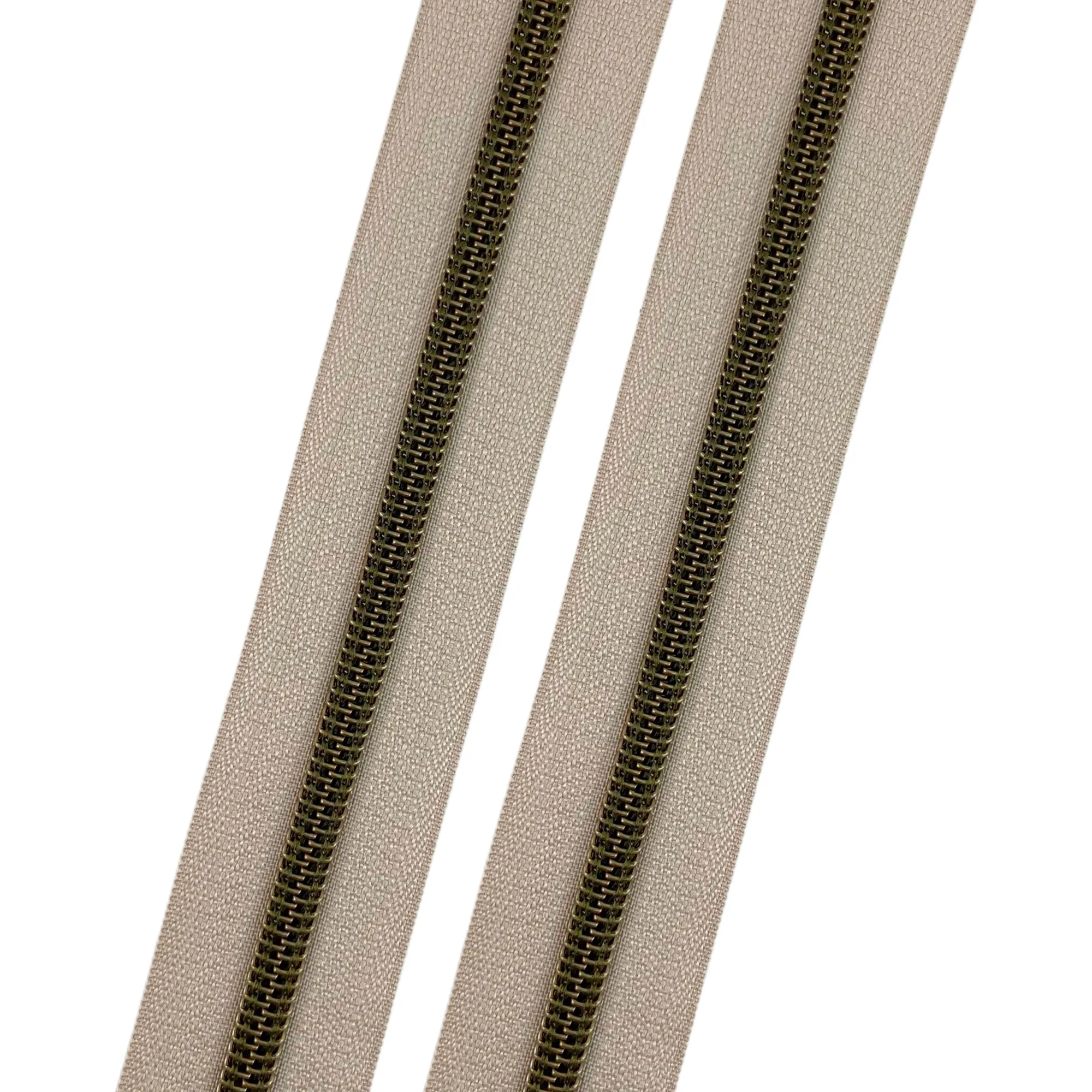
- Beige - #5 Bronze Nylon Coil Zipper Tape: Size #5 nylon coil zipper tape in beige with bronze-finish teeth, sold by length. A warm neutral tape that pairs well with tan, brown, and cream fabrics while the bronze teeth match warm hardware.
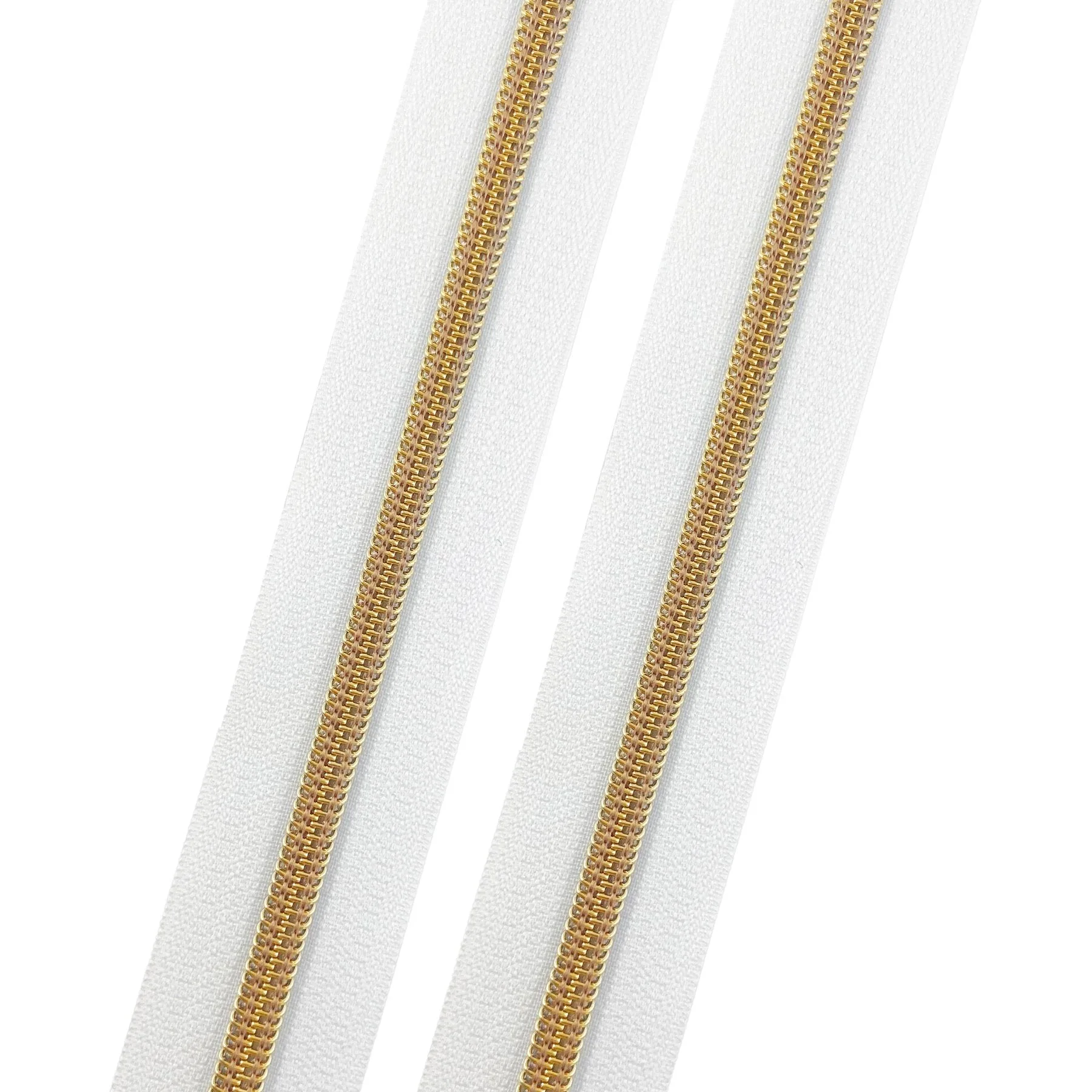
- White - #5 Gold Nylon Coil Zipper Tape: Size #5 nylon coil zipper tape in white with gold-finish teeth, sold by length. The white tape keeps the zipper light and clean, while the gold teeth add a warm accent that suits pastel and cream palettes.
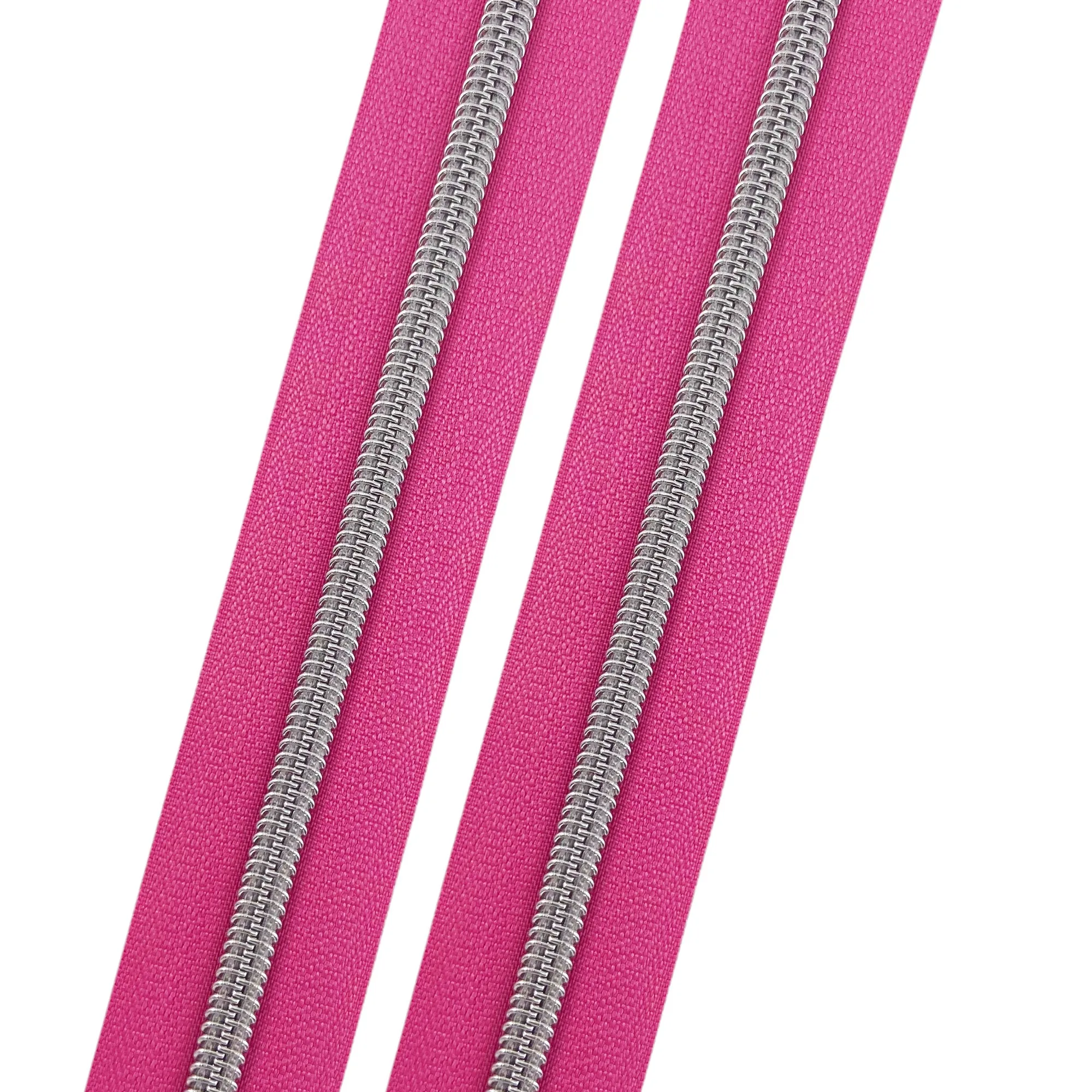
- Pink Lemonade - #5 Silver Nylon Coil Zipper Tape: Size #5 nylon coil zipper tape in pink with silver-finish teeth, sold by length. A soft color with neutral silver teeth, useful when you want a gentle contrast that still works with silver hardware.
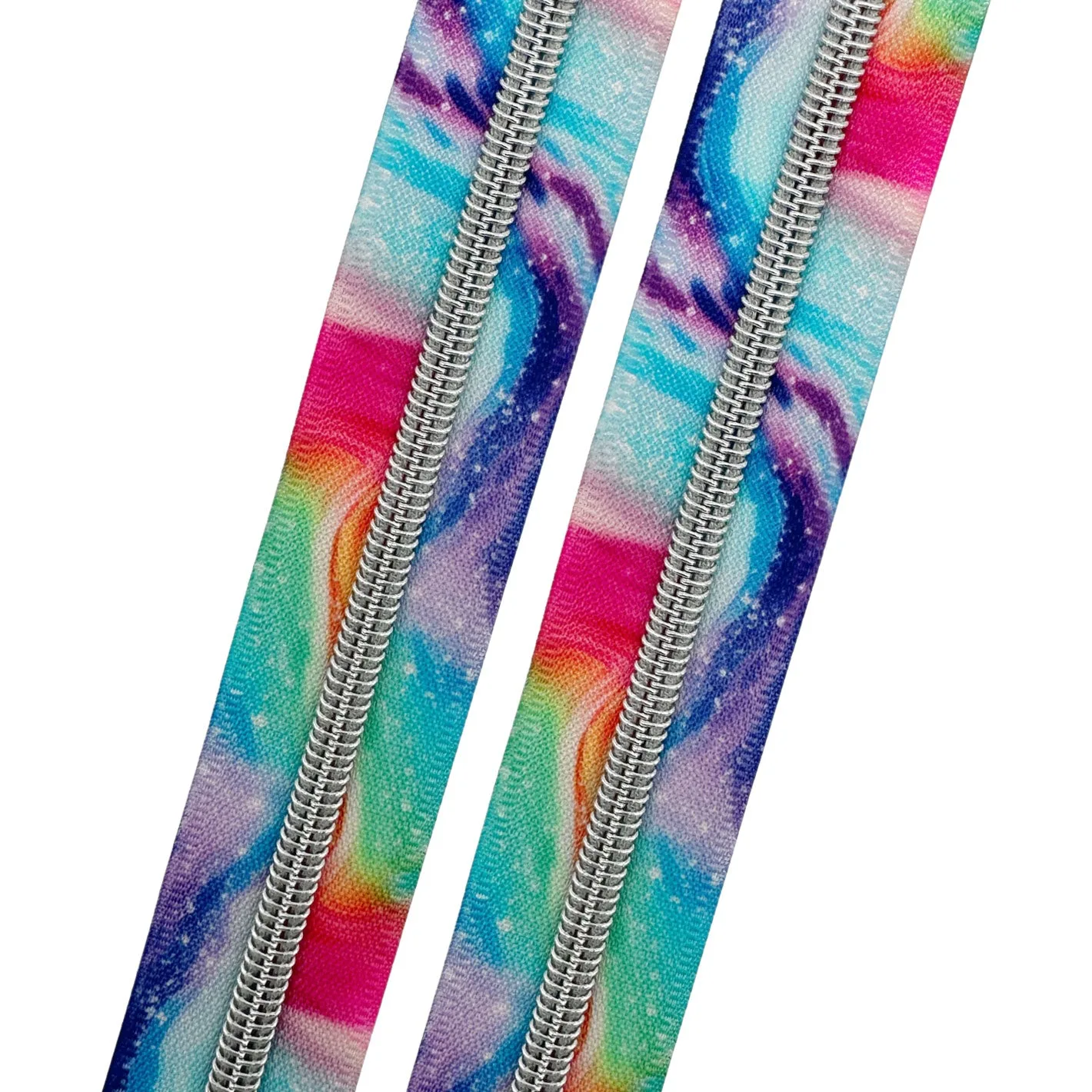
- Rainbow Glitter - #5 Silver Nylon Coil Zipper Tape: Size #5 nylon coil zipper tape with a bold glitter finish and silver-look teeth that are actually nylon, sold by length. A statement tape for projects where the zipper is the focal point; the nylon teeth can be sewn over without special needles.
Is This Color Approach Right for Your Project?
Best for
- Bag makers choosing zipper tape for a specific fabric and hardware combination
- Sewists who want a repeatable rule instead of guessing at the fabric store
- Projects where the zipper is a visible design element, such as front pockets and main openings
Not for
- Shoppers looking for a specific zipper size recommendation; see our separate size guide
- Projects that require an exact dye match to a proprietary fabric color
- Anyone who needs a custom-printed tape with a specific logo or text
Matching zipper tape to fabric comes down to one decision: should the zipper disappear or stand out? Match the dominant color to blend, contrast by two shades to feature it, and always match the teeth finish to your hardware. Test the combination in daylight before you cut, and you will get a zipper that looks like it belongs.