Quick answer
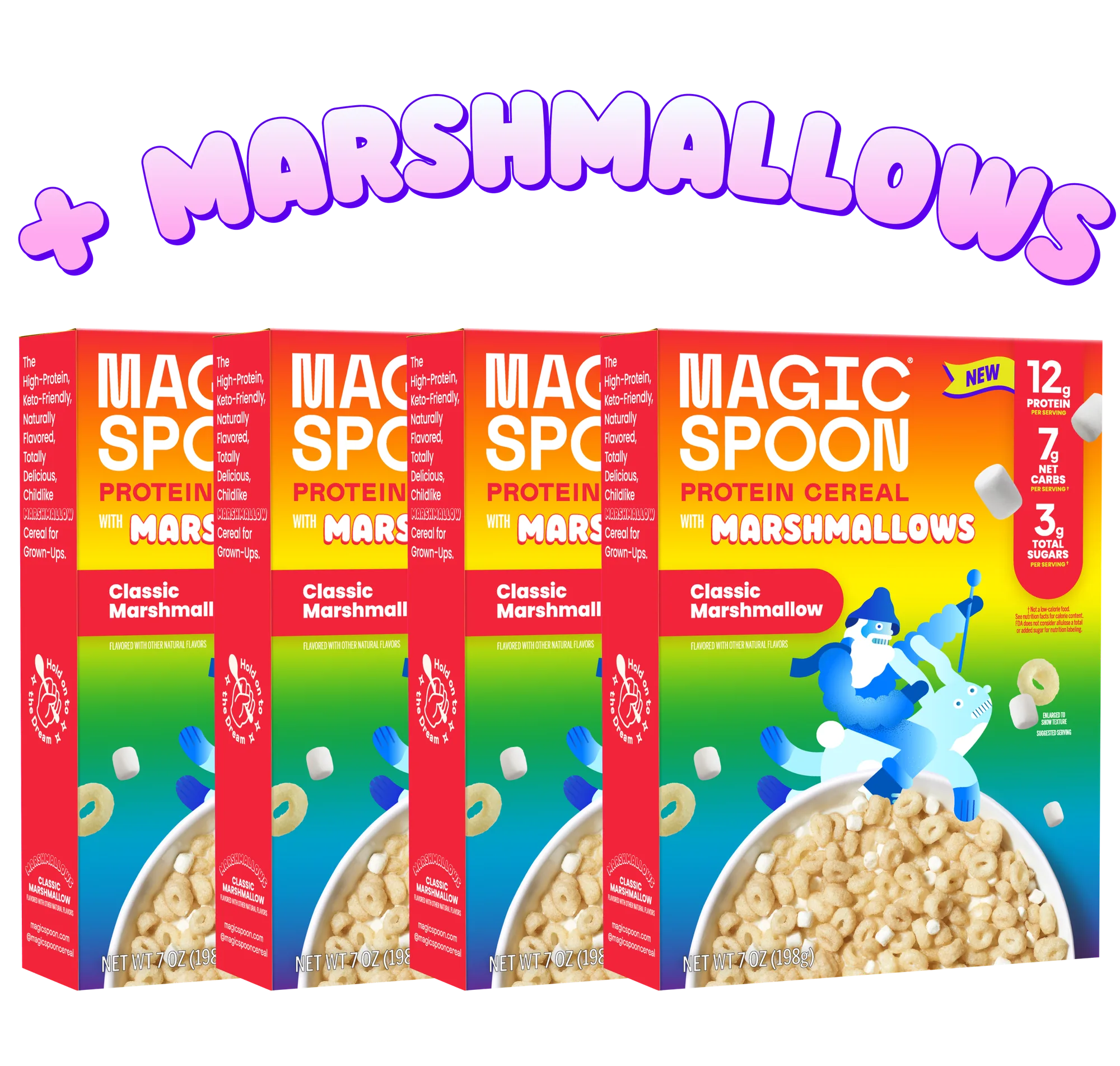
Protein cereal treats can be a reasonable snack swap, but only when the cereal itself does the heavy lifting. Magic Spoon's Protein Cereal with Marshmallows delivers 12g of protein and 3g of sugar per bowl, so a no-bake treat built on it lands in a very different place than one made with standard marshmallow cereal. The catch: the marshmallows and any added mix-ins still count, so portion size and what you stir in decide whether it's a genuinely better snack.
Myth 1: "Protein" on the box means the treat is automatically healthy
The word protein describes one nutrient, not the whole snack. A treat can carry 12g of protein per cereal serving and still be a dessert if you add a full bag of marshmallows, chocolate, and butter on top. The label on the cereal is the only reliable anchor: Magic Spoon's Classic Marshmallow Protein Cereal lists 12g of protein and 3g of sugar per bowl, but that number applies to the cereal as sold, not to the finished treat you assemble at home. If your recipe doubles the sweet additions, you've diluted the very thing that made the swap worthwhile.
Myth 2: Cereal treats can't be a dessert swap because they're still candy
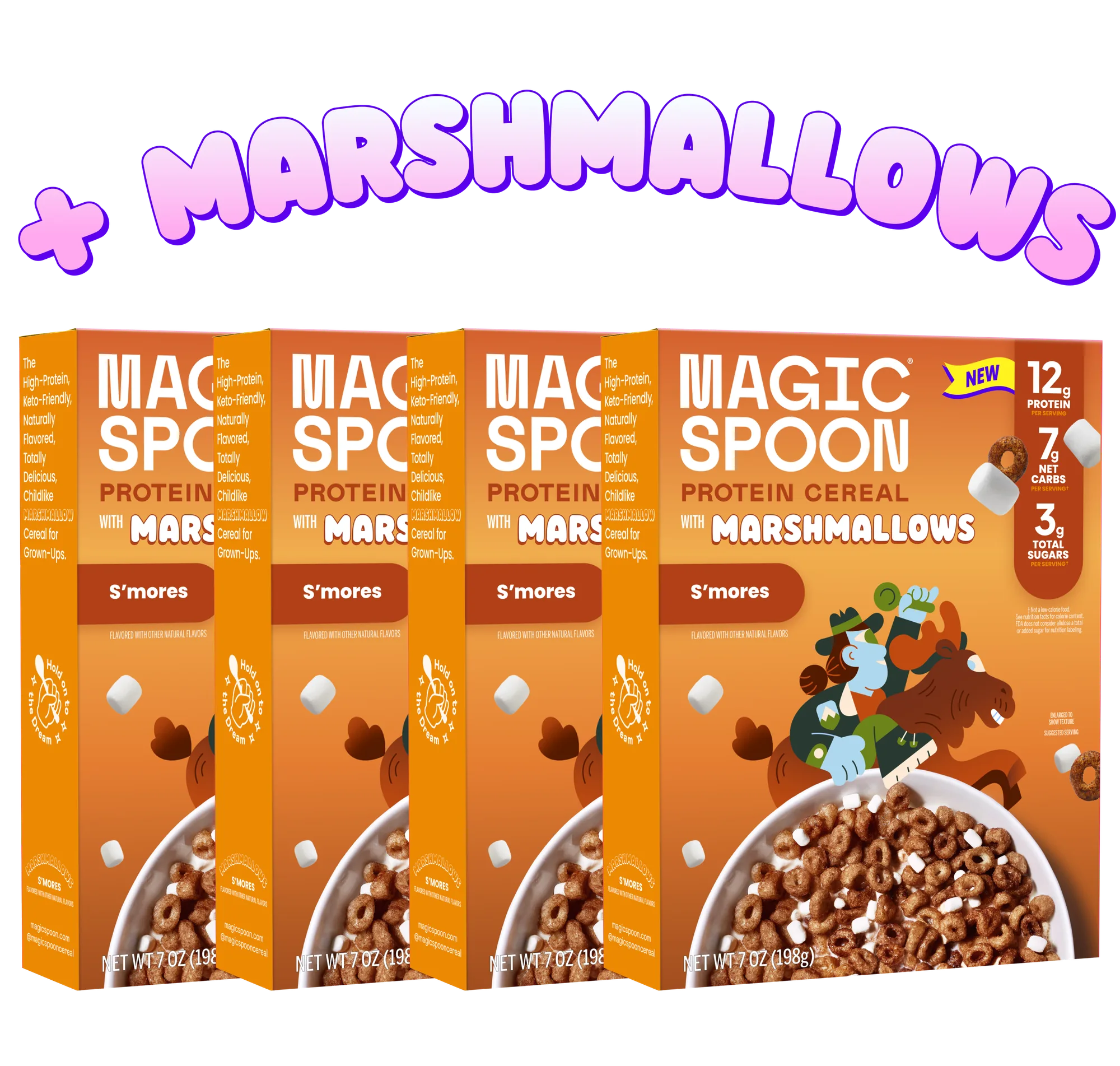
This one is half true. A classic crispy rice treat is mostly marshmallow and butter, so calling it a health food would be a stretch. But the swap isn't about pretending it's a salad; it's about improving the base. Starting with a cereal that already provides 12g of protein and 3g of sugar per bowl changes the math before you add anything. S'mores Protein Cereal with Marshmallows brings chocolatey flavor and real marshmallow bits, so you can lean on the cereal's built-in sweetness instead of pouring in extra sugar. That's a meaningful difference for a dessert swap, even if the finished treat remains a treat.
Myth 3: You need protein powder or a special recipe to make them high-protein
Not necessarily. If the cereal already carries 12g of protein per bowl, a simple no-bake recipe of cereal plus a binder can get you there without a scoop of powder. That matters because protein powder often changes texture and can add its own sugar or sweeteners. Using a cereal like Classic Marshmallow Protein Cereal as the base keeps the ingredient list shorter and the flavor closer to the nostalgic treat you're trying to recreate. You can still add mix-ins, but you don't have to rely on them for the protein claim.
Myth 4: All marshmallow cereals are basically the same
The category has real variation. Magic Spoon's new Protein Cereal with Marshmallows comes in Classic and S'mores, both with 12g of protein and 3g of sugar per bowl, but the flavor profiles differ: Classic leans on extra marshmallow bits and a light, crispy loop, while S'mores adds a chocolatey, campfire-inspired note. Those differences matter when you're choosing a base for treats, because a chocolate-forward cereal can carry a recipe that a plain one can't, and vice versa. Reading the flavor description is more useful than assuming every marshmallow cereal behaves the same in a no-bake recipe.
Myth 5: A protein cereal treat is a free pass to eat more
Protein doesn't cancel calories, and it doesn't turn a treat into an unlimited food. The 12g of protein and 3g of sugar per bowl are per-serving figures, so if you eat two or three treats, you're stacking those numbers. The practical move is to treat the protein cereal as the upgrade and keep the portion in snack territory. If you're swapping a dessert for a protein cereal treat, the win comes from the base cereal's nutrition, not from eating a larger amount of it.
Verdicts on common protein cereal treat claims
- Claim: Protein cereal treats are automatically a healthy snack.: Only if the cereal base does the work. A cereal with 12g of protein and 3g of sugar per bowl gives you a better starting point, but added marshmallows, butter, or chocolate can erase that advantage. Verdict: Partly true. Check your full recipe, not just the cereal box.
- Claim: You can't make a high-protein treat without protein powder.: False. If the cereal already provides 12g of protein per bowl, you can build a no-bake treat around it without a scoop of powder, which keeps texture and flavor simpler. Verdict: False. The cereal can be the protein source.
- Claim: A protein cereal treat is a free pass to eat more.: False. The 12g protein and 3g sugar are per bowl, so multiple treats stack those numbers. Portion size still matters. Verdict: False. Keep it in snack territory.
What the labels actually say
- Classic Marshmallow - Protein Cereal with Marshmallows: Classic Marshmallow Protein Cereal with Marshmallows has 12g of protein and 3g of sugar per bowl, with light crispy loops and real marshmallow bits. This is the baseline for a no-bake treat: the cereal itself supplies meaningful protein and low sugar before you add a binder or mix-ins.
- S'mores - Protein Cereal with Marshmallows: S'mores Protein Cereal with Marshmallows has 12g of protein and 3g of sugar per bowl, with crispy loops, chocolatey flavor, and real marshmallow bits. If you want a dessert-style treat without adding chocolate chips or syrup, this flavor already carries the chocolate note.
- Classic Marshmallow - Protein Cereal with Marshmallows: Classic Marshmallow Protein Cereal with Marshmallows is also available in a granola category listing with the same 12g protein and 3g sugar per bowl. The nutrition is consistent across listings, so you can compare price and category without worrying that the formula changes.