Quick answer
Bake cinnamon rolls if you want a forgiving, same-day enriched dough that rewards simple rolling and cutting. Choose babka if you enjoy laminating-style filling, a twisted loaf, and a sliceable bread that keeps well. Both rely on strong flour and butter, so pick the one whose shaping method matches your patience and schedule.
Babka and cinnamon rolls share more than a bakery case. Both begin with an enriched dough, both depend on butter and eggs for tenderness, and both taste best when the dough is mixed strong enough to hold a filling without tearing. The difference is in how you build and bake them.
That difference matters when you are deciding what to bake this weekend. A cinnamon roll recipe rewards speed and repetition. A babka recipe rewards patience and a gentle hand. Knowing which one fits your kitchen is the fastest way to avoid a frustrating bake.
How the doughs differ
Cinnamon roll dough is usually a soft, lightly enriched dough. It can be mixed, proofed, rolled, and baked within a few hours. Babka dough is often richer, with more butter and eggs, and it benefits from a cold rest so the gluten relaxes and the layers stay distinct. If your kitchen runs warm, babka dough can turn greasy during shaping unless you chill it between steps.
Both doughs need enough structure to support a filling. Whole grain flours absorb more water and can make either dough feel stiff at first. A freshly milled whole wheat bread flour, such as the one from Kneads, brings bran and germ that add flavor but also require a little extra liquid and a gentler mix.
- Mix until the dough clears the bowl, then check for a windowpane before adding soft butter.
- Chill babka dough for at least an hour before rolling; cinnamon roll dough can often be shaped right after the first rise.
Shaping and filling: roll versus twist
Cinnamon rolls are rolled into a rectangle, spread with filling, and cut into individual spirals. The shaping is repetitive and easy to scale, which makes it a good choice for a crowd or a bake sale. Babka is rolled, filled, cut lengthwise, and twisted, so the filling is exposed in ribbons rather than hidden inside each coil.
That twist changes the eating experience. A babka slice shows swirls of chocolate or cinnamon running through the crumb, while a cinnamon roll delivers its filling in a concentrated center. If you want a neat, shareable portion, rolls win. If you want a loaf that slices cleanly and looks impressive on a plate, babka wins.
- Use a bench scraper to lift and move sticky dough without stretching it.
- For babka, keep the filling layer thin near the edges so the twist does not tear.
Time, proofing, and baking
Cinnamon rolls can be baked the same day, and they also freeze well after shaping for a make-ahead breakfast. Babka usually needs a longer final proof and a moderate oven so the center sets without the outside burning. Because babka is baked as a loaf, it also needs more cooling time before slicing.
Neither bake is difficult, but they fail in different ways. Rolls dry out if overbaked. Babka can collapse if underproofed or if the filling is too heavy. A digital scale and an instant-read thermometer remove most of that guesswork, and a lined pan makes cleanup faster for either project.
- Bake rolls until the center reads about 190°F (88°C) for a soft crumb.
- Let babka cool almost completely before slicing so the crumb sets.
Flour and ingredient choices
Strong bread flour gives both doughs the elasticity they need. Whole wheat and spelt flours add flavor and nutrients but also make the dough more fragile, so many bakers blend them with a bread flour rather than using them alone. If you mill or buy fresh flour, use it within a few weeks for the best rise.
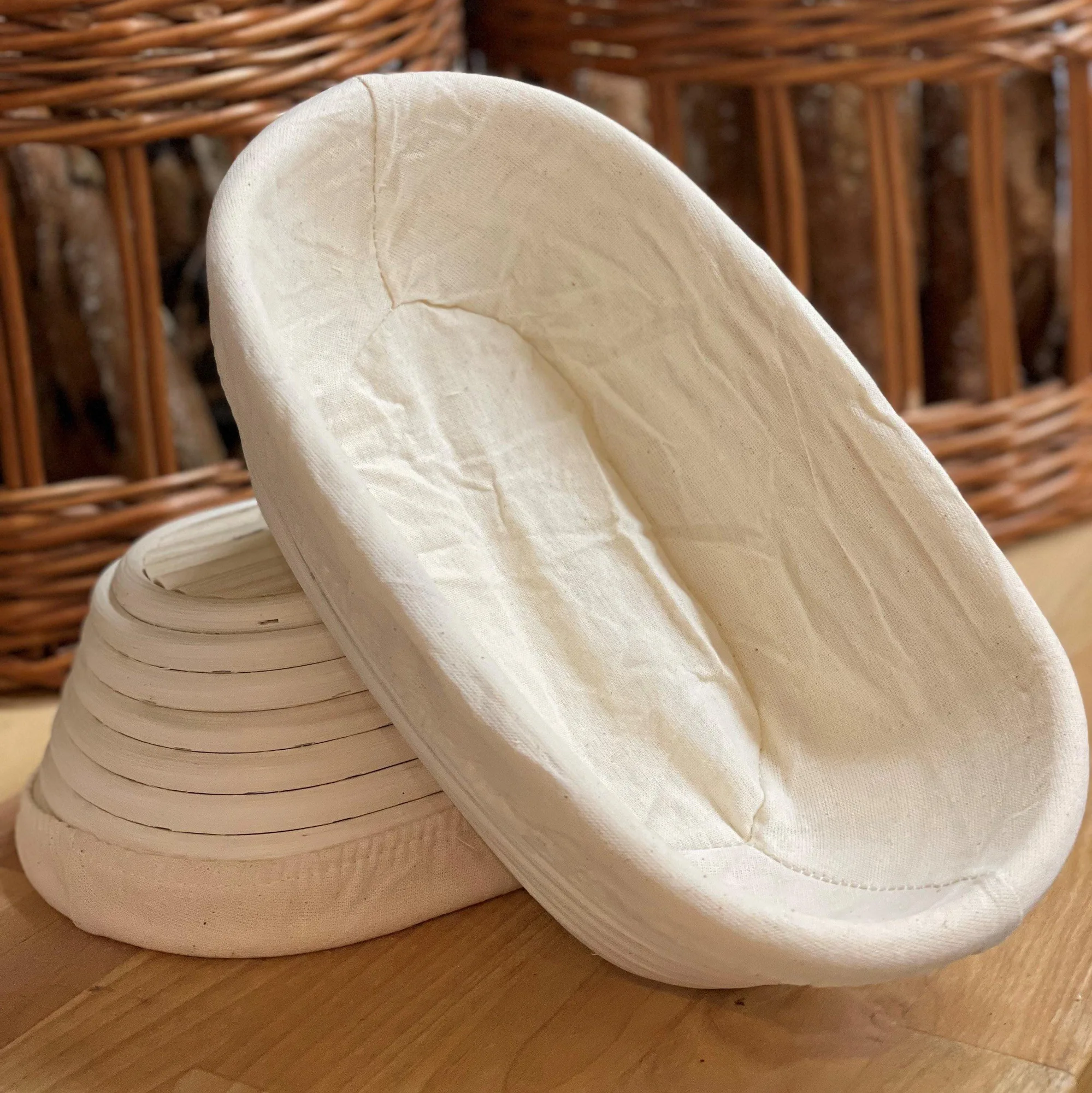
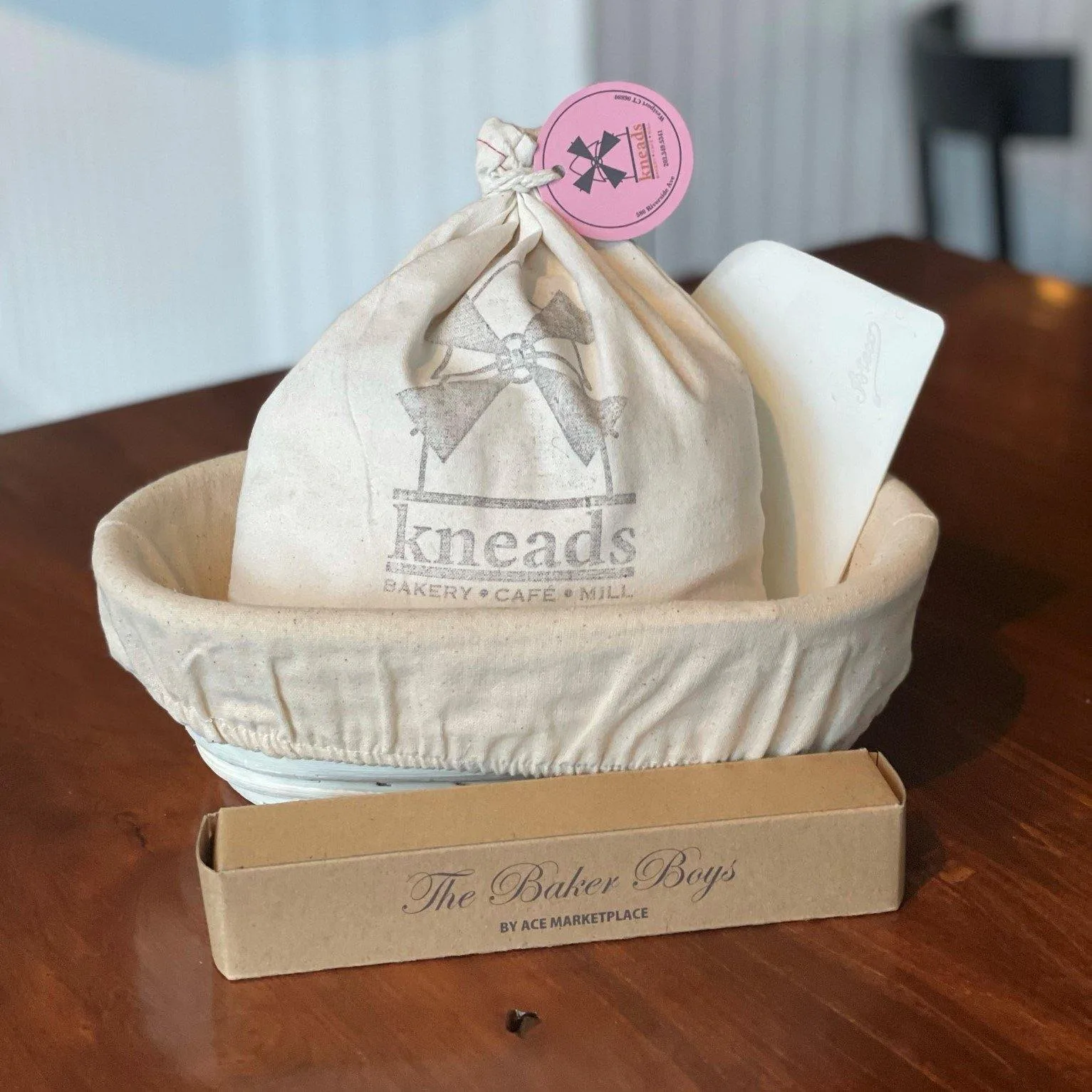
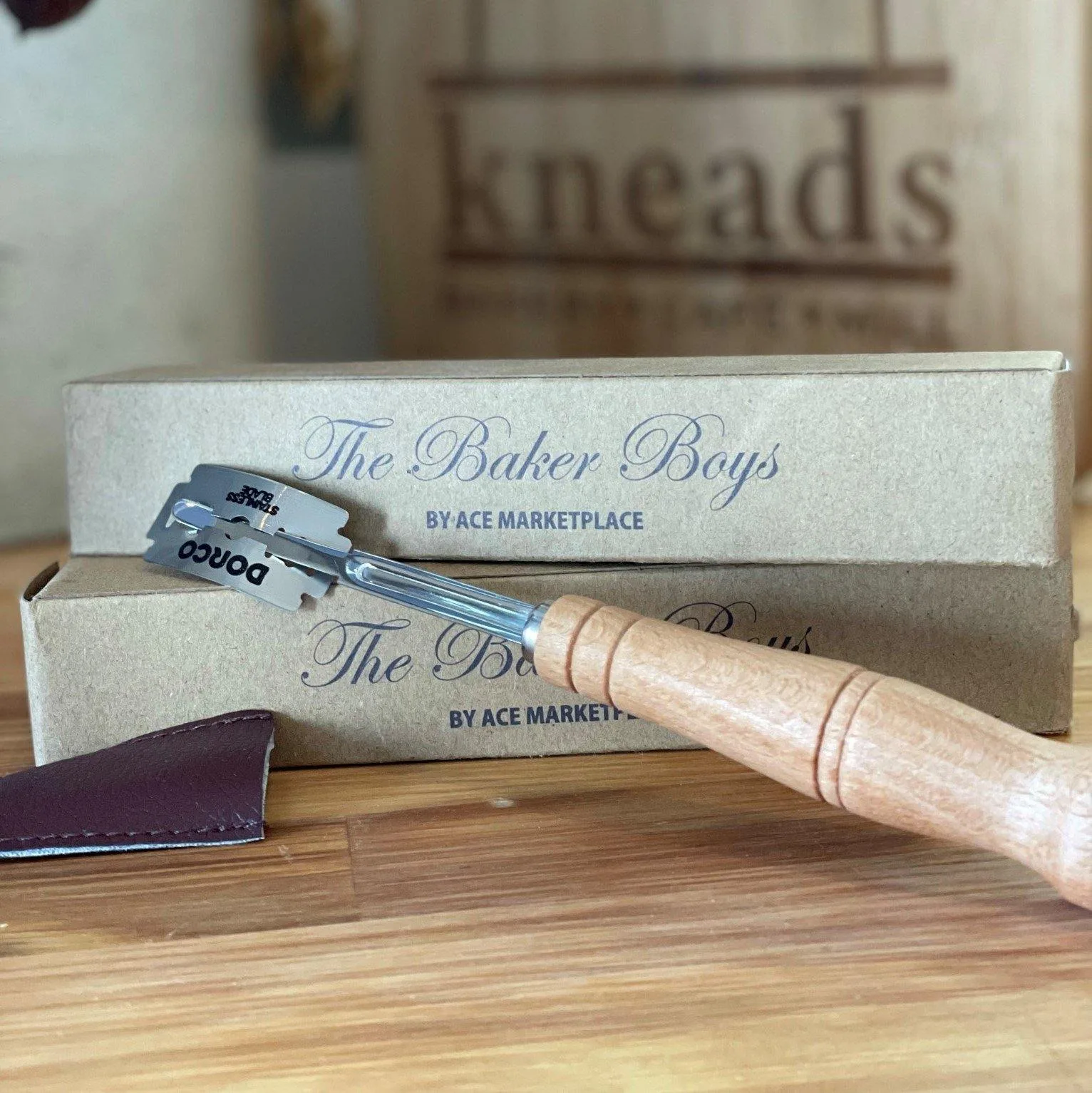
For a shortcut on bake day, Kneads offers a Bakers Gift Basket that includes a banneton, a bread lame, a bowl scraper, and 2 lbs of freshly milled whole grain bread flour. It covers the tools you need for babka shaping and scoring without buying each piece separately.
bread lame
- Start with 20–30% whole grain flour in an enriched dough and increase as you learn how it hydrates.
- Store fresh flour in an airtight container away from heat and light.
Trade-offs at a glance
- Shaping effort: Cinnamon rolls use a simple roll-and-cut method; babka requires rolling, cutting, and twisting a filled dough. Choose rolls for speed, babka for a showpiece loaf.
- Time to table: Rolls can be mixed, proofed, and baked in a few hours; babka usually needs a longer chill and final proof. Pick rolls for same-day baking, babka for a planned weekend project.
- Filling style: Rolls keep filling in a spiral center; babka exposes filling in ribbons throughout the slice. Rolls for gooey centers, babka for even distribution.
- Forgiveness: Rolls tolerate slight overproofing and variable filling amounts; babka can tear or collapse if the dough is warm or underproofed. New to enriched dough? Start with rolls, then try babka.
- Storage and serving: Rolls are best fresh but freeze well after baking; babka keeps longer and slices cleanly for sharing. Bake rolls for immediate eating, babka for a loaf that lasts a few days.
Kneads products that fit this comparison
- Bakers Gift Basket: Includes a banneton basket with a liner, a bread lame, a bowl scraper, and 2 lbs of freshly milled whole grain bread flour. Gives you the shaping, scoring, and flour basics for babka or rolls in one purchase.
- Whole Wheat Bread Flour Retail 6 pk: Freshly milled hard red spring flour, milled in store on a New American Stone Mill, with six 2 lb packs. A strong, whole grain option for enriched doughs, with enough volume for several baking sessions.
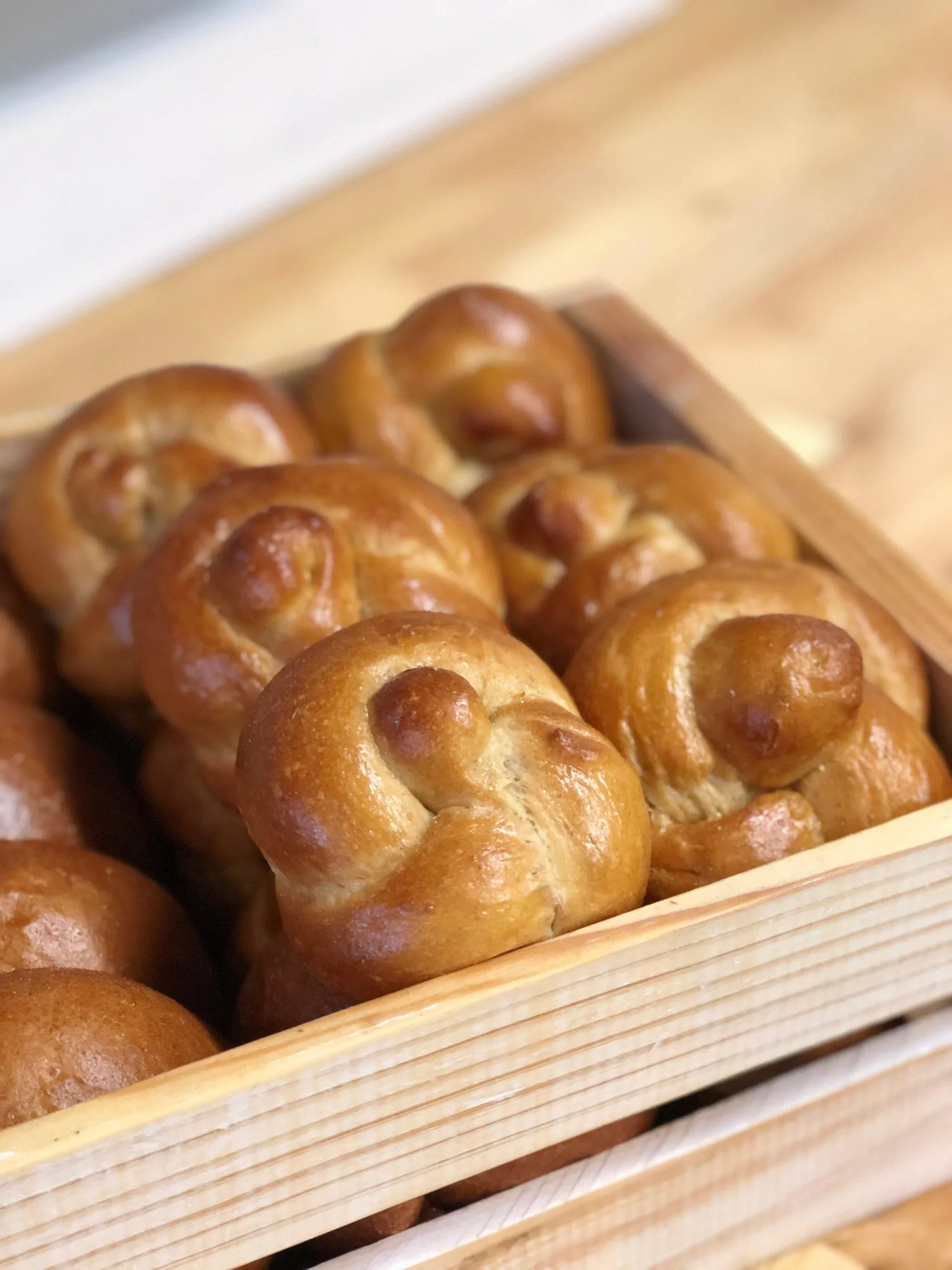
- Knot Roll: A mini tied challah roll sold by the piece, from the Breads & Buns category. A ready-made enriched bread to compare against your homemade rolls or babka.
- Mini Seasonal Fruit Scone Box: Contains one dozen mini fruit scones, miniature size, fruit scone variety. A quick bakery-style option when you want a sweet bake without turning on the oven.
Which one should you bake?
Best for
- Bakers who want a same-day project with simple, repeatable shaping
- Families or groups who prefer individual portions and freezer-friendly leftovers
- Anyone new to enriched dough who wants a forgiving first bake
Not for
- Bakers looking for a sliceable loaf with filling in every bite
- Anyone who wants a bake that improves after a day on the counter
- Bakers who dislike rolling and cutting sticky dough
Both babka and cinnamon rolls are worth learning, and the right choice comes down to your schedule and shaping comfort. Start with rolls if you want a quick win, then try babka once you are confident handling a rich dough. Either way, use fresh flour and give the dough the rest it needs.