Quick answer
For most commutes, a backpack wins because it balances weight across both shoulders and leaves your hands free. Choose a briefcase if you need a polished, meeting-ready carry and your walk is short. Choose a messenger only if you prefer quick access and a crossbody strap, and you don't mind uneven weight. Your gear volume, walking distance, and dress code should decide — not trends.
Your commute decides more about your laptop bag than your job title does. A 10-minute walk to a car is a different problem than a 40-minute train-and-bike trip. The three classic shapes — backpack, briefcase, and messenger — solve those problems in different ways, and picking the wrong one shows up as shoulder pain, a soaked laptop, or a bag that never quite closes.
This comparison looks at how each work bag type handles weight, access, and capacity, using real examples from the WaterField Designs catalog. You'll see where each shape wins, where it loses, and how to match one to your actual route.
How each bag type carries weight
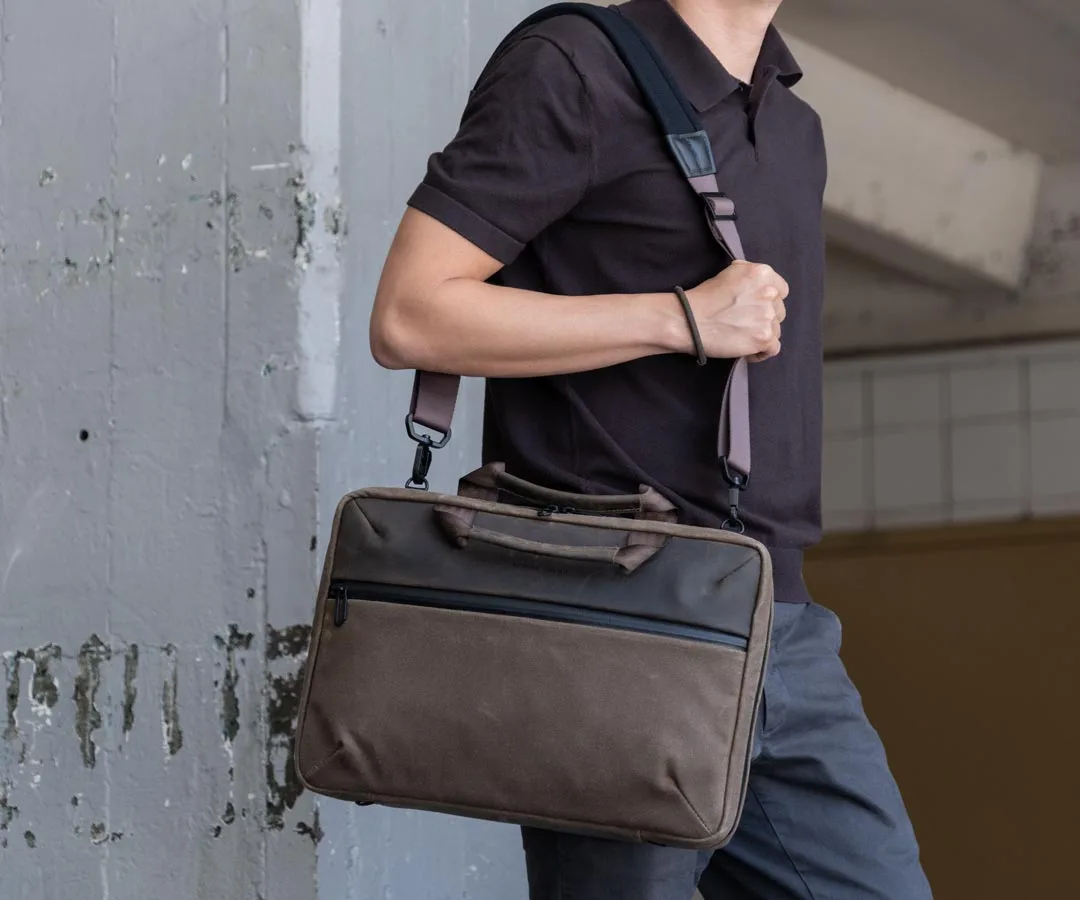
A backpack puts the load on both shoulders and your hips, which is why it's the default for long walks, bike commutes, and heavy tech loads. The trade-off is access: you usually have to swing it off one shoulder to reach anything. A briefcase keeps weight on one side and one hand, so it feels heavier fast, but it stays upright and looks formal. A messenger spreads weight diagonally across your torso, which is more comfortable than a briefcase for walking but less balanced than a backpack.
If your commute involves more than 15 minutes of walking or any cycling, the backpack's two-shoulder carry is the practical choice. If you mostly drive or take short walks between meetings, a briefcase or messenger can work without wearing you down.
- Test your bag loaded, not empty — weight distribution only shows up when it's full.
- If you carry a laptop plus a tablet plus chargers, count the total pounds before choosing a shape.
Access, organization, and security
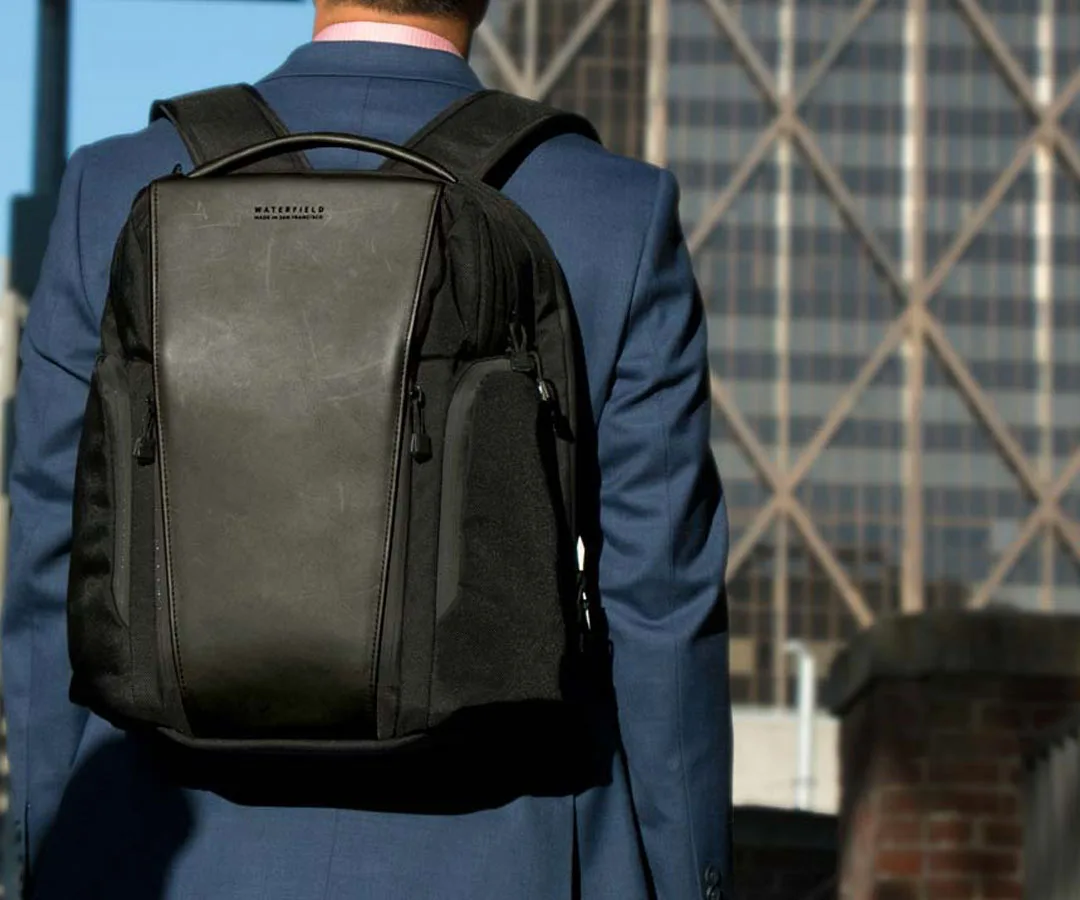
Messengers and briefcases give you fast, top-down access without taking the bag off. That matters if you're pulling out a laptop at security, a transit card, or a notebook in a meeting. Backpacks often have more total pockets and compartments, but reaching them mid-commute is slower. The Tech Folio Backpack is a good example of the backpack trade-off done well: it gives you a folio for organizing cables, adapters, and dongles, plus a compartment that stores two devices or a change of clothes. You get serious organization, but you still have to take it off to use it.
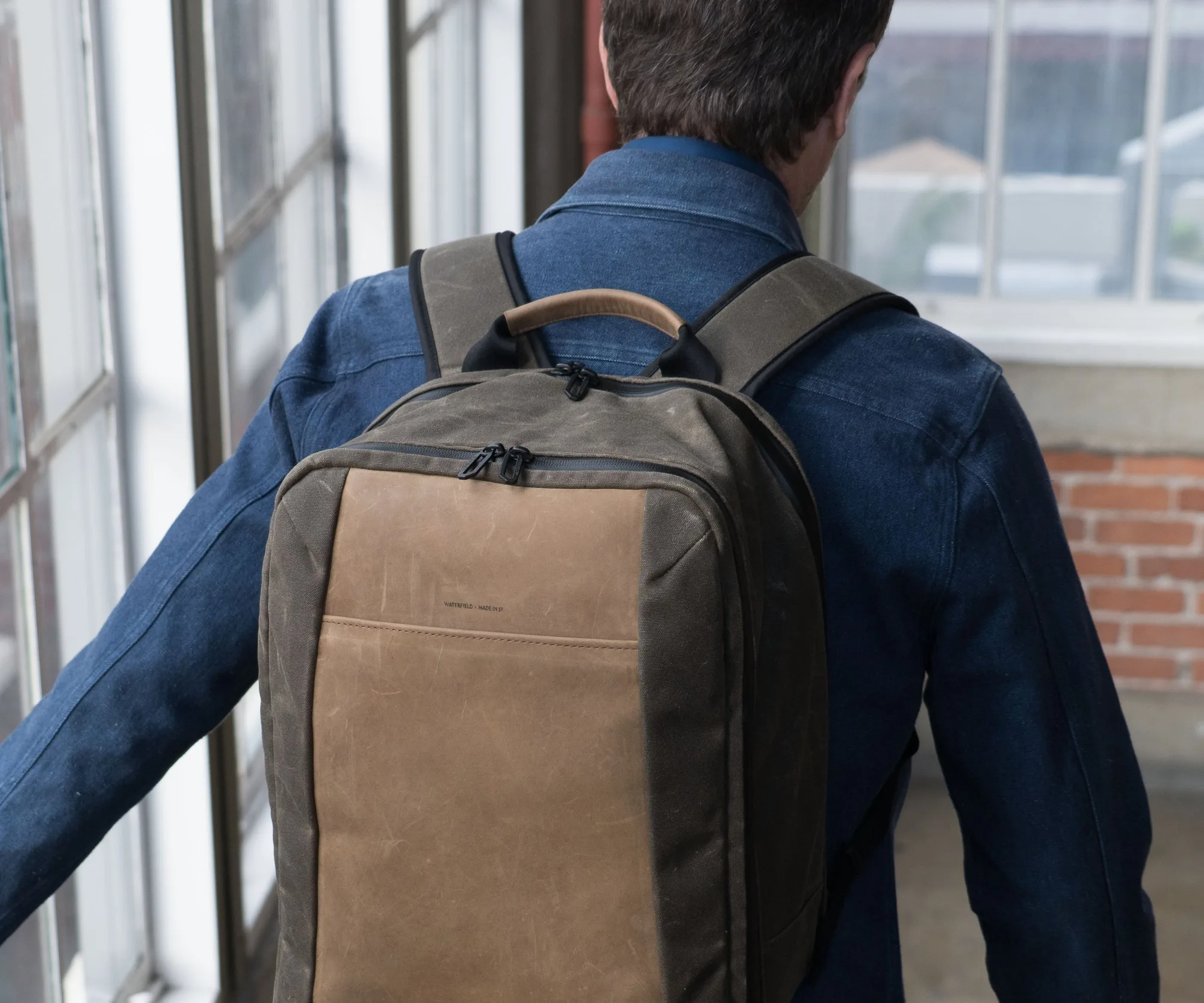
Tech Folio Backpack
Security is a separate axis. A backpack worn on both shoulders is harder to snatch than a messenger hanging at your hip, but a briefcase held in hand is the easiest to set down and forget. None of these shapes is inherently theft-proof — zipper placement and how you wear the bag matter more than the category.
- If you open your bag more than five times per trip, prioritize quick-access design.
- Keep your laptop in a dedicated padded pocket rather than a general compartment.
Capacity and what each shape can actually hold
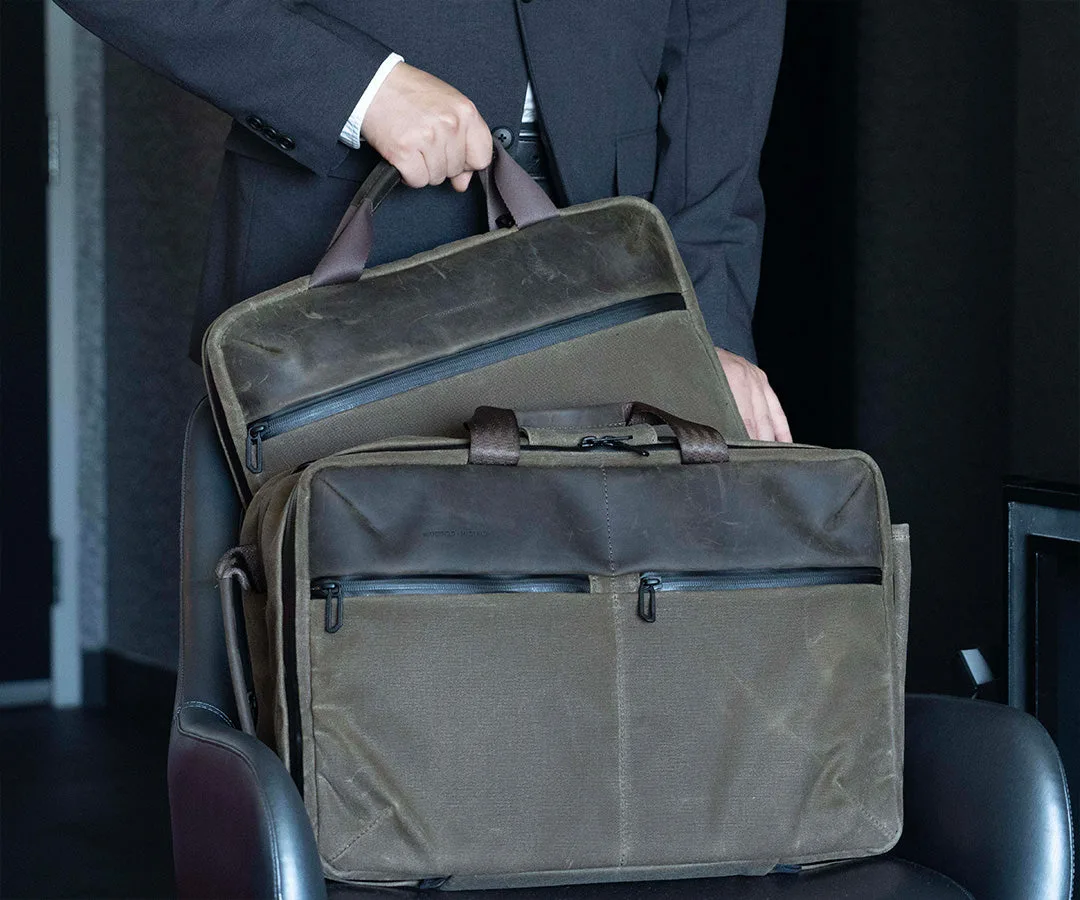
Backpacks scale up the most. The Tech Folio Tank Backpack is the largest laptop backpack in the WaterField line, holding up to 17-inch and 18-inch laptops with two padded pockets for a laptop and tablet, plus a separate folio for accessories. That's a lot of gear in one carry. Briefcases and messengers tend to cap out earlier because a single shoulder strap limits how much weight is comfortable. The Slim Brief for 48-Hour Travel System is a good reference point: it organizes tech gear, a laptop, and a tablet in one slim profile, and it's designed to work on its own or slide into a larger travel bag.
The practical rule: if your daily load includes a large laptop, a tablet, and a full charger kit, a backpack is the only shape that stays comfortable. If your load is a laptop, a notebook, and a few cables, a briefcase or messenger keeps things lean.
- Measure your laptop before buying — a 17-inch machine rules out most slim briefs and messengers.
- If you sometimes need a change of clothes, look for a backpack with a separate compartment.
Style, dress code, and where you're going
Briefcases read as formal. Messengers read as casual-to-smart. Backpacks now span both ends, from technical to executive, but they still carry a more casual default in conservative offices. The Pro Executive Laptop Backpack is built to close that gap: it has two main compartments, strategically placed pockets, and an optional Executive Folio for short meetings, and it stands on its own. If your day moves between a desk, a train, and a client meeting, that kind of backpack gives you backpack comfort without looking like you're heading to a gym.
If your workplace is strictly suit-and-tie and your commute is short, a briefcase is still the cleanest match. If you split time between casual and formal settings, a backpack with a removable folio or a slim brief that fits inside a larger bag gives you more flexibility than committing to one look.
- Match the bag to the most formal setting you'll walk into that day.
- A removable folio or slim brief can double as your meeting bag.
Trade-offs at a glance
- Backpack: comfort vs. access: Best weight distribution for long walks and heavy loads, but you usually have to take it off to reach your gear. The Tech Folio Backpack and Tech Folio Tank Backpack add organization to offset the access trade-off. Choose a backpack if your commute is long, your load is heavy, or you bike.
- Briefcase: polish vs. one-shoulder strain: Looks formal and stays organized, but all the weight sits on one side and one hand. The Slim Brief for 48-Hour Travel System stays slim enough to carry on its own or inside a larger bag. Choose a briefcase if your walk is short and meetings dominate your day.
- Messenger: quick access vs. uneven load: Easy to swing around and grab a laptop or transit card, but the crossbody strap puts uneven pressure on one shoulder over time. Choose a messenger if access matters more than all-day comfort and your load stays light.
Real options that show the differences
- Tech Folio Backpack: Two bags in one: a folio for organizing tech gear plus a compartment that can store two devices or a change of clothes. Built for professionals who carry cables, adapters, dongles, and power chargers. If your commute involves lots of small tech accessories, this backpack's organization keeps them from turning into a tangled mess — and the second compartment covers an overnight or gym stop.
- Pro Executive Laptop Backpack: Two main compartments, strategically placed pockets, and an optional Executive Folio for short meetings. It stands on its own. A backpack that can pass in a business setting and stay upright on the floor next to your desk, so you're not fishing for it under a chair.
- Slim Brief for 48-Hour Travel System: A removable slim brief that organizes tech gear, laptop, and tablet in one sleek carry. Designed to be used on its own or inserted into a larger bag. If you want briefcase looks with the option to pack it inside a travel bag, this gives you two carry modes without buying two bags.
- Tech Folio Tank Backpack: The largest laptop backpack in the line, holding up to 17-inch and 18-inch laptops. Two padded pockets store a laptop and a tablet, plus a separate folio organizes accessories in see-through zippered pockets. If you carry a big laptop, this is the shape that keeps the weight on both shoulders instead of one.
Which one fits your commute?
Best for
- Commuters who walk or bike more than 15 minutes each way
- People carrying a large laptop plus a tablet and charger kit
- Anyone who wants hands-free carrying on trains or buses
Not for
- Short car commutes where a briefcase's formal look matters more than weight distribution
- Minimalist carriers who only need a laptop and a notebook and prefer quick access
There's no single best laptop bag for every commute — only the shape that matches your route, your load, and your dress code. Start with how long you walk and how much you carry. If both are high, a backpack like the Tech Folio Backpack or Tech Folio Tank Backpack earns its place. If your walk is short and your meetings are formal, a slim brief keeps things sharp. Pick the trade-off you can live with every day.