Quick answer
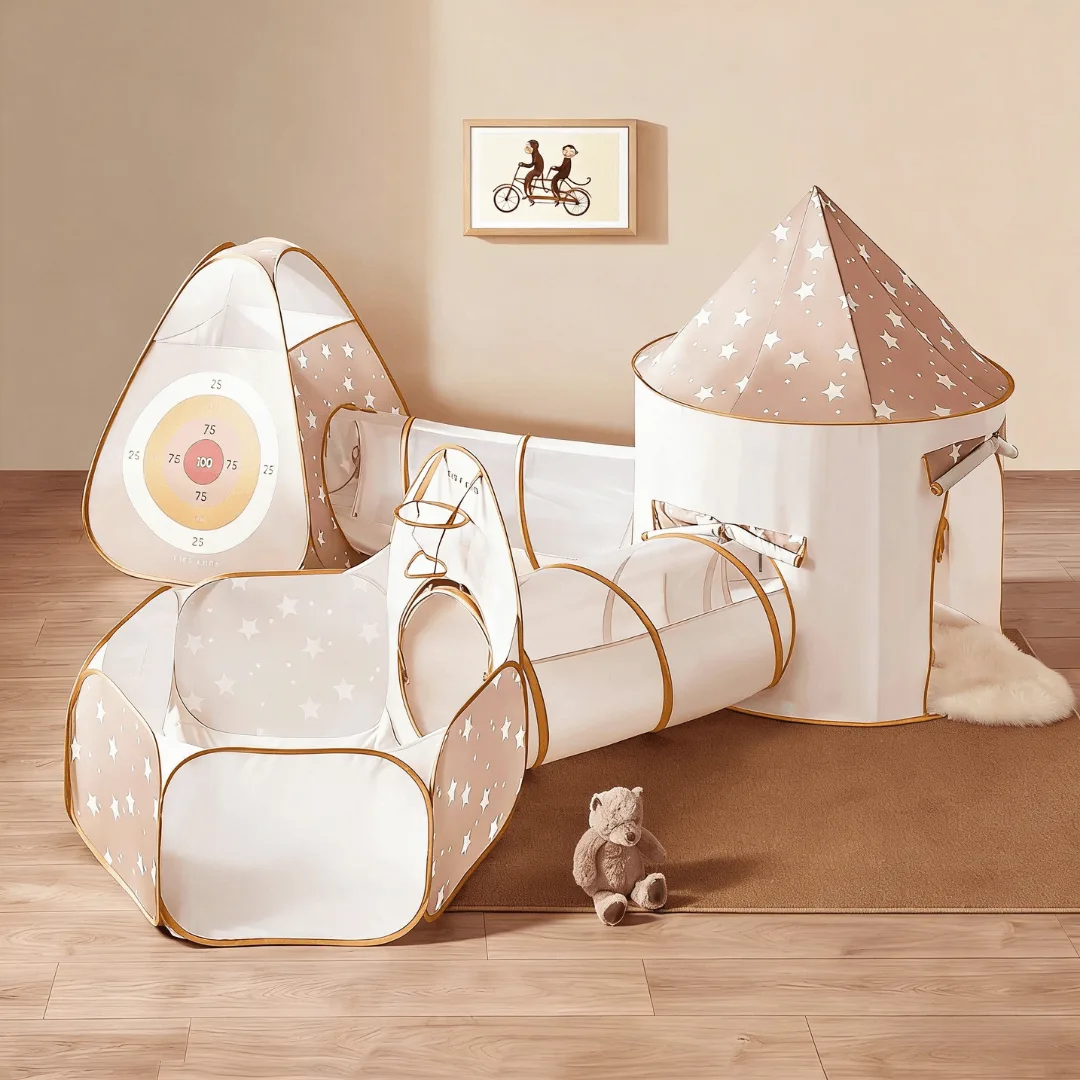
For a typical toddler ball pit, plan on roughly 100 balls per square foot of floor area if you want good coverage, or about 50 per square foot for a looser fill. Buy balls sized 2.75 inches or larger to reduce choking risk, and add a padded mat or rug under the pit to soften the base. If you want a ready-made cozy corner, a teepee tent with a floor mat can double as a ball pit boundary.
How many balls do you actually need?
Ball count depends on the pit's footprint and how deep you want the balls to sit. A common guideline is 100 balls per square foot for a dense, knee-deep fill, or 50 per square foot for a shallow layer that still lets kids see the bottom. For example, a 3 ft x 3 ft pit (9 sq ft) needs about 450 balls for a full fill, or 225 for a light layer. Measure the interior length and width, multiply them, then choose your density. Buying in bulk is usually cheaper per ball, but you may want to start with a smaller pack and add more if your child prefers a deeper pit.
What size and material are safest for ball pit balls for kids?
The safest balls for toddlers are at least 2.75 inches (about 7 cm) in diameter, which is the standard threshold used to reduce choking hazards. Avoid smaller balls, even if they are marketed for kids. Material matters too: look for non-toxic, phthalate-free plastic (often labeled PE or HDPE) that is easy to wipe clean. Balls with a smooth surface and no sharp seams are less likely to scratch or trap dirt. If you are unsure about a specific product, check the manufacturer's age recommendation and safety certifications.
Do you need a ball pit mat, and what should it do?
A mat under the pit is not strictly required, but it makes the play area more comfortable and protects your floor from scuffs. Look for a mat that is thick enough to cushion falls (at least 0.5 inch) and sized to extend a few inches beyond the pit's edges. Non-slip backing helps keep the pit from sliding on hardwood or tile. If you already have a soft rug, that can work, but a dedicated mat is easier to wipe clean if snacks or accidents happen. A mat also defines the play zone, which can help toddlers understand where the balls belong.
What are some ball pit filler ideas besides plastic balls?
If you want a different sensory experience, you can use fabric balls, foam blocks, or even crumpled paper for a temporary filler. Fabric balls are quieter and softer but may not hold their shape as well. Foam blocks are great for stacking and knocking down, but they can be heavier and may not fill gaps evenly. Crushed paper or balloons are not recommended for unsupervised toddlers due to choking and suffocation risks. For a classic ball pit feel, plastic balls remain the most practical choice because they are lightweight, durable, and easy to clean.
How do you set up a toddler ball pit safely?
Place the pit on a flat, stable surface away from stairs, sharp corners, and heat sources. If the pit has a frame, check that all connections are secure and there are no exposed bolts. Always supervise toddlers during play, and keep the ball depth shallow enough that they can sit or stand without feeling trapped. Clean the balls periodically with mild soap and water, and let them dry completely before returning them to the pit. For extra containment, you can place the pit inside a play tent or use a play tunnel as an entryway, but make sure the structure cannot tip over.
Ball pit FAQ
Can I use a teepee tent as a ball pit?
Yes, a teepee tent can work as a ball pit boundary if the floor mat is flat and the tent is stable. The Tiny Land® Teepee Tent for Kids with Mat includes a floor mat that can serve as a base. Just avoid overfilling so the tent stays upright and supervise play. Check that the tent cannot tip over and that the mat does not slide.
How do I clean ball pit balls?
Wipe each ball with a damp cloth and mild soap, then rinse and air-dry completely. Avoid soaking them in water, which can trap moisture inside. For a deeper clean, you can put balls in a mesh laundry bag and run a gentle cycle, but check the manufacturer's instructions first. Dry balls thoroughly to prevent mold.
What if my child puts balls in their mouth?
If your child is still mouthing toys, choose balls that are at least 2.75 inches in diameter and made from non-toxic materials. Even then, always supervise. If you catch a child with a ball in their mouth, calmly remove it and redirect to a different activity. Supervision is the most important safety measure.
Product facts
- Tiny Land® Play Kitchen Accessories – Children’s Coffee Maker: Wooden Kids Play Coffee Maker Set: Tiny Land® Play Kitchen Accessories – Children’s Coffee Maker: Wooden Kids Play Coffee Maker Set includes a side knob that makes a clicking sound when turned. Adds a realistic barista element to pretend play, which can extend role-play scenarios beyond the ball pit and encourage communication skills.
- Tiny Land® Teepee Tent for Kids with Mat – Indoor Play Tent with Floor Mat: Tiny Land® Teepee Tent for Kids with Mat – Indoor Play Tent with Floor Mat includes a breathable window and a floor mat. The included mat provides a soft base that can double as a ball pit mat, and the breathable window helps with airflow during indoor play.