Quick answer
Before a child's first ride, walk the route for a safe go-kart riding surface, set the speed limiter to its lowest setting, and fit a helmet that stays put. Then teach three rules: no passengers, no riding near traffic or slopes, and stop when an adult says stop. Most battery-operated go-kart injuries come from speed and surface surprises, not from the kart itself.
Set the kart up before the first ride
Charge the battery fully and check the manual for the seat and pedal positions, then sit your child in the kart with the power off. Their feet should reach the pedals or footrest without stretching, and their hands should reach the steering with elbows slightly bent. If the kart has a parental remote or speed limiter, pair it and test it in your driveway before the child drives. Confirm the brake stops the kart from a slow roll, and check that the tires hold pressure and the steering turns freely.
Choose a safe go-kart riding surface
The safest surface for a kids electric go kart is smooth, flat, and free of traffic: a fenced driveway, a tennis court, or a paved cul-de-sac with no through traffic. Avoid slopes, wet pavement, gravel, sand, and grass, which reduce traction and make braking unpredictable. Walk the route first and remove toys, hoses, and stones. Set a visible boundary, such as a chalk line or cones, so your child knows where the ride ends.
Dress the rider for the slide, not the ride
A helmet is non-negotiable, and it should be a bike helmet that fits snugly and sits level on the head. Closed-toe shoes protect toes from pedals and the ground, and long pants reduce scrapes. Avoid loose clothing, scarves, and drawstrings that can catch in wheels or steering. Tie back long hair. Gloves are optional but help on karts with hard grips.
First-ride checklist: 7 steps before you hand over the controls
- 1. Read the manual's age and weight limits: Every battery-operated go-kart lists a minimum age and a maximum weight. Check both before charging anything. A kart that is too big or too small for your child makes steering and braking harder to control. Checkpoint: if your child is below the minimum age, wait. No accessory makes an undersized rider safe.
- 2. Charge the battery and test the brake with the wheels off the ground: A full charge gives predictable speed. Lift the rear wheels, press the pedal briefly, and confirm the motor engages and the brake stops the wheels. Do this before your child is in the seat. Mistake to avoid: assuming a new kart is charged. Most ship with a partial charge.
- 3. Set the speed limiter or parental control to the lowest setting: If your kart has a remote kill switch, a speed dial, or an app-based go kart parental controls feature, set it to the slowest mode for the first week. Increase speed only after your child demonstrates steering and stopping. Checkpoint: your child should be able to stop from top speed within the boundary you set.
- 4. Walk and clear the safe go kart riding surface: Pick a smooth, flat area away from traffic, slopes, and water. Remove toys, hoses, and debris. Mark the boundary with cones or chalk so your child has a clear turn-around point. Mistake to avoid: letting the first ride happen on a sloped driveway. Slopes make braking distances longer and are a common cause of runaways.
- 5. Fit the helmet and gear, then do a sit test: The helmet should not rock when your child shakes their head. Shoes must be closed-toe. Have your child sit in the kart with the power off and show you where the brake and steering are. Checkpoint: your child can point to the brake and explain what it does before the power goes on.
- 6. Teach the three rules of kids electric go kart riding: One rider at a time. No riding near roads, driveways with traffic, or slopes. Stop immediately when an adult says stop. Practice the stop command on foot first, then in the kart at the slowest speed. Mistake to avoid: adding a passenger. Most karts are built for one rider, and a second rider changes the balance and braking.
- 7. Supervise the first ten rides within arm's reach: Stand where you can reach the kart or the remote kill switch. Watch for the two warning signs of a first time go kart rider losing control: stiff arms and a fixed stare. End the session on a good stop, not a crash. Checkpoint: after ten supervised rides, review the rules again before letting your child ride at a higher speed.
Products that support safe riding habits
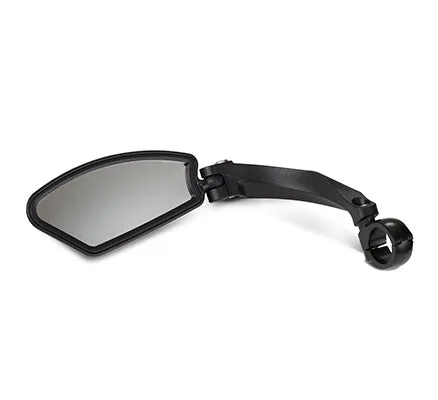
- Handlebar Bike Mirror: Splash and crack resistant 3-inch mirror that securely attaches to the handlebar, adjusts to multiple viewing angles, and is designed to be mounted on the left side of the handlebar, with various clamp sizes available and compatibility with Flyer M880 and Flyer L885. If your child rides a bike or trike alongside the go-kart, a mirror lets you or an older rider watch for approaching traffic and keep the group together without turning around.