Quick answer
For most road and gravel rides up to three hours, carry two cage-mounted bidons and refill at a shop or fountain. Switch to a hydration vest only when refill points are far apart or you cannot spare a hand to grab a bottle. Flasks suit short, pocket-based rides where you want small sips without leaving the bars.
How many bottles do you actually need
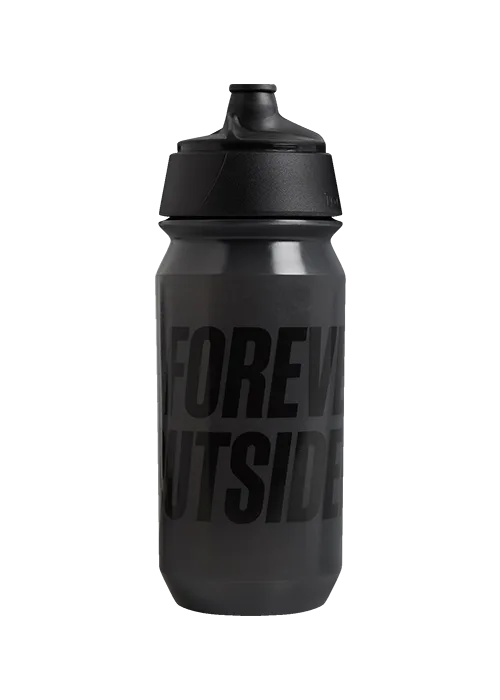
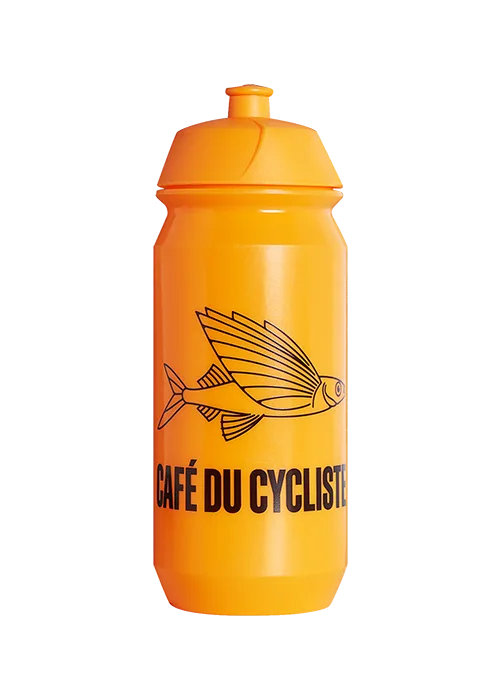
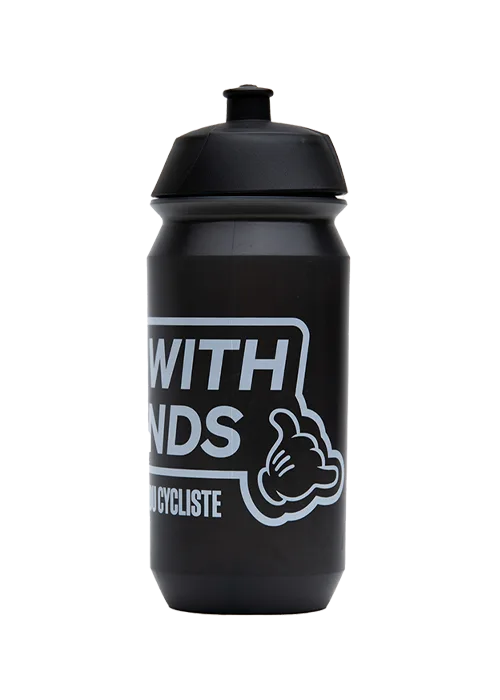
Start with ride time, not bottle count. One 500-600 ml bidon-500ml-flyingfish-white-a76abc4498327c5da4d84c98-761626">bidon-500ml-ride-with-friends-pearl-4ed3e41d349c442ed31a54dc-761625">bidon-750ml-white-8ab471aee93560d59bac9500-761623">bidon-500ml-khaki-f3f85e0a3e3d0b3dfc55582f-761621">bidon covers roughly an hour of steady riding in mild conditions; heat, altitude, and effort push that down. Two cages plus a refill stop is the standard setup for most three-hour rides. Beyond that, either add a third cage, carry a flask as backup, or move to a vest so your hands stay on the bars.
- Under 90 minutes: one bidon, one cage.
- Two to three hours: two bidons, plan one refill.
- Three hours or unsupported: vest or three-plus bottles.
- Racing or group rides: bidons only, refill at neutral stops.
Bidon vs flask: what changes on the bike
A bidon sits in a cage and is squeezed, so you control the flow and can drink without stopping. A flask sits in a jersey pocket or hip pack and is sipped through a bite valve or cap, which is easier on rough terrain but holds less and needs a free hand to retrieve. Neither is better in the abstract; the choice follows where you can reach and how much you need per hour.
When a hydration vest earns its place
A hydration vest moves weight to your back and keeps water accessible without a cage, which helps on long unsupported routes, in races with limited feed zones, and on bikes with no cage mounts. The trade-offs are real: a loaded vest is warmer, changes your center of gravity, and takes longer to refill than swapping a bidon. Test it on a short ride before committing to a long one.
Bidon features that matter in practice
Look at the cap first. A membrane lid that opens and closes in one motion lets you drink without unscrewing anything, and a leak-proof seal keeps grit and road spray out. BPA-free construction matters if the bottle sits in the sun or you leave water in it between rides. Size options let you match cage clearance, so check that the bottle fits your frame before buying a pair.
Decision rules for bottle carry
- Choose bidons when refills are reachable: If you pass a shop, fountain, or feed zone within 90 minutes, two cage bidons cover the ride with less weight on your back. Default setup for most road and gravel rides.
- Choose a flask when you want sips, not gulps: A pocket flask works for short rides and rough terrain where grabbing a cage bottle is awkward, but it holds less and still needs a free hand. Add as backup, not as your only water.
- Choose a vest when refills are far apart: Long unsupported routes, races with limited feed zones, or bikes without cage mounts justify the extra weight and warmth of a vest. Test the fit on a short ride first.
Bidon options in the catalog
- Bidon: Membrane lid opens or closes in one gesture; BPA-free, leak-proof, and available in sizes. One-handed drinking without unscrewing, and a seal that survives rough roads and repeated refills.
- Bidon: Same membrane lid and BPA-free, leak-proof build in the Ride with Friends design, available in sizes. A second graphic option when you want two bottles that are easy to tell apart in the cage.
Match the carry to your ride
Best for
- Road and gravel riders with regular refill access
- Riders who want one-handed drinking without stopping
- Bikes with two working cage mounts
Not for
- Long unsupported routes with no refill points
- Bikes without cage mounts or with tight frame clearance
- Riders who need hands-free sipping on technical terrain