Quick answer
Before you change a single rule, play the game three times and note exactly where you lose. If you lose to the same mechanism every time, that is a difficulty problem worth fixing. If you lose in different places each game, you are still learning, and the fix is more plays, not more house rules. When you do adjust, change one variable at a time so you can tell whether it helped.
A board game that feels too hard is usually not broken. It is either teaching you something you have not learned yet, or it is genuinely tuned tighter than your group enjoys. Those two problems look identical at the table and need completely different fixes.
This guide walks through a diagnosis first, then the house rules that reliably make a board game easier without flattening the decisions that made it worth playing. The same logic applies whether you are playing a solo survival game, a two-player duel, or a big crew-management sim.
Separate the symptom from the cause
The symptom is always some version of "we keep losing." The cause is what you need to identify. Three losses in a row to the same event, the same resource shortage, or the same final round is a pattern. Losses that scatter across different failure points suggest you are still mapping the game's economy and timing.
Write down one line after each loss: what killed you, and when. After three sessions you will have a pattern or you will not. This costs nothing and prevents the most common mistake, which is rewriting rules to fix a problem you have not actually named.
- Note the round you lost in and the single biggest cause.
- Track whether the same player or role struggles every time.
- Count how many rules you had to look up mid-game; high counts mean learning, not difficulty.
When the cause is unfamiliarity, not difficulty
New games feel brutal because you are spending actions on exploration instead of execution. A game like StarDriven: Gateway asks you to assign crew, activate stations, choose sectors, and complete missions, and every one of those is a decision you make worse the first few times simply because you do not know the mission deck yet.

StarDriven: Gateway
The corrective action here is not a house rule. It is a lower-stakes first session: play with the simplest scenario or scoring condition available, talk through your options openly, and treat the game as a tutorial. Give it three full plays before you judge the difficulty at all.
- Play the introductory scenario even if it looks too plain.
- Allow table talk and take-backs in session one only.
- Re-read the rulebook after game one; most confusion resolves on the second pass.
House rules that make a board game easier without breaking it
Effective house rules change the pressure, not the core loop. The safest levers are starting resources, timing, and information. Give everyone one extra starting resource, add a round to the clock, or reveal one hidden piece of information earlier than the rules allow. Each of these softens the margin without removing the decisions you came for.
Avoid rules that delete a whole system, such as ignoring a threat type or removing an entire phase. Those tend to convert a tense game into a boring one, and they are hard to walk back once your group has tasted the easier version.
- Change one variable per session and keep a written note of it.
- Prefer extra time or resources over removed threats.
- Agree the house rule before setup, not after a bad first round.
Adjusting difficulty in co-op games specifically
Co-op games concentrate the problem because one strong player can quietly run the table while everyone else watches. If your group loses constantly and also feels sidelined, the difficulty is not the real issue. Fix the turn structure first: require each player to state their own plan before advice is offered.
If the loss is genuine and shared, co-op games are the easiest genre to tune because there is no opponent to rebalance against. A single extra action per round, or one free recovery, is usually enough to turn a loss into a narrow win.
- Rotate who makes the final call each round.
- Add help only after a loss where everyone contributed.
- Never tune difficulty mid-scenario; finish and adjust next time.
Know when to stop tuning and pick something else
If you have applied two or three adjustments and the game still feels like work, the problem is fit, not difficulty. Some games are designed around a tight margin, and sanding that down removes the reason to play them. That is a legitimate reason to move on.
A useful test: after your adjusted game, ask whether anyone wants to play it again next week. If the answer is no across the group, stop adjusting and choose a game whose natural difficulty already matches your table.
- Two adjustments without improvement means it is a fit problem.
- Smaller, faster games are easier to tune than long campaigns.
- Keep the original rules intact so you can return to them later.
Difficulty diagnosis: symptom, cause, action, stopping point
- You lose to the same mechanism every game: A repeated, specific failure point usually means the game is tuned tighter than your group's comfort level, or one rule is being misread. Re-read that rule first, then apply one small adjustment such as an extra starting resource.
- You lose in different places each game: Scattered losses are the signature of inexperience with the game's economy and timing, not of excessive difficulty. Play three more sessions before changing anything.
- You win, but nobody at the table had fun: This is a player-count or turn-structure problem wearing a difficulty costume, common in co-op games where one voice dominates. Fix who decides each turn before you touch the difficulty.
- Two adjustments later, it still feels like work: You have changed the pressure twice and the game has not opened up, which points to a mismatch between the design and your group. Stop tuning and choose a different game; keep your notes so you can revisit it later.
Games where difficulty tuning comes up often
- StarDriven: Gateway: An epic starship simulation about managing crew, assigning them to stations, and completing missions across scenarios with different scoring conditions. Because scenarios carry different scoring conditions, the simplest one is your natural training mode before you consider any house rule.
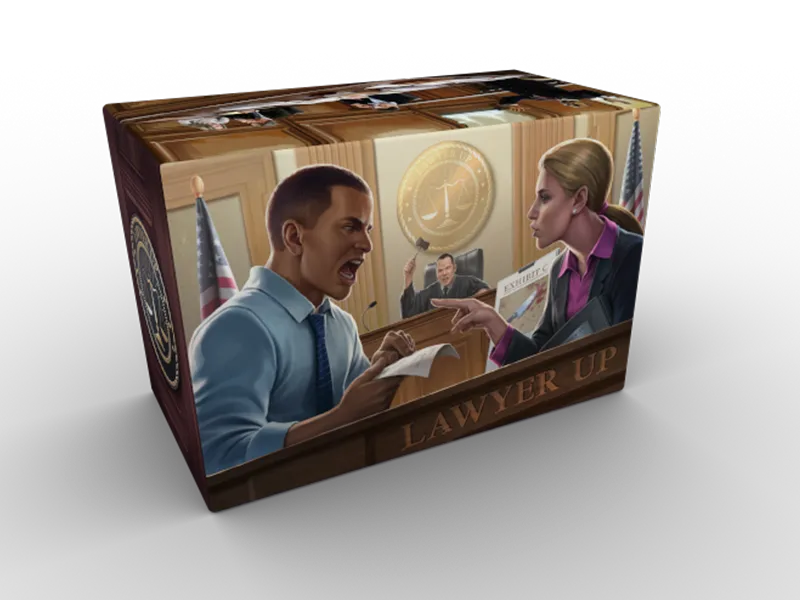
- Lawyer Up: An asymmetrical two-player courtroom card game with a Discovery draft followed by a Trial where players call witnesses and play arguments. In a two-player asymmetric game, difficulty is relative; if one side keeps losing, the fix is usually role swapping rather than a rules change.
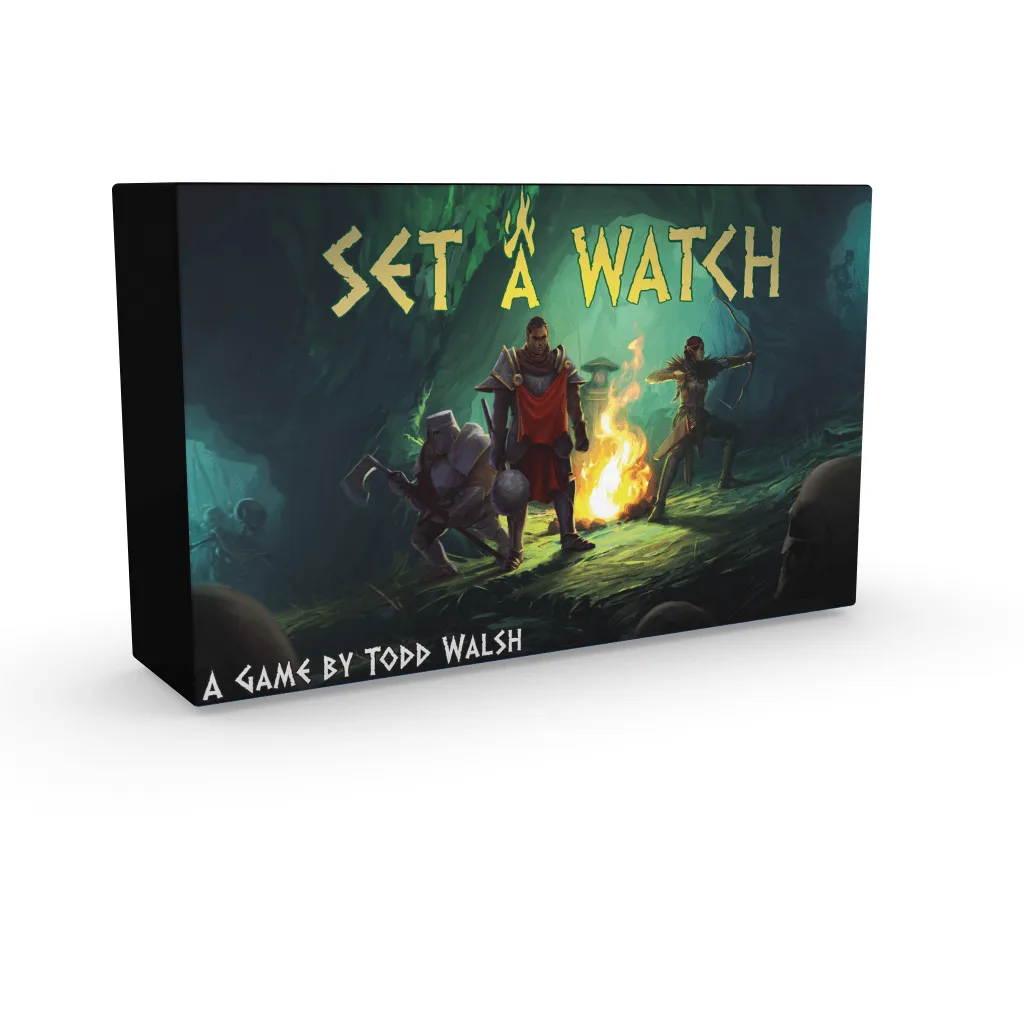
- Set a Watch: Metal Coins & Cloth Pouch: Includes 20 metal coins and a cloth storage pouch, designed to enhance the Swords of the Coin experience. Physical components do not change difficulty, but clear, easy-to-handle tokens reduce the bookkeeping errors that make a game feel harder than it is.
Difficulty is a dial, not a verdict. Diagnose the cause, change one thing at a time, and be willing to stop when the game's natural challenge is simply not the challenge your table wants.