Myth 1: Decaf always tastes flat or papery
The idea that decaf is inherently dull is a broad claim, and the supplied record for CALM doesn't support applying it to this coffee. CALM is described as an original medium roast specialty-grade organic coffee with a taste profile of dark chocolate, vanilla, and sweet red apple-like mild acidity. That's a specific flavor description, not a promise that every decaf tastes the same.
What the record does not include is a side-by-side tasting result or a claim that CALM is indistinguishable from a caffeinated roast. So the honest takeaway is narrower: flavor depends on the coffee, and CALM's supplied profile gives you something concrete to evaluate rather than a generic decaf assumption.
Myth 2: All decaf is made with chemical solvents
This myth gets repeated often, but the supplied CALM record describes a different method. The coffee is decaffeinated with a chemical-free natural water process that removes 99.9% of caffeine and retains high antioxidant properties. The label also lists Naturally Water Processed.
That doesn't tell you how every decaf on the market is made, and the record doesn't compare methods. It does give you a verifiable statement about this specific bag: if solvent-free processing is your concern, CALM's supplied description addresses it directly.
Myth 3: Decaf has no meaningful antioxidants
The supplied CALM record states that the natural water process retains high antioxidant properties. That's the extent of the antioxidant claim in the evidence provided. There are no numbers, ORAC values, or comparisons to caffeinated coffee in the record, so treat any specific antioxidant figure you see elsewhere as unverified until you check the source.
The practical point: decaf does not automatically mean stripped of everything else. For CALM, the retained antioxidant properties are part of the supplied product description.
Myth 4: Decaf means zero caffeine, no exceptions
CALM's record says the process removes 99.9% of caffeine. That is not the same as 100%. If your reason for choosing decaf is strict caffeine avoidance, the supplied evidence supports a very low residual level, not an absolute zero. The record does not give a milligram figure per cup, so we can't state one here.
For most people cutting back on caffeine, 99.9% removal is the relevant number. For medical or pregnancy-related decisions, the supplied information is not a substitute for advice from a qualified professional.
Myth 5: Decaf ground coffee is a compromise on ingredients
The CALM record lists one ingredient: 100% specialty-grade organic Arabica coffee. It also states that Purity Coffee contains only high-quality Arabica coffee with no additives or allergens. The bag is USDA Organic Certified.
One limit worth naming: the supplied evidence does not include a full allergen statement beyond that no-additives/no-allergens line. If you have a specific allergy, check the packaging and the linked certificate of analysis rather than relying on a general claim.
Myth 6: Ground decaf keeps for months once opened
This is the myth with the most practical cost. The supplied brewing recommendations say that once the bag is opened, you should try to keep air out and consume within 10 days for optimum aromatics. That's a freshness window for flavor, not a food-safety expiration date, and the record doesn't give a separate shelf life.
For storing decaf ground coffee, the supplied guidance is simple: minimize air exposure after opening. The record does not specify a container type, freezer guidance, or a room-temperature limit, so don't treat those as manufacturer instructions. If you brew slowly, the 12 oz bag size matters more than you might think.
What the CALM record actually confirms
-
CALM: Decaf Ground Coffee: Decaffeinated with a chemical-free natural water process that removes 99.9% of caffeine and retains high antioxidant properties. Directly addresses the solvent and zero-caffeine myths with a specific, supplied claim.
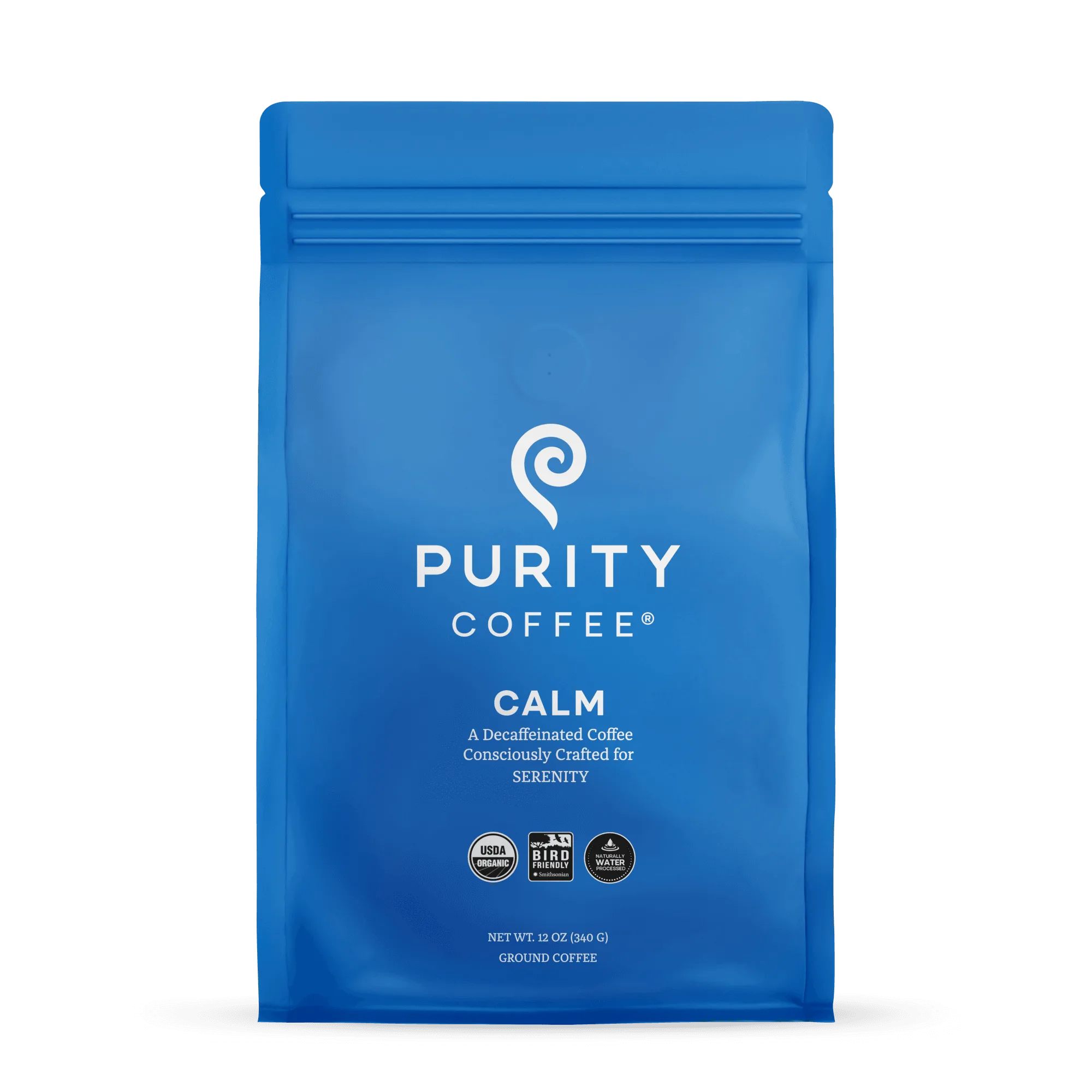
CALM: Decaf Ground Coffee
-
CALM: Decaf Ground Coffee: Ingredient: 100% Specialty-grade organic Arabica coffee; USDA Organic Certified. Supports the ingredient myth with a one-item ingredient list rather than a marketing slogan.
-
CALM: Decaf Ground Coffee: Taste profile: dark chocolate, vanilla, sweet red apple-like mild acidity. Gives you a concrete flavor expectation instead of the vague 'decaf tastes bad' assumption.
-
CALM: Decaf Ground Coffee: One 12 oz bag = about 25-30 8 oz cups of coffee. Helps you plan around the 10-day post-opening freshness window.
-
CALM: Decaf Ground Coffee: Medium-fine grind, best suited for electric drip, manual pour-over, AeroPress, or Clever Dripper; use water between 195F and 205F. Brewing method affects what you taste, so some 'decaf tastes weak' complaints are really grind and water temperature issues.
Turning the myths into a better cup
Once you strip away the assumptions, the supplied instructions for CALM are short and specific. These are the steps the record supports, not a general decaf routine.
- Start with 4 Tbsp (20g) per 12-oz mug: The supplied preparation instruction says to start there and adjust to taste. That's a supported starting point, not a rule you have to keep.
- Match the brewer to the grind: The medium-fine grind is listed as best for electric drip, manual pour-over, AeroPress, or Clever Dripper. Using a method outside that list is your call, but the record doesn't endorse it.
- Check your water temperature: The record specifies 195F to 205F. Water that's too cool can make any coffee taste flat, which is one reason 'decaf tastes weak' can be a brewing problem rather than a bean problem.
- Use filtered water and clean equipment: This is the record's own care note. It's a small habit that removes variables when you're judging flavor.
- Keep air out after opening: The 10-day optimum-aromatics window is the record's guidance. The record does not specify a storage container, so choose one that limits air exposure and use your judgment.
Where the evidence stops
A myth-busting article should be clear about what it can't settle. The supplied CALM record does not include a caffeine milligram count per cup, a full allergen panel, a shelf-life date beyond the 10-day post-opening freshness note, or a comparison with caffeinated coffee. It also doesn't claim the water process is universal across the decaf industry.
That's not a knock on the coffee. It's a reminder that the strongest version of each myth correction is the one tied to a specific supplied fact, and the weakest version is the one that fills gaps with confident guesses. If a claim matters to your health or your purchase, check the bag and the linked certificate of analysis before you decide.