Quick Answer
Most camping griddle setup mistakes come from treating a portable griddle like a campfire: guessing at level ground, ignoring wind, and storing it loose in the car. Instead, level the griddle before you cook, block wind around the cooking surface, and carry it in a padded bag so the body and lid stay protected between trips. The fixes are small, but they decide whether your next outdoor meal is even or frustrating.
Myth: Any Flat Spot at the Campsite Works
A picnic table or a patch of dirt can look flat and still slope enough to pool oil on one side of the griddle. That matters because a griddle cooks by contact: when the surface tilts, one zone runs hotter and wetter while the opposite side dries out. Before you light anything, set the griddle down, press a hand on each corner, and check for rocking. If it moves, reposition it or shim the low leg until the frame sits solid.
Myth: Wind Only Matters for the Flame
Wind steals heat from the cooking surface, not just the burner, so even a shielded flame can leave you with a cold half-griddle. On exposed campsites, set up with your back to the prevailing breeze, use the vehicle or a cooler as a windbreak, and keep a folding wind guard around the griddle body if you have one. If you are cooking on a tailgate or picnic table, rotate the griddle so the wind hits the shortest side of the cooking surface rather than sweeping across it.
Myth: A Hot Griddle Needs No Prep Area
Camping setups often skip the landing zone, so raw food, tongs, and cooked food end up competing for the same square foot of table. A stackable tray set gives you separate surfaces for prepping ingredients and serving finished dishes, and food-safe plastic means you can move them from cooler to table without a plate swap. Set trays on the opposite side of the griddle from the wind, and keep the cooking surface clear except for the food and tools in active use.
Myth: Carrying a Griddle Bare Is Fine for Short Trips
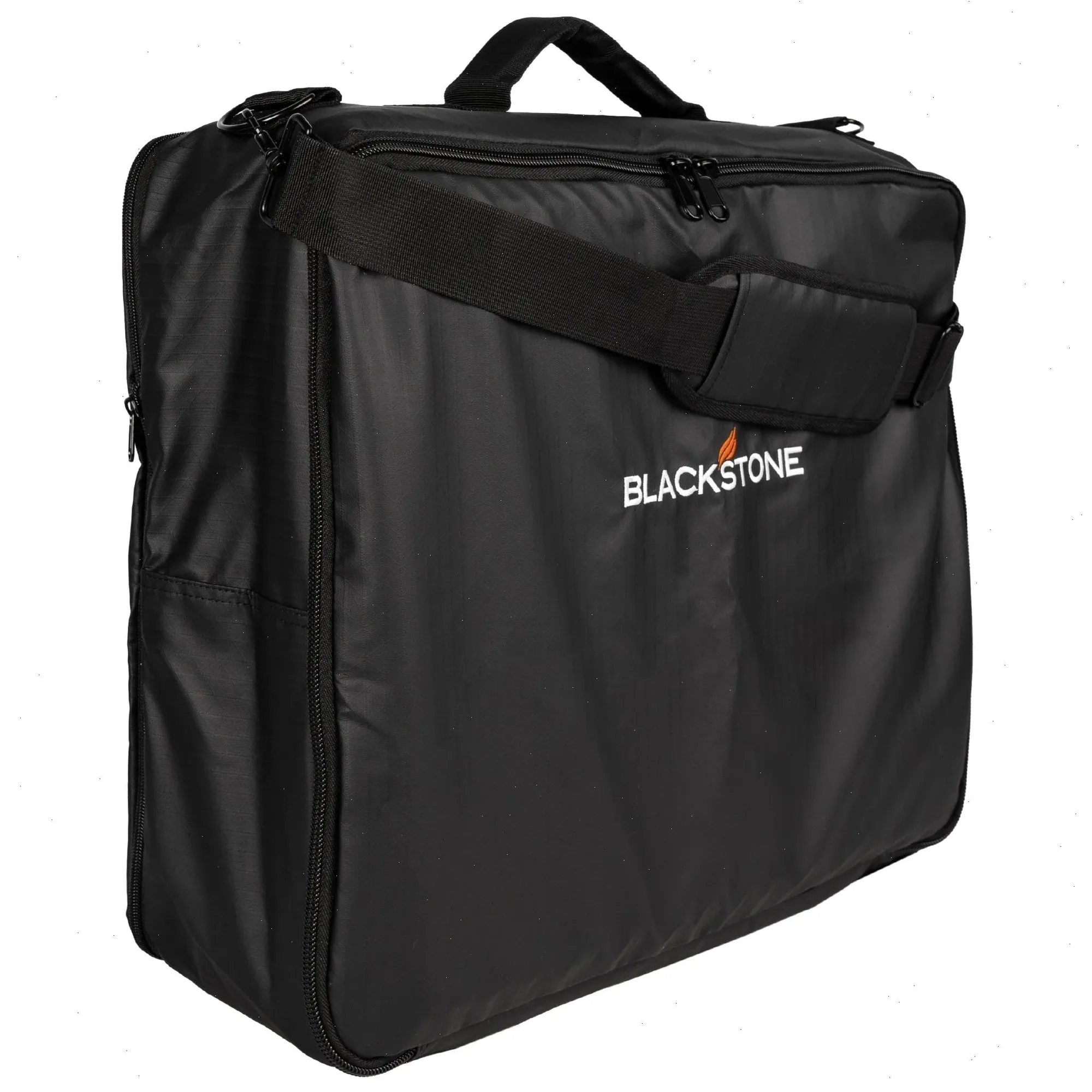
A griddle that rides loose in a trunk or truck bed can shift, knock its lid, and collect dust and moisture before it ever reaches the campsite. A padded carry bag with a shoulder strap and reinforced stitching keeps the griddle contained and weather-resistant between trips, which protects the surface you seasoned. Pack the griddle last so it sits on top of softer gear, and let it cool completely before it goes in the bag.
Setup Verdicts: What to Believe
- Any flat spot will do: A campsite surface can look level and still tilt enough to pool oil and create uneven heat zones. Verdict: false. Check for rocking and level the griddle before you cook.
- Wind only affects the flame: Wind pulls heat off the cooking surface, so a shielded burner can still leave half the griddle cold. Verdict: false. Position the griddle with a windbreak and rotate it so wind hits the short side.
- A bare griddle travels fine: An unprotected griddle can shift, knock its lid, and pick up dust or moisture on the way to the campsite. Verdict: false. Use a padded, weather-resistant carry bag and pack the griddle on top.
Setup Gear That Solves These Mistakes
- Camping Griddle Carry Bag: Camping Griddle Carry Bag: padded shoulder strap, reinforced stitching, and weather-resistant material. Protects the griddle in transit and keeps it ready for the next outdoor meal instead of rattling loose in the vehicle.
- Serving Trays (4-Pack): Serving Trays (4-Pack): food-safe plastic, dishwasher safe, and stacks neatly for storage. Creates separate prep and serving zones at the campsite and cleans up easily when you get home.