Quick answer
Wear the canicross belt low, across the top of your hip bones, with the tow line leaving at roughly hip height and staying taut enough that the dog pulls the belt rather than you. If pain sits in your lower back, the belt is usually riding too high or the line is going slack; if it sits in one hip, the belt is usually twisted or the line is pulling to one side. Fix the belt position first, then adjust the line before you change your dog's harness.
Why belt height decides where the load lands
A pulling belt transfers force through your pelvis, so its height changes which muscles absorb that force. Worn low and level across the iliac crest, the pull is taken by your hips and glutes, which are built for it. Worn high on the waist, the same pull levers through your lumbar spine and shows up as lower back fatigue within a few kilometres.
Check the height standing still before you run. The belt should sit below your natural waist, roughly where a climbing harness waist belt rests, and stay there when the dog leans into it. If it climbs during the first few minutes, the fit is wrong, not the dog.
Line angle and tension: the part most runners skip
The tow line should leave your body at about hip height and stay under light tension. A slack line means you are running up to the dog and then getting jerked, which is a common source of both back jolts and hip twisting. A line that angles upward toward a high attachment point drags the belt up your torso with every stride.
If your setup allows it, keep the line short enough that it never touches the ground on flat terrain. On steep descents, let it run longer rather than bracing against it, and control speed with your own braking instead of fighting the pull through your lower back.
Asymmetry: when only one side hurts
One-sided hip or knee pain usually means the pull is not centred. A belt that has rotated on your hips, a line attached off-centre, or a dog that consistently runs to one side all load the same hip repeatedly. Rotate the belt back to level, then watch your dog for a few minutes and note which side they favour.
If the dog drifts to one side, correct it with your position rather than by pulling back with your arm. Holding a line in one hand for a whole run is enough to create a lateral twist through the pelvis even when the belt itself is level.
Gear choices that make good fit easier
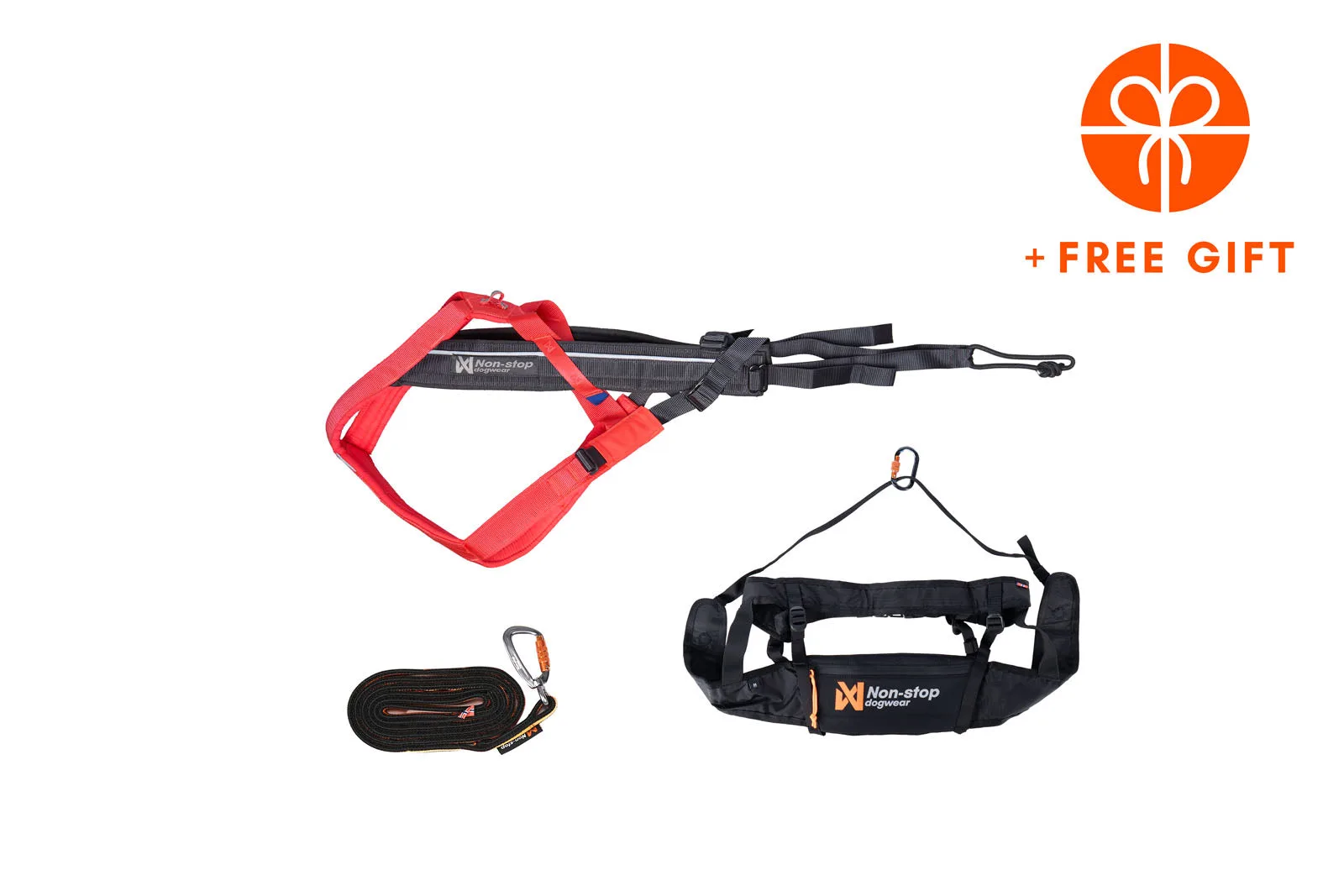
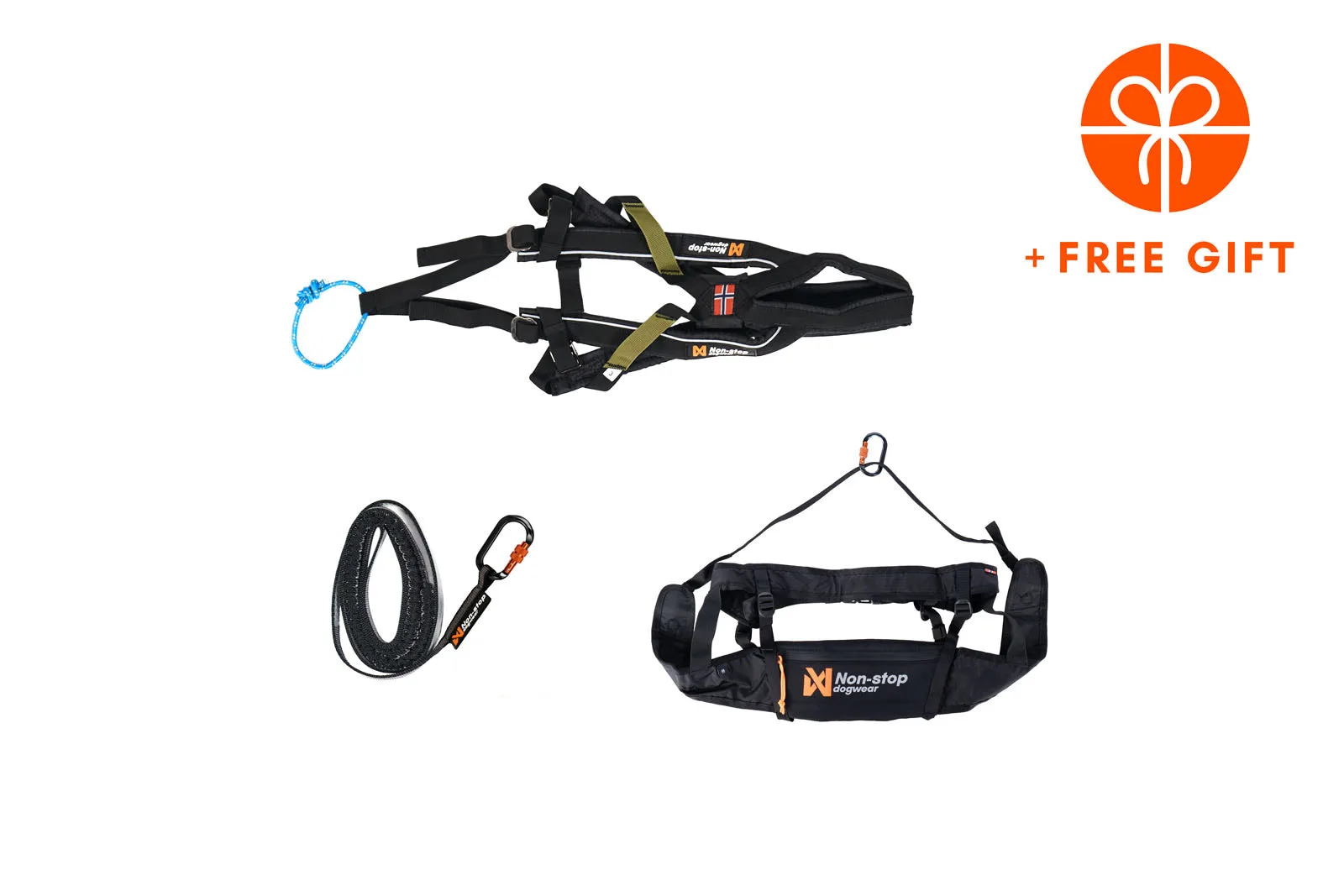
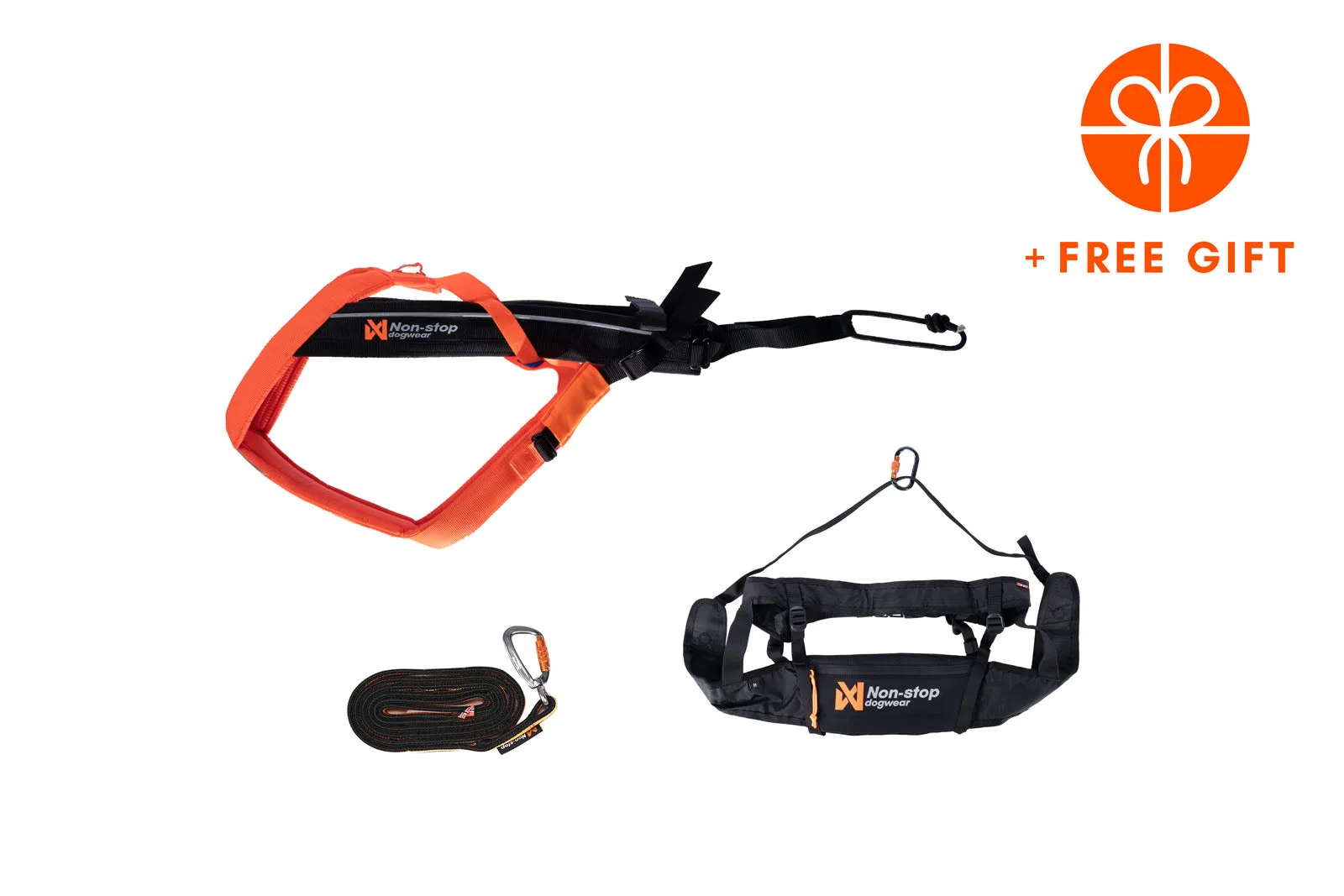
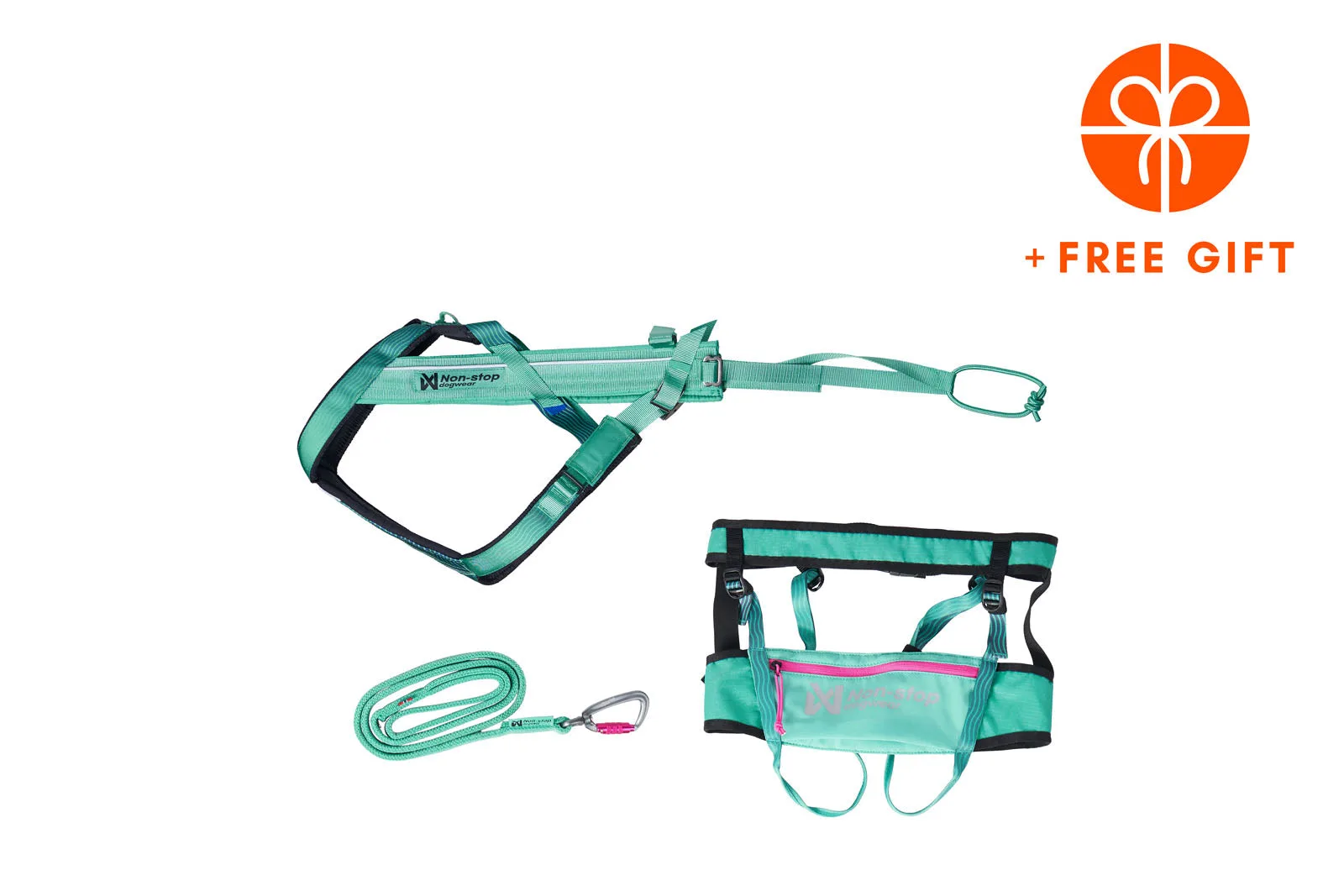
Adjustability matters more than padding for fit problems. A belt with independent adjustments for waist and leg or hip straps can be set level even if your hip shape is asymmetric, which a single-strap design cannot do. Rope-style leads with a locking carabiner also let you shorten the line cleanly for tight trails without re-tying knots mid-run.
Weight and bulk are a tradeoff. A heavier, wider belt spreads load well on long, steady runs but feels clumsy on technical singletrack. If most of your running is short and fast, a lighter, narrower belt is often the better fit even though it offers less surface area.
Diagnose your belt problem
- Lower back ache after 20-30 minutes: The belt is riding at or above your natural waist, so the pull levers through your lumbar spine instead of your hips. Lower the belt to sit across the top of your hip bones and re-tighten so it cannot climb. If the ache returns on the next run at the correct height, stop and have your running gait checked rather than adjusting the belt further.
- Sharp jolts rather than steady pull: The line is going slack and snapping taut. Shorten it so it stays under light tension on flat ground, and run closer to the dog on descents instead of bracing. If the terrain makes a taut line impossible, switch to a shorter route or a different activity for that session.
- One hip or knee hurts, the other does not: The belt has rotated or the dog is running consistently off-centre. Level the belt, then correct the dog's line with your own position rather than your arm. If the asymmetry persists after two or three runs with a level belt, see a physiotherapist before continuing.
Gear that supports a correct belt fit
- Rock adjustable leash: A multifunctional rope leash, ideal for hands-free walking, camping and other activities with your dog. Hands-free use keeps your arms out of the equation, so the pull goes through the belt and hips instead of twisting your torso.
- Move leash: A soft and comfortable, yet solid dog leash developed for an active lifestyle, equipped with a Twistlock carabiner to keep your dog secure. A secure locking connection means you can shorten or reposition the line without worrying about the attachment working loose mid-run.
- NSD Cap: Light and comfortable cap with adjustment possibility on the back. A small comfort item, but a cap that stays put removes one distraction on long runs where you are already monitoring belt position.