Quick answer
Cat collar bells add a fun touch and help you keep track of your cat, but they need to be chosen and replaced carefully to avoid discomfort or injury. This guide explains how to select, attach, and replace bells safely.
Why bell size and sound matter for your cat
A bell that is too heavy can strain a cat's neck over time, especially for kittens or small breeds. A bell that is too loud may startle or stress your cat. Look for bells that are lightweight and produce a gentle jingle rather than a sharp ring.
Cats with sensitive hearing may benefit from bells that have a softer tone. Always test the bell near your cat before attaching it to the collar to gauge their reaction.
When to replace a cat collar bell
Bells can wear out over time. The brass connector may corrode, the clapper can break, or the bell can become dented and produce a dull sound. If the bell no longer rings clearly or the connector looks worn, replace it immediately to prevent the bell from falling off.
Cats that spend time outdoors may lose bells more often due to rough play or weather. Check the bell weekly and replace it as soon as you notice any damage.
How to choose and replace cat collar bells
- Check the bell weight and size: Hold the bell in your hand and feel its weight. For an average adult cat, a bell that weighs less than 5 grams is ideal. If the bell feels heavy, choose a smaller or lighter option. A bell that is too heavy can cause neck strain over time.
- Test the sound level: Shake the bell near your ear. It should produce a soft jingle, not a loud ring. If the sound is harsh, look for a bell with a smaller clapper or a padded interior. A bell that is too loud can stress your cat and may even damage hearing.
- Attach the bell securely to the collar: Slide the brass connector through the collar ring or loop, then pinch it closed with pliers. Make sure the bell hangs freely and does not get caught on the collar fabric. A loose bell can snag on furniture or become a choking hazard.
- Check the bell weekly for wear: Look for cracks, dents, or a dull sound. If the bell no longer rings clearly or the connector shows rust, replace it immediately. A damaged bell can fall off and become a swallowing risk for pets or children.
- Replace the bell when needed: Remove the old bell by opening the brass connector with pliers. Attach the new bell using the same method. Dispose of the old bell safely. Always use pliers to avoid bending the connector too much, which can weaken it.
Product facts
-
Cat Collar Replacement Bells: Cat Collar Replacement Bells feature a durable brass connector and come in assorted colors. The brass connector holds securely on most collars, and the assorted colors let you match your cat's personality or collar style.
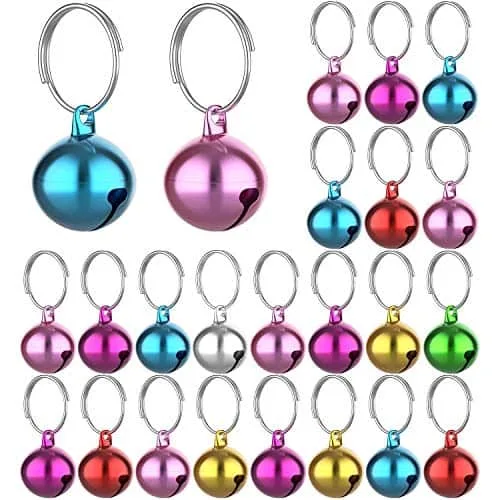
Cat Collar Replacement Bells