Quick answer
For a small studio, a 33-inch softbox is the sweet spot: large enough to wrap light softly for head-and-shoulders or three-quarter portraits, yet compact enough to position without hitting walls. Start with one 33-inch hexa softbox and a grid, then adjust based on your room's diagonal and ceiling height.
Measure your space before you shop
Grab a tape measure and note three numbers: the distance from your subject to the background, the distance from your light position to the subject, and the ceiling height. In small rooms, the limiting factor is usually the light-to-subject distance. A softbox that is too large for that distance will wrap light around the subject and spill onto the background, reducing contrast. As a rule, the softbox's diagonal should be no more than the light-to-subject distance divided by 1.5 for a soft but controllable look. If your room is under 10 feet wide, a 33-inch modifier is often the largest you can comfortably feather without clipping the frame.
Match softbox shape to your portrait style
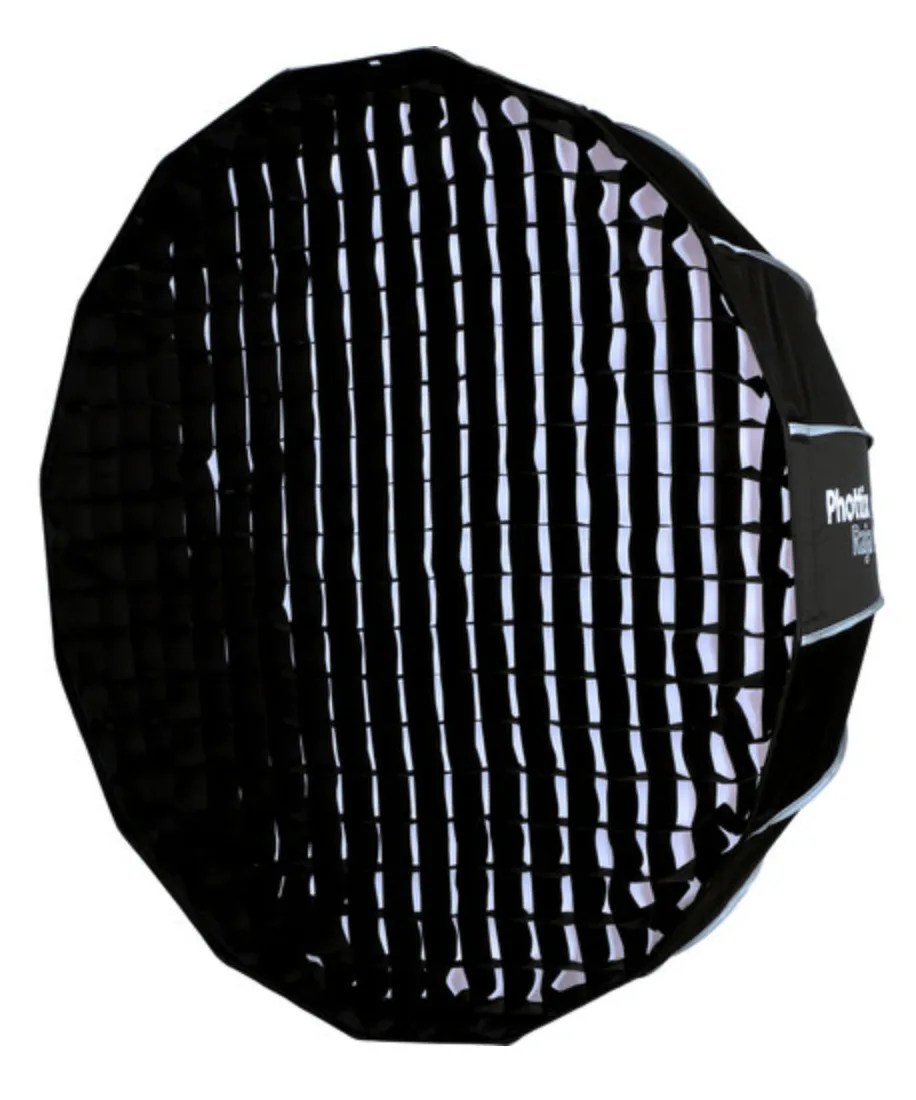
Hexagonal and octagonal softboxes produce round catchlights and a natural falloff that flatters faces. Rectangular boxes give more directional control for edgy or fashion looks. In a tight studio, a hexa shape is more forgiving because you can rotate it to fit corners. The Phottix Raja Hexa Softbox with Grid (33") is a good example: its umbrella-like opening mechanism and centralized metal joint let you set it up in seconds, which matters when you are constantly reconfiguring a small space. The included grid is essential for controlling spill in rooms with low ceilings or close walls.
Plan your modifier placement and grid use
Position the softbox just outside your camera's frame, angled down at 45 degrees for classic portraits. In small rooms, use the grid to narrow the light spread and prevent it from bouncing off nearby walls. Without a grid, light bounces everywhere and flattens the image. With a grid, you can still get soft shadows but with more direction. If you need to light a full-length portrait in a tight space, consider a larger softbox placed farther back, but check that you have at least 6 feet of light-to-subject distance. If not, stick with a 33-inch box and move the subject closer to the background for a darker, more dramatic look.
Step-by-step softbox size selection
- Measure your room's usable diagonal: Stand in your intended shooting position and stretch a tape measure to the farthest corner where you might place a light. Subtract 2 feet for walking space. That number is your maximum light-to-subject distance. Checkpoint: if the diagonal is under 8 feet, a 33-inch softbox is your practical maximum.
- Decide between 24-inch, 33-inch, and 48-inch: 24-inch boxes are for headshots only and risk harsh falloff. 33-inch boxes handle head-and-shoulders and three-quarter portraits. 48-inch boxes need at least 8 feet of throw and are usually too big for small studios. Common mistake: buying a 48-inch box for a 10x10 room; it will spill light everywhere and limit your angles.
- Choose a shape that fits your space: Hexa or octa shapes let you rotate the box to fit tight corners and give round catchlights. Rectangular boxes are better for edge lighting but harder to place in corners. Checkpoint: hold a cardboard mock-up of the box in your space to see if you can angle it without hitting walls.
- Add a grid for control: A grid narrows the light spread by 40-60 degrees, reducing wall bounce. Use a 40-degree grid for portraits, 20-degree for dramatic isolation. Common mistake: skipping the grid in small rooms; without it, light bounces off nearby walls and flattens contrast.
- Test and adjust with a single light: Set up one softbox at 45 degrees, take a test shot, then move it closer or farther. If shadows are too harsh, move the box closer; if too flat, move it farther or add a grid. Checkpoint: the softbox should be just outside the frame; if you see it in the shot, it is too close or too large.
Product facts
- Phottix Raja Hexa Softbox with Grid (33"): Phottix Raja Hexa Softbox with Grid (33") features an umbrella-like opening mechanism with a centralized metal joint, heat-resistant fabric, and a Bowens S-mount speed ring. The quick setup and Bowens mount make it easy to use with common strobes in a small studio, while the heat-resistant fabric allows continuous lights without risk.