Quick answer
For a balanced ready-to-drink cold brew, start with 1 part coffee to 8 parts water by weight. If your cold brew tastes weak, the usual culprits are too much water, too little coffee, or too short a steep. With pre-measured portion packs, the fix is simple: add another pack or reduce the water, then steep 14–18 hours in the fridge.
Why portion packs change the cold brew math
Whole-bean recipes ask you to weigh coffee, which is hard to do when you are camping, traveling, or brewing in an office kitchen. Portion packs remove that step. Each pack holds a fixed amount of coffee, so your only variables are water volume and steep time. That makes the cold brew coffee ratio easier to control, but it also means you need to know how many packs your pitcher or jar actually needs.
A typical 2.25 oz portion pack is sized for brewing a pot of hot coffee, not for a single glass of cold brew. If you treat one pack as a single serving and add a full pitcher of water, you will get a thin, tea-like result. Instead, count packs against your water volume, not against the number of people drinking.
The ratio to start with
Use this as your baseline: 1 part coffee to 8 parts water by weight for ready-to-drink cold brew. In volume terms, that is roughly 1 cup of ground coffee to 4 cups of water. If you want a cold brew concentrate ratio you can dilute later, tighten it to 1 part coffee to 4 parts water.
Portion packs make this practical. For a 1-quart (32 oz) pitcher at 1:8, you need about 4 oz of coffee by weight, which is close to two 2.25 oz packs. For a half-gallon (64 oz) pitcher, use four packs. These are starting points, not laws. Adjust by one pack at a time until the cup tastes right to you.
- Ready-to-drink: 1 part coffee to 8 parts water
- Concentrate: 1 part coffee to 4 parts water
- 1-quart pitcher: about 2 portion packs
- Half-gallon pitcher: about 4 portion packs
How to fix cold brew coffee that is too weak
Weak cold brew almost always comes down to one of three things: too much water, too little coffee, or too little time. Before you dump the batch, taste it and diagnose. If it tastes watery but still has some coffee flavor, you can often rescue it by steeping longer or by adding another portion pack and steeping a few more hours.
If it tastes sour or grassy, the coffee is under-extracted and needs more time, not more coffee. If it tastes flat and hollow, you likely need more coffee. Once you have added water, you cannot take it back out, so always start with less water than you think you need and top up after steeping.
Steep time and temperature matter as much as the ratio
Cold brew is forgiving, but it is not instant. At room temperature, 12–18 hours is usually enough. In the fridge, plan on 14–18 hours. If you go past 24 hours, you risk bitterness and a muddy texture. If you pull it too early, you get a weak, sour cup even if your ratio was correct.
Keep the grounds fully submerged. Portion packs that float on top will not extract evenly, which is a common cause of cold brew coffee too weak. Stir once at the start, then leave it alone.
When to stop adjusting and change your approach
If you have added coffee, extended the steep, and the cup still tastes thin, the problem is likely the coffee itself, not your technique. Darker roasts and coffees with lower acidity tend to hold up better in cold water. If you are using a light, floral roast, it may simply not have enough body for cold brew no matter how you adjust the ratio.
At that point, switch to a coffee built for cold extraction or move to a concentrate you dilute to taste. Do not keep adding packs to a batch that has already gone bitter. Once bitterness sets in, more coffee will not fix it.
Cold brew diagnosis: symptom, cause, fix
- Symptom: watery, tea-like cold brew: Cause: too much water for the amount of coffee, or too few portion packs for the pitcher size. Fix: add one portion pack or reduce water by 25%, then steep another 4–6 hours. Stop when the cup has body but is not bitter.
- Symptom: sour or grassy flavor: Cause: under-extraction from too short a steep or coffee that was not fully submerged. Fix: steep 4 more hours and stir to submerge the grounds. If it is still sour after 18 hours, your grind may be too coarse.
- Symptom: harsh, bitter, or muddy cup: Cause: over-extraction from steeping longer than 24 hours or using too fine a grind. Fix: shorten the next steep to 14 hours and use a coarser grind. Do not add more coffee to a bitter batch.
- Symptom: weak even after adjusting ratio and time: Cause: the coffee itself may be too light or delicate for cold extraction. Stop adjusting and switch to a darker roast or a cold brew concentrate you dilute to taste.
Products that fit this method
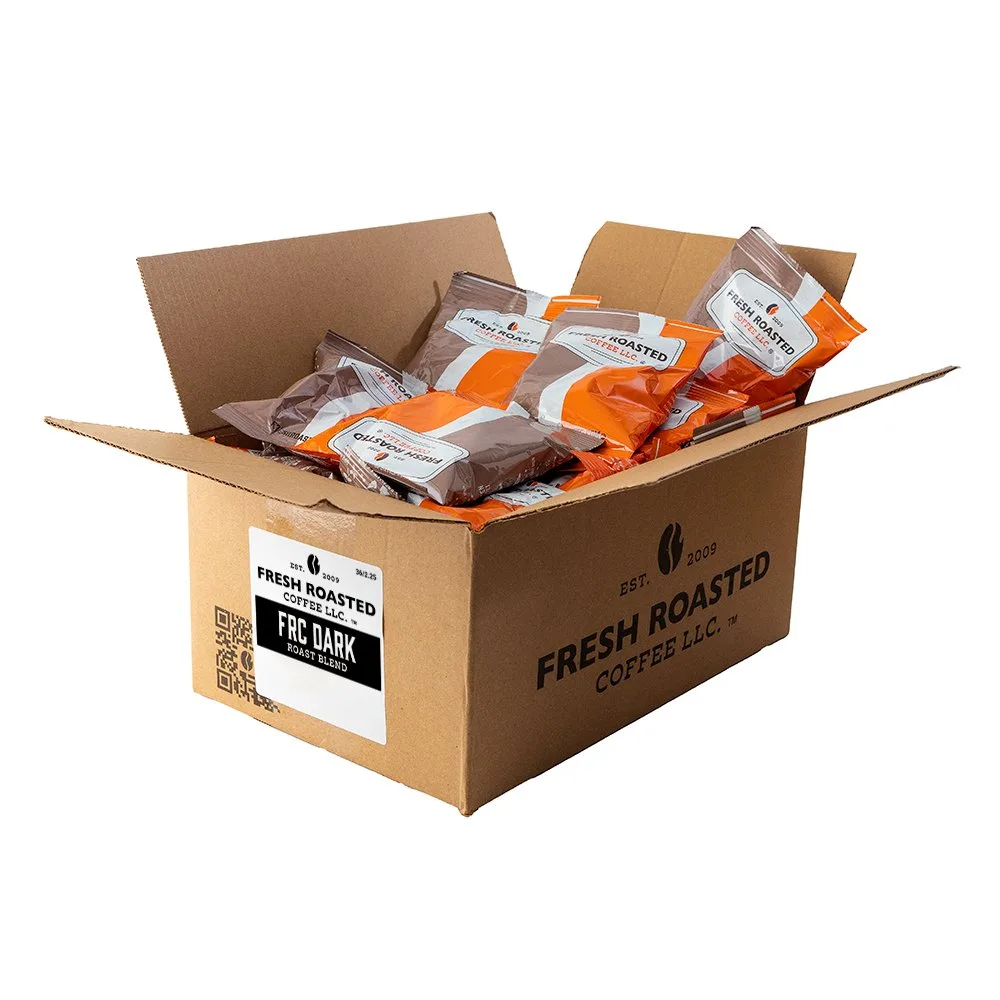
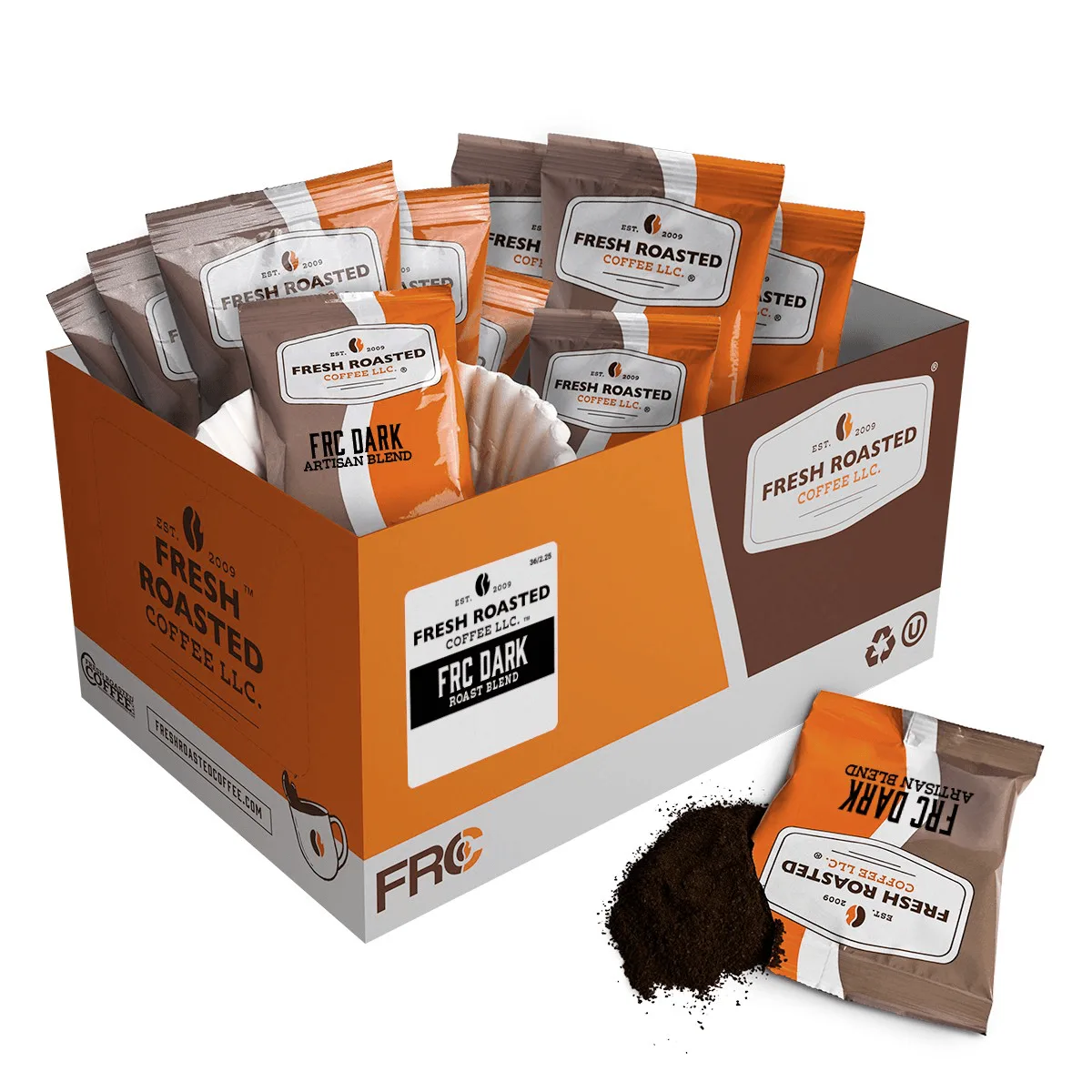
- 2.25 oz - Coffee Portion Packs: Italian Roast Frac Packs are pre-measured, freshly roasted portion packs sold in 36-count boxes, with flavor and count options. Pre-measured packs remove the scale from cold brew math, so you can count packs instead of weighing grounds. The dark Italian roast also has the bold, heavy body that holds up well in cold water.
- Organic Sumatra - Roasted Coffee: Organic Sumatra is a roasted coffee with earthy, pepper, and chocolate cupping notes, available in multiple sizes and grind options. Its lower acidity and smooth chocolate character make it a strong candidate for cold brew if you want a rounder, less sharp cup. Choose a coarse grind for steeping.
- Hario® Ka-Ku Cold Brew Tea Bottle: The Hario Ka-Ku Cold Brew Tea Bottle has a 1.2L capacity and is designed to be stored upright or sideways without spills. A 1.2L bottle is about 40 oz, so it fits roughly two to three portion packs at a ready-to-drink ratio. The spill-resistant design makes fridge storage easier during a long steep.