Quick answer
Most sunglasses problems fall into three groups: surface scratches, hinge or screw looseness, and frame misalignment. You can fix a loose hinge yourself with a precision screwdriver, and you can slow surface wear with careful cleaning and storage. Deep lens scratches, cracks, and bent metal cores need a professional or a replacement. Decide by symptom, not by how much the frame originally cost.
Sunglasses rarely fail all at once. They loosen, scratch, or drift out of alignment gradually, usually because of how they are stored and cleaned. Knowing which symptom you are looking at tells you whether a five-minute fix will work or whether you are wasting time.
This guide separates each common sunglasses problem into symptom, likely cause, corrective action, and the point where you should stop and choose another option. It also covers the materials that make some frames more repairable than others, using real examples from the Monos range.
Symptom: Fine scratches on the lens surface
Fine, hairline scratches that you can see at an angle but not through are usually caused by abrasive particles trapped on the lens during cleaning. Wiping a dry lens with a shirttail or a rough towel drags dust and sand across the surface. The scratch is shallow and often sits in the coating rather than the lens material itself.
Start by rinsing the lens under lukewarm water to remove grit, then clean with a microfiber cloth and a drop of mild soap. For very light surface marks, a lens-safe optical cleaner can reduce their appearance, but it will not remove a scratch that has cut into the lens. Never use toothpaste, baking soda, or abrasive polishes; they add more scratches than they remove.
- Rinse before you wipe, every time.
- Keep a microfiber cloth in your bag instead of using clothing.
- Store sunglasses in a hard case, not loose in a pocket or bag.
Symptom: A loose or wobbly hinge
A hinge that feels floppy or lets the temple swing freely is almost always a loose screw rather than a broken hinge. Vibration from travel, repeated opening and closing, and temperature changes gradually back the screw out. This is the most repairable sunglasses problem on the list.
Use a small precision screwdriver that matches the screw head, and turn clockwise until snug. Do not overtighten; the screw threads into acetate or metal and can strip. If the screw keeps loosening, a tiny dab of clear nail polish or removable thread locker on the threads gives it grip. If the screw is missing, most opticians will fit a replacement for a small fee or free.
- Tighten screws before they fall out, not after.
- Work over a table so a dropped screw does not disappear.
- If the hinge itself is cracked or the barrel is deformed, stop and see a professional.
Symptom: Frames that sit crooked or pinch
If one lens sits higher than the other, or the temples press unevenly against your head, the frame has likely been bent. This happens when sunglasses are shoved into a bag, sat on, or stored with one temple folded incorrectly. Acetate frames can sometimes be adjusted with gentle heat, but the margin for error is small.
Do not try to bend a frame cold. Acetate can snap, and metal cores can kink. A qualified optician has the tools to warm and adjust the frame safely, usually in minutes. If the frame has a visible crack at the hinge or bridge, adjustment will not hold, and replacement is the better path.
- Check alignment by placing the sunglasses upside down on a flat surface; both temples should touch evenly.
- Never leave sunglasses on a car dashboard, where heat can warp acetate.
- If adjustment has already been attempted twice and the frame springs back, stop.
Symptom: Peeling or bubbling lens coating
A coating that bubbles, peels, or develops a crazed pattern is usually the result of heat exposure or chemical contact. Leaving sunglasses in a hot car or cleaning them with alcohol-based products can break down lens coatings over time. This is different from a scratch because the damage is in the coating layer, not the surface.
There is no reliable DIY fix for coating failure. Once the coating lifts, it will continue to lift, and the lens will look cloudy in that area. If the sunglasses are still under warranty, contact the manufacturer. If not, compare the cost of replacement lenses against a new pair; for many frames, replacement lenses are the more economical choice.
- Avoid alcohol, ammonia, and household glass cleaners on coated lenses.
- Do not leave sunglasses in direct sun or a hot car.
- If the coating is peeling across the center of your vision, stop using them for driving.
Symptom: Nose pads that have hardened or fallen off
On frames with adjustable nose pads, the pads are usually held by a small screw or push-in mount. Over time, the silicone hardens, yellows, or tears, and the pad can drop off. This is a common and inexpensive fix. Replacement pad kits are widely available, and an optician can fit them while you wait.
If the pad arm itself is bent or broken, that is a frame repair rather than a pad swap. Do not force a new pad onto a bent arm; it will not sit correctly and can scratch the lens. If the arm is damaged, treat it as a frame alignment issue and see a professional.
- Replace nose pads in pairs so they wear evenly.
- Clean around the pad mounts gently; buildup there is common.
- If the pad arm is loose in the frame, stop and get it looked at.
Sunglasses care tips that prevent most problems
Almost every problem above starts with storage and cleaning. A hard case and a microfiber cloth solve the majority of scratch and hinge complaints. When you take sunglasses off, fold them and put them in the case rather than setting them lens-down on a table or dropping them into a bag with keys and coins.
Cleaning habits matter just as much. Rinse first, use mild soap and water, and dry with a clean microfiber cloth. Avoid paper towels, which are wood-based and abrasive, and avoid cleaning solutions with alcohol or ammonia. If you wear sunglasses daily, a quick weekly check of the hinge screws takes less than a minute and prevents the most common failure.
- Rinse, clean, dry: in that order.
- Check hinge screws monthly.
- Keep a spare microfiber cloth in your travel bag.
When to repair and when to replace
Repair makes sense when the damage is mechanical and the lens is intact: loose screws, worn nose pads, or a frame that needs alignment. These fixes are quick, low-cost, and preserve a frame you already like. Replacement makes more sense when the lens itself is deeply scratched, cracked, or losing its coating, especially if the lens is the part you rely on for clarity and UV protection.
The decision also depends on the frame's construction. Frames with precision hinges and integrated metal cores, like the Minaret and Portico, are built to hold adjustment and tolerate regular use, which makes a simple screw tightening worthwhile. If the damage is structural, such as a cracked hinge barrel or a snapped temple, the repair may cost more than the frame is worth.
- Repair: loose screws, worn pads, minor alignment.
- Replace: deep lens scratches, cracks, coating failure across the field of view.
- When in doubt, ask an optician for a quick assessment before spending.
Sunglasses problem diagnosis
- Fine surface scratches: Caused by dry wiping or grit on the lens. Rinse and clean with mild soap and a microfiber cloth. Do not use abrasives. If you cannot feel the scratch with a fingernail, it is usually cosmetic. If you can, stop and consider replacement lenses.
- Loose or wobbly hinge: Usually a backed-out screw. Tighten clockwise with a precision screwdriver until snug, then add a small dab of clear nail polish if it keeps loosening. If the hinge barrel is cracked or the screw will not hold, stop and see an optician.
- Crooked or pinching frame: Caused by bending or heat. Do not adjust cold. An optician can warm and align acetate frames safely. If the frame has already been adjusted twice and springs back, stop and replace.
- Peeling or bubbling lens coating: Caused by heat or chemical cleaners. No reliable DIY fix exists. Check warranty coverage first. If the coating failure is in your central vision, stop wearing them for driving.
- Hardened or missing nose pads: Replace in pairs. Kits are inexpensive and an optician can fit them quickly. If the pad arm is bent or broken, stop and treat it as a frame repair.
Materials that affect how your sunglasses age
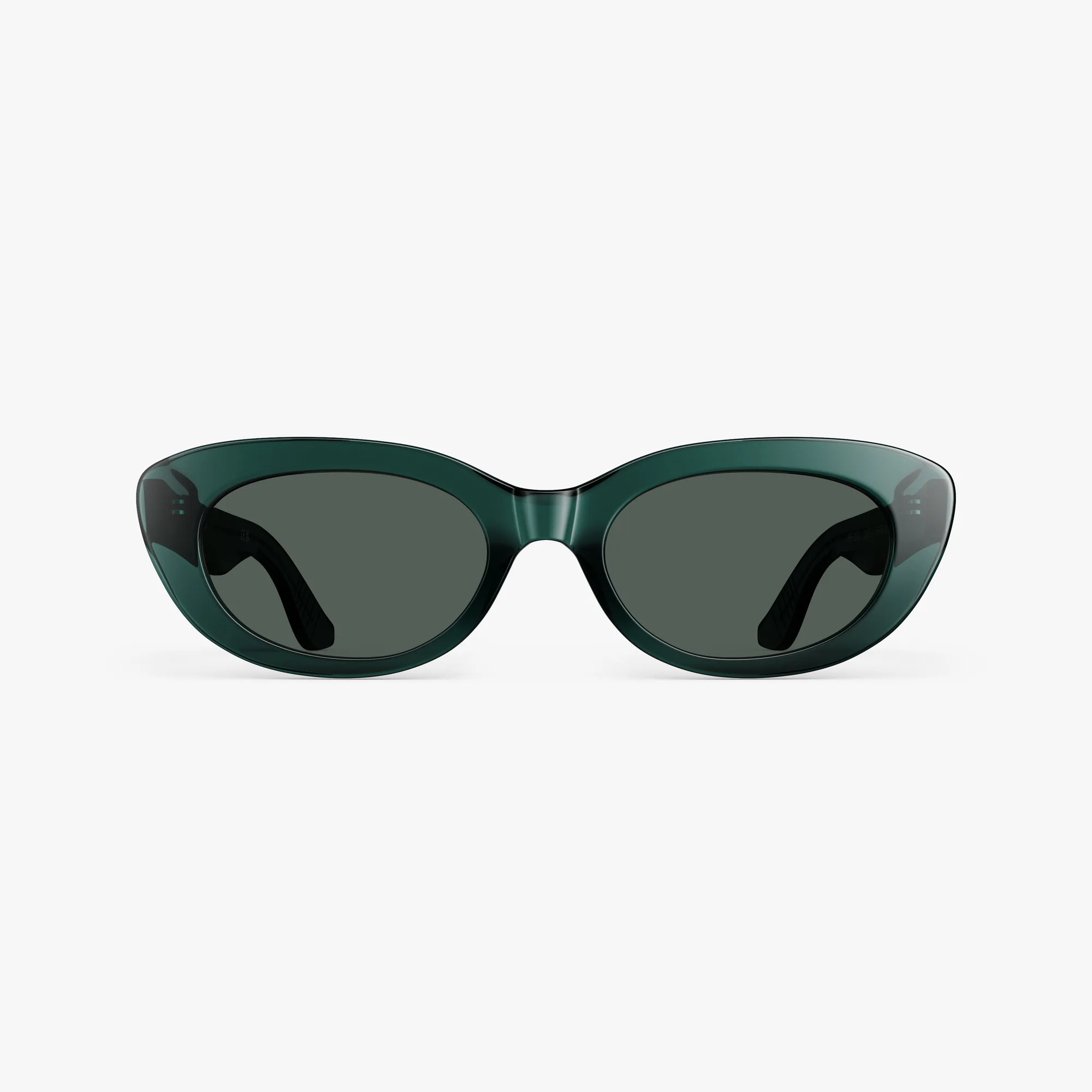
- Minaret Sunglasses: Crafted from Mazzucchelli cellulose acetate and fitted with ZEISS CR39 polymer lenses, with precision 5-barrel hinges and an integrated metal wire core. The 5-barrel hinge and metal core hold adjustment better than basic hinges, so a loose screw is usually a simple fix rather than a sign the frame is failing.
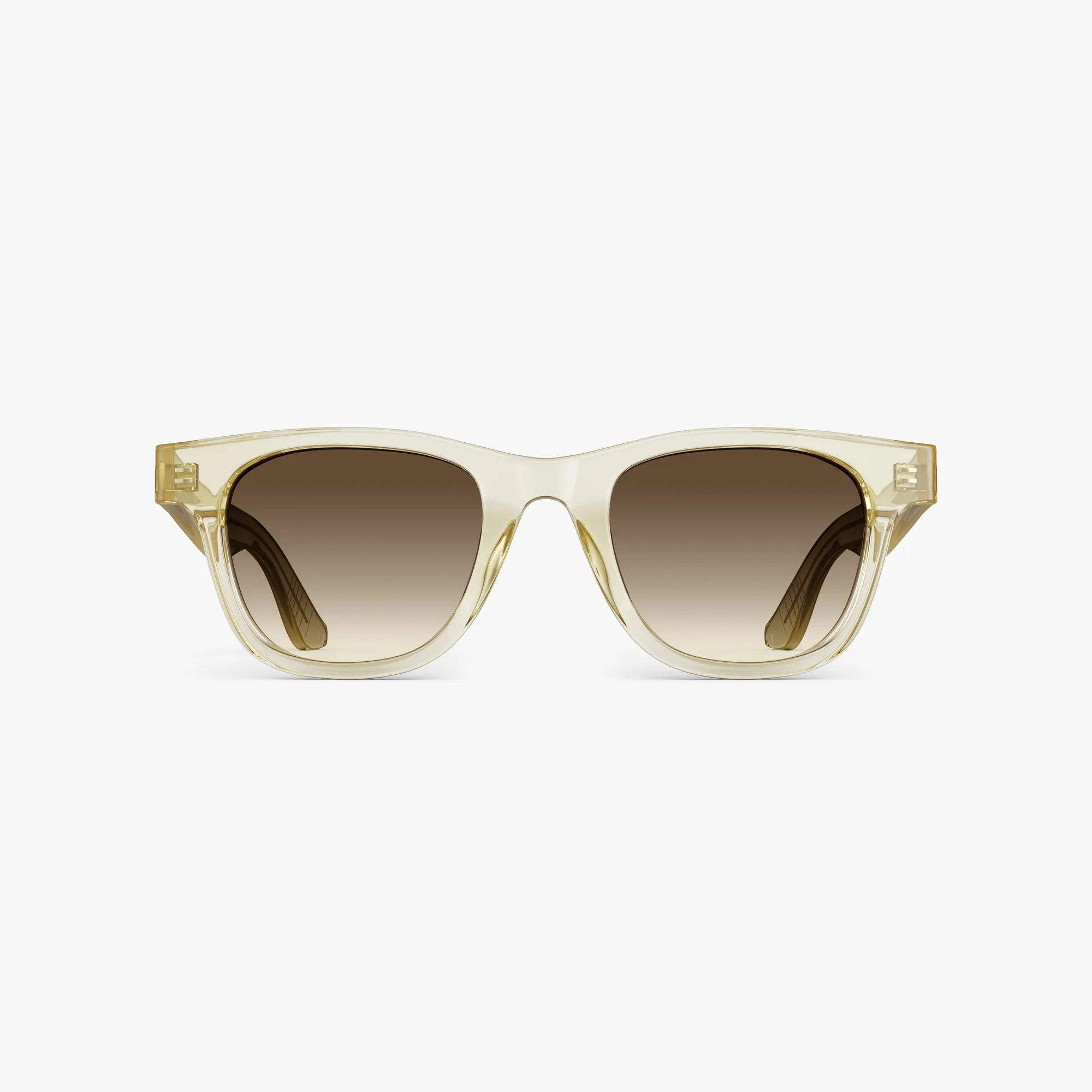
- Portico Sunglasses: Crafted from Mazzucchelli cellulose acetate and fitted with ZEISS CR39 polymer lenses, with a square silhouette designed for a wide range of faces. Acetate frames can be adjusted by an optician, but they should never be bent cold; the material responds to gentle heat and can snap if forced.
Most sunglasses problems are preventable with a case, a microfiber cloth, and a monthly screw check. Fix the mechanical issues yourself, leave frame alignment and lens damage to a professional, and replace when the lens no longer does its job clearly.