Quick answer
No—federal ADA regulations do not require service dog handlers to carry any identification, registration, or access cards. However, many handlers choose to carry a service dog public access card or information card because it can quickly answer common questions from businesses, airlines, and the public without a lengthy explanation. If you want a low-cost tool that summarizes access rights and contact info, a printed card is a practical addition to your routine, not a legal necessity.
What the ADA actually says about documentation
The Americans with Disabilities Act (ADA) guarantees access to public places for service dogs that are individually trained to do work or perform tasks for a person with a disability. The law does not require handlers to show any paperwork, ID, or certification to gain entry. Businesses may only ask two questions: whether the dog is required because of a disability and what work or task the dog has been trained to perform. They cannot demand a card, registration number, or proof of training.
That said, the absence of a legal requirement doesn't mean cards are useless. In practice, frontline staff—especially in settings like airports, hotels, or busy retail stores—may not know the exact rules. A concise ADA service dog questions card can defuse confusion before it escalates, giving the person a quick reference without turning the encounter into a debate.
Why some handlers still carry information cards
A service dog information card serves two purposes: it educates the reader about the handler's rights, and it provides contact details if the business wants to verify policies later. For handlers who frequently travel or visit new establishments, having a stack of cards in a vest pocket or wallet means they can hand over clear, consistent information without repeating themselves. It also helps when the handler has a speech-related disability or prefers not to engage in a back-and-forth.
Therapy dog handlers face a different situation. Therapy dogs do not have public access rights under the ADA—they are invited into facilities like hospitals or schools. A therapy dog identification card can help staff recognize the dog's role, but it does not grant legal access. Keeping that distinction clear prevents misunderstandings.
What to look for in a service dog access card
A useful card should be easy to read at a glance and durable enough to survive daily handling. Look for double-sided printing that includes a brief summary of ADA access rules on one side and space for the handler's contact information on the other. Card stock quality matters: flimsy paper will dog-ear quickly, while heavier stock holds up in a wallet or pocket. If you plan to hand cards to businesses, a multi-pack lets you replenish without reordering constantly.
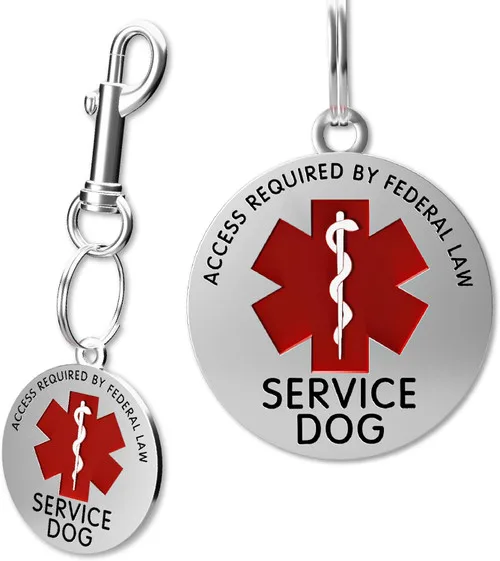
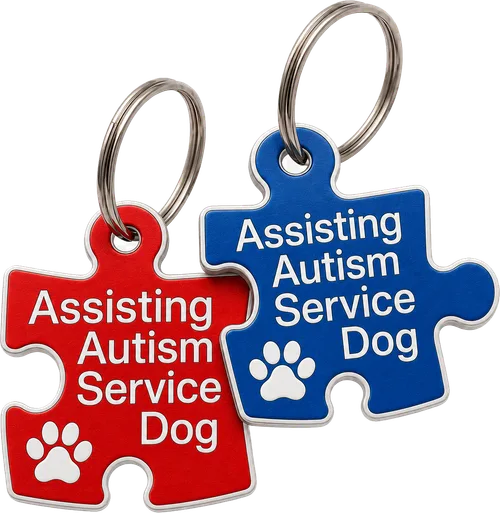
Some handlers also carry a personalized ID tag for the dog's collar or harness. A tag is not a substitute for a card, but it can silently communicate the dog's role when a quick visual cue is enough. For example, a double-sided aluminum tag engraved with 'Service Dog' and a medical alert symbol can reduce the number of times you need to explain your dog's presence. The tradeoff is that tags are small and may not include detailed legal language, so they work best alongside a printed card.
How to handle a business that demands a card
If a business insists on seeing an access card before allowing entry, you are not legally obligated to provide one. You can politely explain that the ADA does not require documentation and offer to answer the two permitted questions. If the situation escalates, ask to speak with a manager and, if necessary, file a complaint with the Department of Justice. Carrying a service dog handler rights card can make this conversation easier because it puts the key points in writing, but it is not a legal shield—it is a communication tool.
Remember that state and local laws may differ slightly, and airlines are governed by the Air Carrier Access Act, which has its own rules for service animals. Always check the specific regulations for your situation before relying on any card as proof of access.
Quick FAQ
Are ADA service dog access cards legally required?
No. The ADA does not require any identification, registration, or card for service dogs. Businesses cannot demand one as a condition of entry. Carry a card only if it helps you communicate, not because it is mandatory.
What should I do if a business asks for a service dog public access card?
You can explain that the ADA does not require documentation and offer to answer the two permitted questions about the dog's necessity and trained tasks. If the business refuses access, ask for a manager and consider filing a DOJ complaint. Stay calm and factual; a card can support your explanation but is not a legal requirement.
Do therapy dog identification cards grant public access?
No. Therapy dogs do not have public access rights under the ADA. They are allowed only where invited, such as hospitals or schools. A therapy dog ID card identifies the dog's role but does not create access rights. Keep therapy dog and service dog roles distinct to avoid confusion.
Relevant products for handlers
- Service Dog ADA Public Access Required Cards - 25pk: Service Dog ADA Public Access Required Cards - 25pk are printed on both sides using heavy high-quality card stock and provide a short overview of ADA access rules. A durable, ready-to-hand card helps you answer common access questions quickly without carrying loose paperwork.
- Service Dog & Therapy Dog Information Cards 25-Pack: Service Dog & Therapy Dog Information Cards 25-Pack are professionally printed in full color on both sides and include contact and access information. Useful if you want a card that covers both service dog and therapy dog roles, with space for your own contact details.
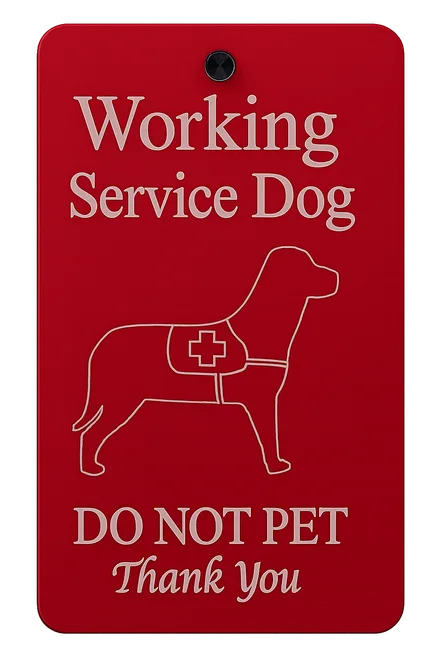
- Aluminum Service Dog Tag – Personalized Dog & Handler Double-Sided ID Tag: Aluminum Service Dog Tag – Personalized Dog & Handler Double-Sided ID Tag is made from red anodized aluminum with laser engraving, showing 'Service Dog' and a Medical Alert Symbol on the front. A collar tag gives a quick visual cue that your dog is working, reducing the need for verbal explanations in crowded or noisy settings.