Quick answer
Set up the Moover Doll House White in a low-traffic area, then use the realistic moving parts—like the oven door and staircase—to spark daily role-play scenes for your toddler.
Why the Doll House White works for ages 3 and up
The recommended age of 36 months means the doll house is built for toddlers who are ready for pretend play but still need sturdy, safe materials. Birch plywood construction and water-based, non-toxic paint ensure durability without compromising safety.
Because assembly is required, you have a chance to involve older siblings or explain the parts to your child before play begins. The 65 x 43 x 74 cm size fits comfortably in most playrooms without dominating the space.
Balancing open-ended play with guided activities
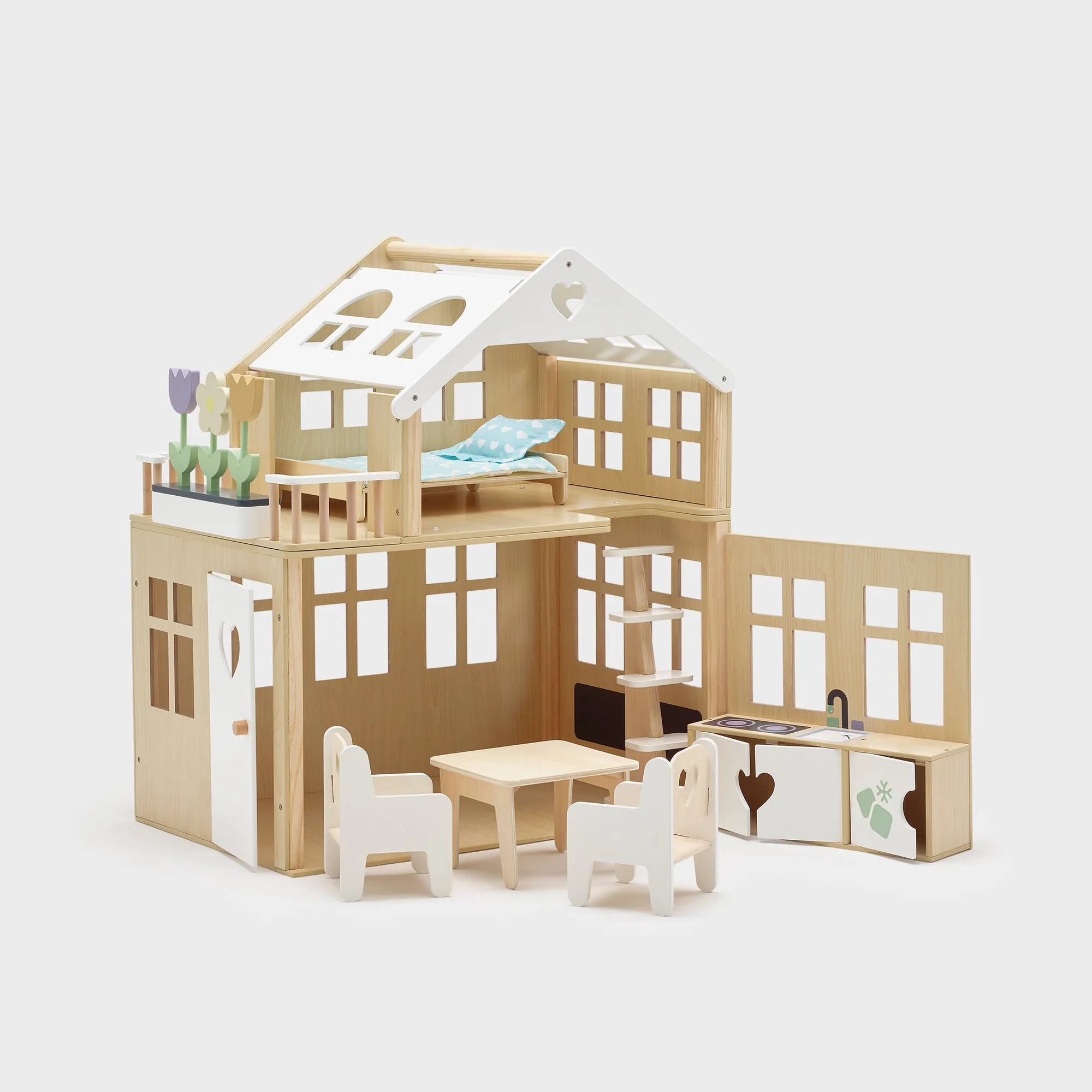
The doll house includes realistic moving parts like an oven, fridge, and staircase. These features naturally encourage fantasy play, but toddlers may need a few prompts to get started. Rotate between free play and simple guided scenes—like "cooking breakfast" or "going upstairs to bed"—to keep interest fresh.
One trade-off: the house does not come with furniture or dolls, so you will need to add those separately. This gives you flexibility to choose pieces that match your child's interests, but it also means an extra purchase.
Step-by-step: Setting up and playing with the Doll House White
- Assemble the house in a safe, accessible spot: Follow the assembly instructions to put the doll house together. Place it on a flat surface away from heavy foot traffic or tripping hazards. A corner of the playroom or a low shelf works well. Check that all screws are tight and no sharp edges remain before letting your child play.
- Introduce the moving parts one at a time: Show your toddler how the oven door opens, the fridge door swings, and the staircase moves. Let them explore each part before combining them into a full play scene. This prevents overwhelm and builds familiarity. If your child gets frustrated, simplify by focusing on just one moving part per session.
- Create a simple role-play scenario: Use a small doll or stuffed animal to act out a daily routine: waking up, going downstairs, opening the fridge for breakfast. Narrate the actions to model language and social skills. Keep the scene short (5–10 minutes) to match toddler attention spans. Avoid directing every move—let your child take the lead once they understand the basics.
- Rotate play themes weekly: Switch between themes like "cooking dinner," "getting ready for bed," or "having a tea party." You can use simple props (a fabric square as a blanket, a small cup) to refresh the setup without buying new accessories. Store extra props in a nearby bin so your child can choose what to add next.
Product fact
-
Doll House - White: The Doll House White is made from birch plywood with environmentally-friendly, water-based, non-toxic paint. You can let your toddler play freely without worrying about harmful chemicals, and the plywood holds up to daily use.
Doll House - White