Quick answer
For everyday drying, wiping, and mopping up spills, reusable double dish towels usually cost less over time and send less waste to landfill than paper towels. Paper still wins for raw meat juices, oven-grease disasters, and anything you would rather throw away than wash. Most kitchens work best with both: cloth for daily jobs, paper for the rare mess you do not want to launder.
How the two options actually differ
Paper towels are single-use: you tear, wipe, and toss. That convenience is the whole product. Reusable kitchen towels are a small upfront purchase you wash and reuse, so the cost and waste shift from every spill to every load of laundry. The trade-off is not cloth versus paper as a moral choice, it is which jobs you want to solve by buying more and which you want to solve by washing more.
The practical difference shows up in absorbency and in what the towel leaves behind. A dual-textured cloth towel can offer a smooth side for glass and a more textured side for scrubbing, while paper tends to shed fibers and fall apart when it gets truly soaked. If you mostly dry hands and dishes, cloth handles it. If you are soaking up bacon grease, paper handles it with less cleanup.
Cost: upfront price versus repeat purchases
The honest comparison is not one towel against one roll. It is how many rolls you stop buying. A set of reusable towels has a visible upfront cost, and paper towels have a small cost that repeats every week. The more often you reach for a towel, the faster cloth pulls ahead; the less often you cook and clean, the longer it takes to break even.
Laundry is the hidden line item. Reusable towels only save money if you wash them in loads you were already running, not in extra hot-water cycles just for towels. Keep a small stack in rotation, wash with kitchen linens, and air-dry when you can. If you would run a separate sanitizing load after every use, paper may genuinely be the cheaper habit for your household.
Waste: what you throw away and what you wash
Paper towels create a steady stream of trash that you cannot avoid if you use them. Reusable towels trade that trash for water, detergent, and energy. Neither is zero-impact, so the useful question is which impact you can realistically reduce in your kitchen. For most homes, replacing daily drying and wiping with cloth cuts the visible waste dramatically, even after accounting for laundry.
The catch is hygiene. Cloth towels used on raw meat, poultry, or fish juices should go straight into the wash, not get wrung out and reused. Paper is the safer single-use option for those moments. That is why a mixed setup is not a compromise, it is the practical answer for kitchen towel waste reduction without risky shortcuts.
Absorbency and the jobs each one does best
Cloth dish towel absorbency depends on the fabric and the texture. A dual-textured towel gives you a plush side for drying and a rougher side for scrubbing counters, which is hard to replicate with a paper sheet. Cloth also holds up when you need to wipe a large wet area rather than dabbing at it.
Paper wins on speed and disposability: grab a sheet, wipe, toss, done. It also wins on greasy or staining messes where you do not want to deal with laundering. If you are choosing reusable kitchen towels, look for a set size that matches your laundry rhythm. Too few towels and you will fall back on paper out of necessity; too many and they sit in a drawer.
Building a setup that actually sticks
The kitchens that switch successfully keep cloth where they use it. A stack by the sink, a couple in a drawer, and one hanging within reach. If the towel is not visible, paper wins by default. Pair towels with the tools you already dry, like wooden spoons that should be hand-washed and air-dried rather than left soaking.
Give yourself a designated paper role so you are not fighting the habit. Many households keep paper for pet messes, draining fried food, and raw-meat cleanup, and use cloth for everything else. That split keeps the savings and the waste reduction without pretending paper has no place.
Trade-offs to weigh before you switch
- Upfront cost versus repeat cost: Reusable towels cost more today and less over months of use; paper towels cost little per roll but never stop costing. Pick cloth if you cook often enough to replace rolls regularly; pick paper if you rarely use towels.
- Laundry load versus trash bag: Cloth shifts waste from your trash can to your washing machine, which only helps if you wash efficiently with full loads. If you would run extra hot-water loads just for towels, paper may be the lower-impact choice for you.
- Hygiene limits of cloth: Towels used on raw meat juices should be washed immediately, not reused; paper is the safer single-use option for those messes. Keep a small paper supply for high-risk cleanup and use cloth for everything else.
- Absorbency and finish: Dual-textured cloth handles drying and scrubbing in one towel, while paper sheds and tears when soaked. For big wet spills and dish drying, cloth does more per towel; for greasy disposal, paper is simpler.
Products that fit this comparison
- Double Dish Towels: Our Place Double Dish Towels are dual-textured kitchen towels available in sets of 2 or 4, in Blue Salt, Sage, Lavender, and Steam. The set size lets you match towel count to your laundry routine, and the dual texture gives you a drying side and a scrubbing side in one towel.
- Beechwood Spoons: Our Place Beechwood Spoons are 100% natural beechwood, sold in a set of two, with Notched and Nested styles. Wooden tools should be hand-washed and dried rather than soaked, so having a dedicated drying towel nearby makes that care habit easier to keep.
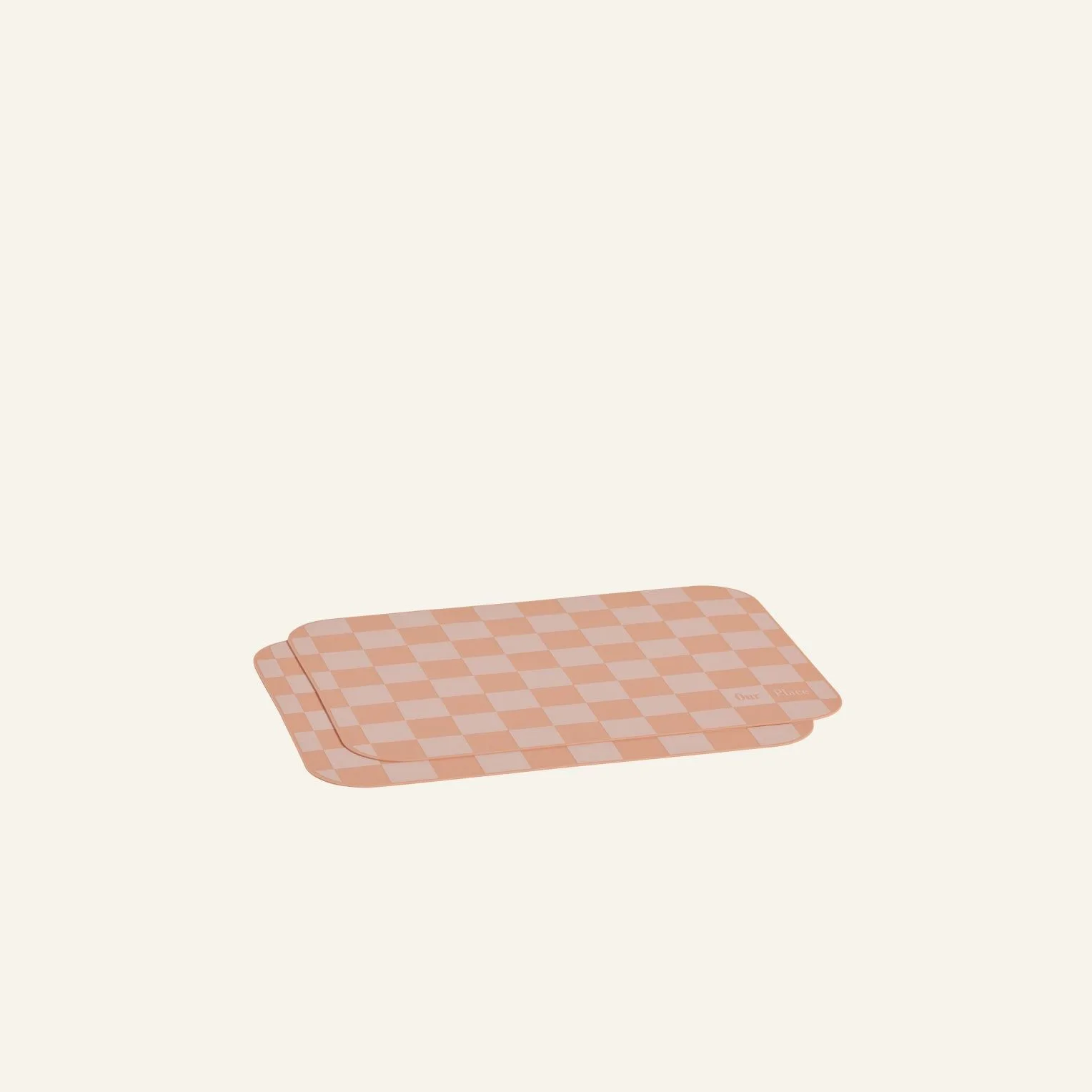
- Mini Oven Mats: Our Place Mini Oven Mats are a set of two quarter-sized reusable silicone mats for standard and toaster ovens, in Spice, Blue Salt, Sage, Char, Steam, and Lavender. Reusable mats catch drips and grease in the oven, which reduces the number of paper towels you reach for during roasting and baking cleanup.
Who should choose which
Choose reusable double dish towels if you
- Cook and clean daily and want to cut repeat paper towel purchases
- Already run regular kitchen laundry loads and can add towels to them
- Want a dual-textured towel for both drying dishes and wiping counters
- Are building an eco friendly kitchen towels setup and want colors that match your space
Stick with paper towels if you
- Rarely cook or clean and would not replace rolls often enough to break even
- Need single-use disposal for raw meat juices, pet messes, or heavy grease
- Cannot or do not want to add kitchen towels to your laundry routine
- Prefer the grab-and-toss habit and are not looking to change it