Quick answer
Silicone sleeves are not required for glass bottles to work, but they add real grip and break protection. If your baby is learning to hold a bottle or you're worried about drops, a Dr. Brown's glass bottle sleeve is a practical, low-cost add-on. It won't make glass unbreakable, so handle bottles with care.
Myth: Glass bottles are too slippery to hold without a sleeve
Glass is smooth, but it isn't automatically slippery. A clean, dry glass bottle can be gripped securely by an adult. The problem shows up when hands are wet, lotioned, or when a baby is learning to hold a bottle. That's where a silicone sleeve changes the equation: it adds a grippy surface that makes the bottle easier to hold. The Dr. Brown's Natural Flow Options+ Wide-Neck Glass Bottle Silicone Sleeves are removable 100% silicone sleeves designed to be grippy. They slide on quickly by wetting the inside of the sleeve and the outside of the bottle. If your baby is starting to self-feed, the added texture and grip can help. But if you always hold the bottle yourself, a sleeve is a comfort upgrade, not a necessity.
Myth: A silicone sleeve makes a glass bottle drop-proof
No sleeve can make glass unbreakable. The Dr. Brown's sleeves help protect glass bottles against breakage while in use, while sterilizing, or while in the dishwasher. That means they can absorb some impact and reduce the chance of chips or cracks during everyday handling. But a hard drop onto tile can still break glass. Think of a sleeve as a layer of protection, not a guarantee. It's most useful during the moments when bottles get knocked around: in the sink, in the dishwasher basket, or on a highchair tray. If you're looking for maximum break resistance, glass may not be the right material for your routine; silicone or plastic bottles are lighter and less prone to shattering.
Myth: Sleeves are only for glass bottles
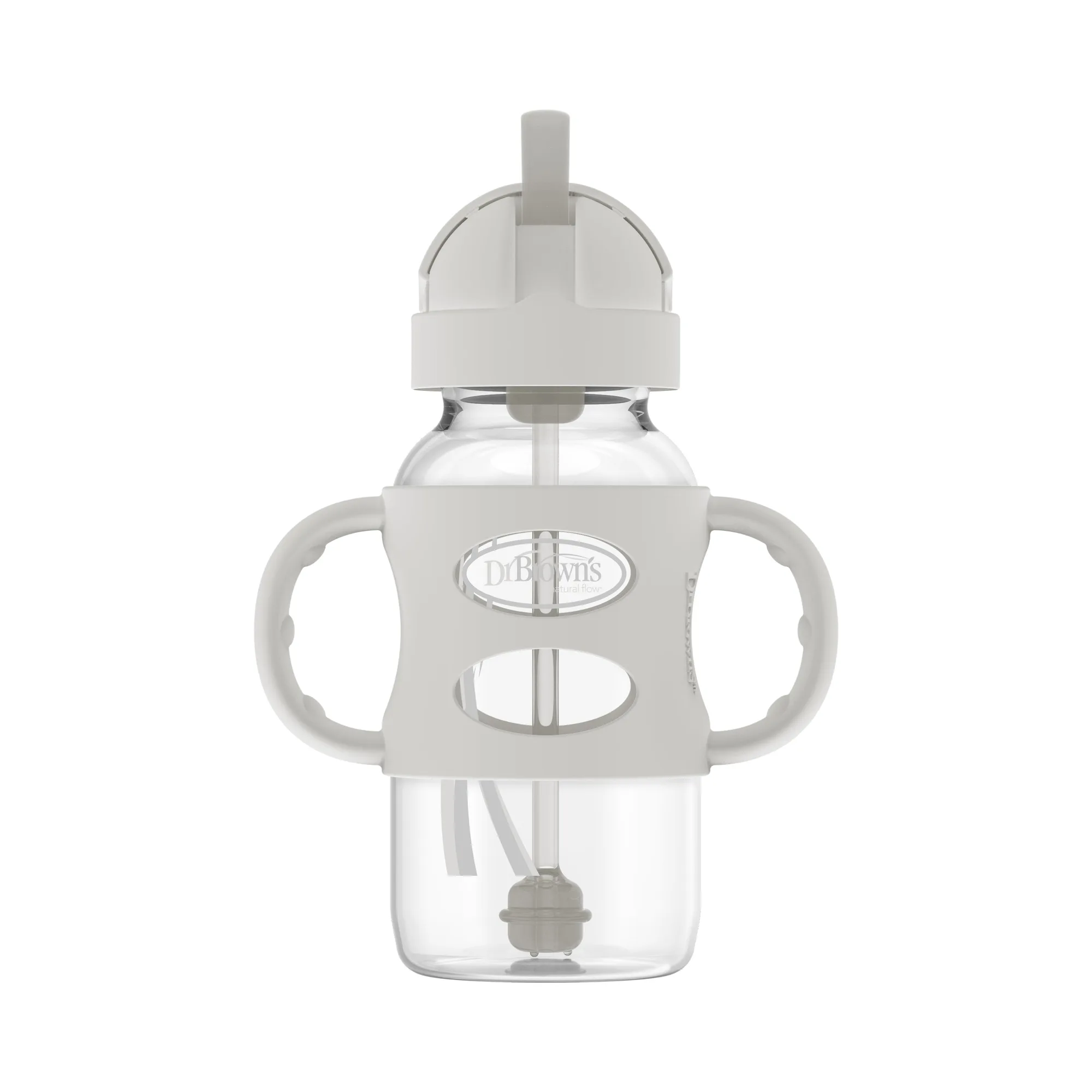
Sleeves are designed for glass, but the grip benefit can matter for other bottle types too. However, the Dr. Brown's sleeves in this catalog are specifically for wide-neck glass bottles. If you use the Milestones Wide-Neck Sippy Straw Bottle with Silicone Handles, that bottle already has soft silicone handles for gripping, so a separate sleeve isn't needed. The Milestones bottle also features a soft, 100% silicone weighted straw that moves with the liquid so baby can tilt and sip in any direction. That's a different kind of grip and drinking support, aimed at transitioning from bottle to independent drinking. Match the accessory to the bottle you actually own.
Myth: You need a sleeve for every bottle
You don't. Many parents use one or two sleeves on the bottles that leave the house or get used during messy meals. The sleeves are removable, so you can swap them between bottles as needed. The see-through back panel lets you check the milk level without removing the sleeve. If you're sterilizing or dishwashing, the sleeve can stay on for added protection. For a full set of bottles, buying a sleeve for each one adds up, but at a few dollars each, it's a small investment compared to replacing a cracked bottle. Start with one or two and see how often you reach for them.
Verdicts on common sleeve claims
- Glass bottles are unusable without a sleeve: False. Adults can hold a clean glass bottle securely. Sleeves help when hands are wet or when a baby is learning to hold the bottle. Skip the sleeve if you always hold the bottle; add one if grip is a struggle.
- A sleeve makes glass bottles unbreakable: False. Sleeves help protect against breakage while in use, sterilizing, or dishwashing, but they cannot prevent breakage from a hard drop. Use sleeves as extra protection, not a guarantee. Handle glass with care.
- You need a sleeve for every bottle you own: False. Sleeves are removable and can be swapped between bottles. Many parents use one or two for the bottles that get the most handling. Start with one or two sleeves and expand if you find them useful.
Product facts
- Dr. Brown's Natural Flow® Options+™ Wide-Neck Glass Bottle Silicone Sleeves: Removable 100% silicone sleeves are grippy, making glass bottles easy to hold. Improves grip for parents and babies learning to hold a bottle, especially when hands are wet or lotioned.
- Dr. Brown's Milestones Wide-Neck Sippy Straw Bottle with Silicone Handles, 9 oz/270 mL: Dr. Brown's Milestones Wide-Neck Sippy Straw Bottle features soft yet sturdy silicone handles that make gripping easy and help teach baby new motor skills. If your baby is transitioning to independent drinking, this bottle already includes grip features, so a separate sleeve may be unnecessary.