Quick answer
In Ecosystem, players draft cards to build a 4x5 grid of animals and habitats, scoring points for biodiversity, food chains, and territory. The game takes 15–20 minutes for 2–6 players ages 10 and up.
What makes Ecosystem different from other card games?
Ecosystem uses a pick-and-pass drafting mechanic similar to Sushi Go, but with a biology theme. Each card represents an animal, habitat, or natural feature, and you arrange them in a 4x5 grid to maximize scoring combos. The game rewards forward planning because cards you pass to neighbors might come back to you later.
Who is this game for?
Ecosystem is designed for families and casual gamers who enjoy light strategy and nature themes. The rules are simple enough for ages 10+, but the scoring system offers depth for adults. If you prefer heavy negotiation or direct conflict, this may feel too gentle.
How to play Ecosystem: step-by-step
- Setup: Shuffle the deck and deal 11 cards to each player. Keep your hand hidden. Place the remaining deck aside. Each player will build a 4x5 grid (20 cards) during the game. Common mistake: forgetting you need exactly 20 cards. If you discard early, you may run short.
- Draft a card: From your hand of 11 cards, choose one card to keep. Pass the remaining hand clockwise to the next player. Everyone picks simultaneously to keep the game fast. Checkpoint: look at what your neighbors might need before you pass. Passing a high-value card can help an opponent.
- Place the card in your grid: Add the chosen card to your personal 4x5 grid. Cards must be placed orthogonally adjacent to at least one existing card. You cannot move cards once placed. Common mistake: placing cards in a way that blocks future combos. Leave room for animals that need specific neighbors.
- Repeat until the grid is full: Continue drafting and placing one card per turn. After 20 rounds, each player will have a full 4x5 grid. The game ends immediately. Checkpoint: the last few rounds are critical. Prioritize cards that fill gaps or complete scoring pairs.
- Score your grid: Each card type scores differently. Wolves score for adjacent deer, foxes score for adjacent rabbits, and so on. Habitats score for contiguous groups. Refer to the card reference for exact values. Common mistake: forgetting that some cards score negatively if certain neighbors are absent. Read each card's scoring rule carefully.
Product facts
-
Free Shipping! Ecosystem | A Family Card Game: Ecosystem is a family card game about animals, their habitats, ecology and biodiversity. It uses card-drafting, tableau-building, and pick-and-pass mechanics. Understanding the drafting and tableau-building mechanics helps you plan your grid for maximum scoring combos.
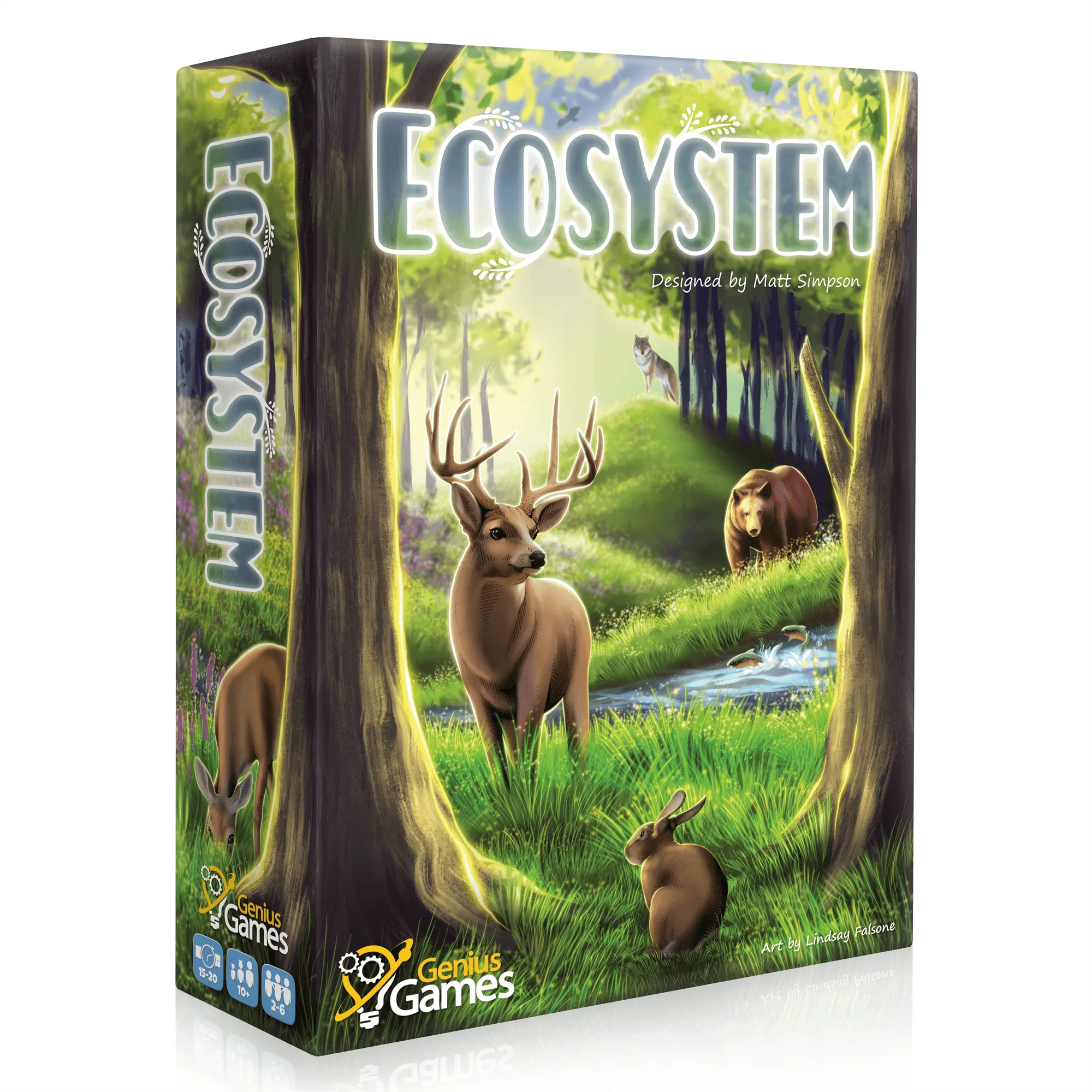
Free Shipping! Ecosystem | A Family Card Game