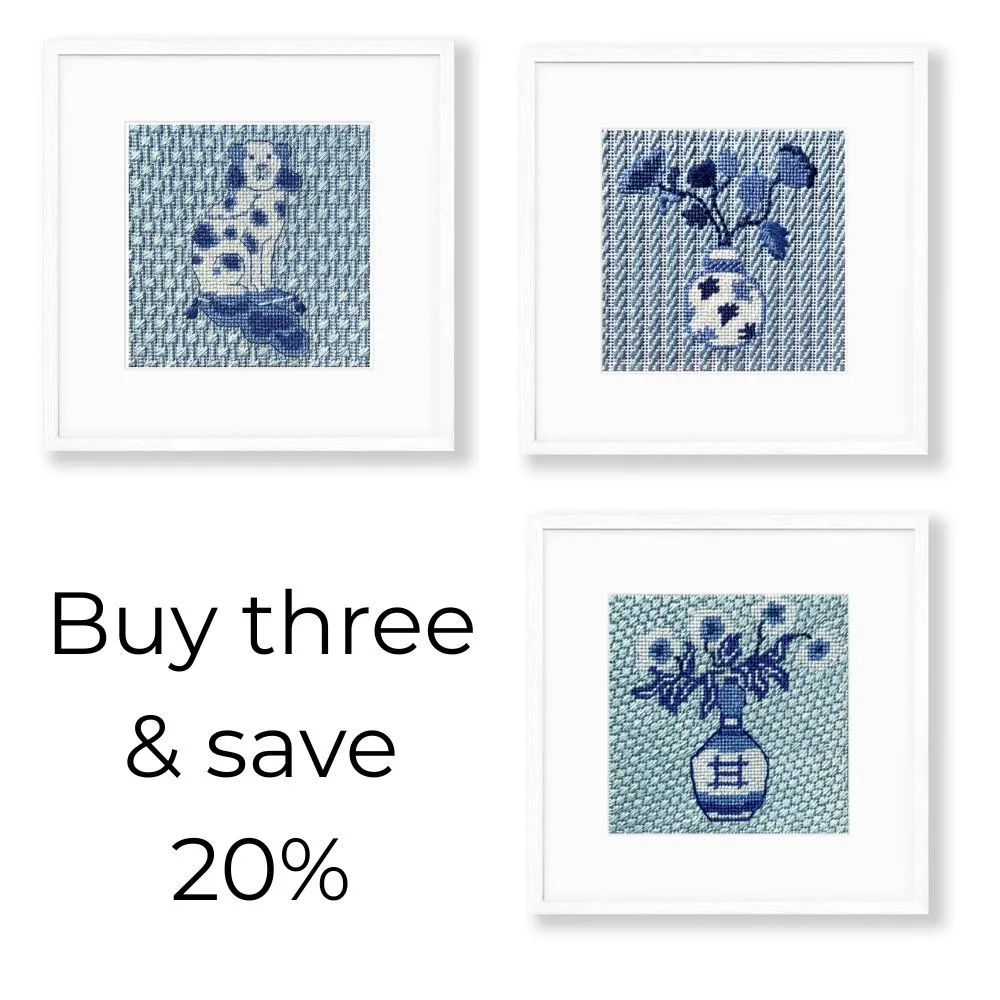
Quick answer
Cross stitch is a counted, grid-based technique where you form X-shaped stitches on evenweave fabric following a chart, while embroidery art covers a wide range of freeform hand-stitching, often with mixed media and no fixed grid. Cross stitch is generally easier to learn because the pattern tells you exactly where each stitch goes; embroidery art gives you more design freedom but demands more practice. Choose cross stitch for structured, repeatable projects and embroidery art for one-of-a-kind pieces.
If you have ever stood in a craft store aisle wondering whether to pick up a cross-stitch kit or an embroidery hoop, you are not alone. The two crafts share needles, floss, and fabric, but they ask for different mindsets and produce very different results. This comparison breaks down the practical differences so you can pick the right one for your next project.
We will look at how each technique works, what finished pieces look like, and which supplies you actually need. Along the way, we will use real examples from our own collection to show how embroidery art translates from sketch to stitched piece, and we will be honest about where each craft falls short.
What is cross stitch?
Cross stitch is a counted-thread technique. You work on a fabric with an even weave, such as Aida cloth or linen, and every stitch is an X formed by crossing one thread over another. The pattern, or chart, is a grid of squares, and each square corresponds to one X on the fabric. Because the grid is fixed, the design is predictable and symmetrical, which makes cross stitch a great choice for beginners who want a clear roadmap.
The finished look is pixel-like and geometric. Cross stitch is ideal for samplers, quotes, small motifs, and anything that benefits from a clean, repeating pattern. It is less suited to shading, curved lines, or textured effects, because the grid limits how organic the stitches can be.
- Best for: beginners, counted patterns, symmetrical designs, portable projects
- Not ideal for: freeform shading, mixed media, large-scale wall art
What is embroidery art?
Embroidery art is an umbrella term for hand-stitching that is not bound to a strict grid. You might use a variety of stitches—running stitch, satin stitch, French knots, chain stitch—and combine them with painting, appliqué, or beading. The design often starts as a drawing rather than a chart, giving you room to improvise. This freedom is what makes embroidery art feel more like painting with thread.
Because there is no single rulebook, embroidery art can be as simple or as complex as you like. A small pendant might take an hour, while a large hoop can take dozens of hours. The trade-off is that you need to make more decisions yourself: where to place stitches, how to blend colors, and when a piece is finished.
- Best for: artists who want freedom, mixed-media pieces, one-of-a-kind gifts
- Not ideal for: crafters who prefer a precise chart, very portable projects, quick repeats
Technique and design freedom
The biggest practical difference is how much the design is predetermined. In cross stitch, the chart is the boss. You count squares and follow the symbols, so the result matches the pattern almost exactly. That structure is comforting and makes it easy to pick up and put down without losing your place. In embroidery art, you are the boss. You might sketch a design on fabric and then choose stitches as you go, which means the final piece can evolve during the process.
This difference also affects how you correct mistakes. In cross stitch, a misplaced stitch is usually easy to spot because it breaks the grid; you can unpick it and re-stitch the correct square. In embroidery art, mistakes are less obvious but also less defined—sometimes an unexpected stitch becomes a happy accident, and sometimes it means reworking a whole section.
- Cross stitch: follow the chart, count twice, stitch once
- Embroidery art: sketch lightly, build in layers, step back often to check balance
Finished look and display
Cross stitch typically looks neat, flat, and graphic. It is often framed in a hoop or a picture frame, and the even grid gives it a tidy, almost printed quality. Embroidery art tends to have more texture and dimension. Because you can mix threads, paints, and beads, the surface can catch light and cast shadows, which makes it feel more like a small sculpture than a flat image.
For display, both can hang on a wall, but embroidery art often works well as a standalone object. A hoop piece can rest on a shelf or hang as wall art, and the hoop itself becomes part of the presentation. Cross stitch is more likely to be framed behind glass to protect the even stitches and keep the fabric clean.
- Cross stitch: frame behind glass or finish in a hoop with a clean backing
- Embroidery art: display in the hoop, on a shelf, or in a shadow box to show texture
Time, cost, and supplies
Cross stitch projects are often sold as kits that include fabric, floss, a needle, and a chart. That makes the entry cost low and the supply list short. The time investment depends on the stitch count: a small motif might take an evening, while a large sampler can take weeks. Embroidery art usually requires you to gather supplies separately—fabric, hoop, floss, and sometimes paint or beads—so the upfront cost can be higher, but you can reuse supplies across projects.
If you are comparing which is easier embroidery or cross stitch, cost and time are part of the answer. Cross stitch is easier to start because the kit removes guesswork. Embroidery art is easier to personalize because you are not locked into a chart. Neither is inherently cheaper in the long run; it depends on how many projects you make and what materials you already own.
- Start with a kit if you want a low-risk introduction to either craft
- Buy neutral fabric and a set of basic floss if you plan to design your own embroidery art
Which is easier: embroidery or cross stitch?
For most beginners, cross stitch is easier to learn. The chart tells you exactly where each stitch goes, and the repetitive motion builds muscle memory quickly. You can see progress square by square, which keeps motivation high. Embroidery art requires you to learn multiple stitches and make compositional choices, so it can feel overwhelming at first.
That said, ease depends on the project. A simple embroidery art piece using only a running stitch and a few French knots can be easier than a large, detailed cross-stitch chart with dozens of color changes. The real question is whether you prefer following a map or drawing your own. If you like structure, cross stitch wins. If you like experimenting, embroidery art will feel more natural.
- Try a small cross-stitch kit first if you are unsure about counting stitches
- Try a pre-printed embroidery pattern if you want to practice stitches without designing
Trade-offs to weigh before you choose
- Structure vs. freedom: Cross stitch gives you a chart and a predictable outcome; embroidery art gives you a blank hoop and the freedom to design as you stitch. Pick cross stitch if you want clear instructions; pick embroidery art if you want to make your own rules.
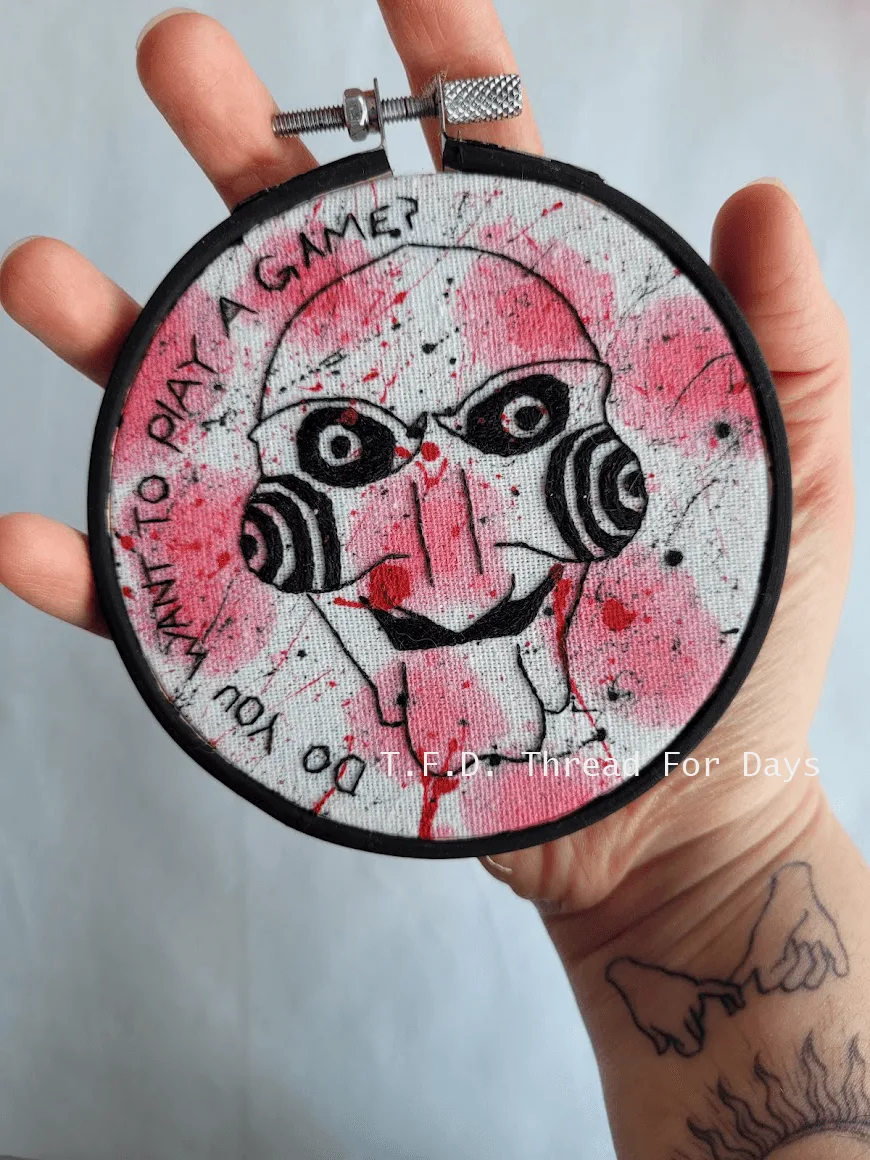
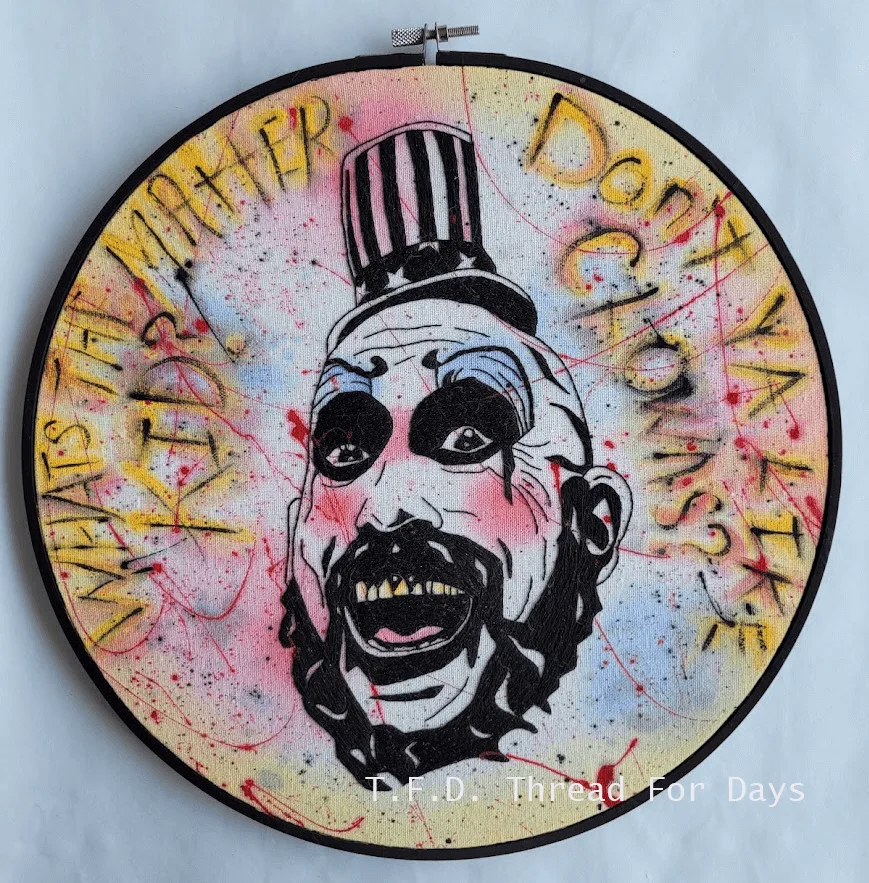
- Time investment: Cross stitch time scales with stitch count; embroidery art time scales with complexity and size. Our 4-inch Jigsaw Mask hoop represents about 8 hours, while the 12-inch Captain Spalding hoop represents about 30 hours. Smaller hoops are a lower-commitment way to try embroidery art before tackling a large piece.
- Display and care: Cross stitch is often framed behind glass to protect the even stitches; embroidery art is frequently displayed in the hoop itself, which lets texture and mixed media show but may require dusting. Consider where the piece will live before you choose the format.
- Learning curve: Cross stitch has a gentler start because the chart removes design decisions; embroidery art asks you to learn multiple stitches and composition. If you are new to needlework, a simple cross-stitch kit can build confidence before you move to freeform embroidery.
Real embroidery art examples from our collection
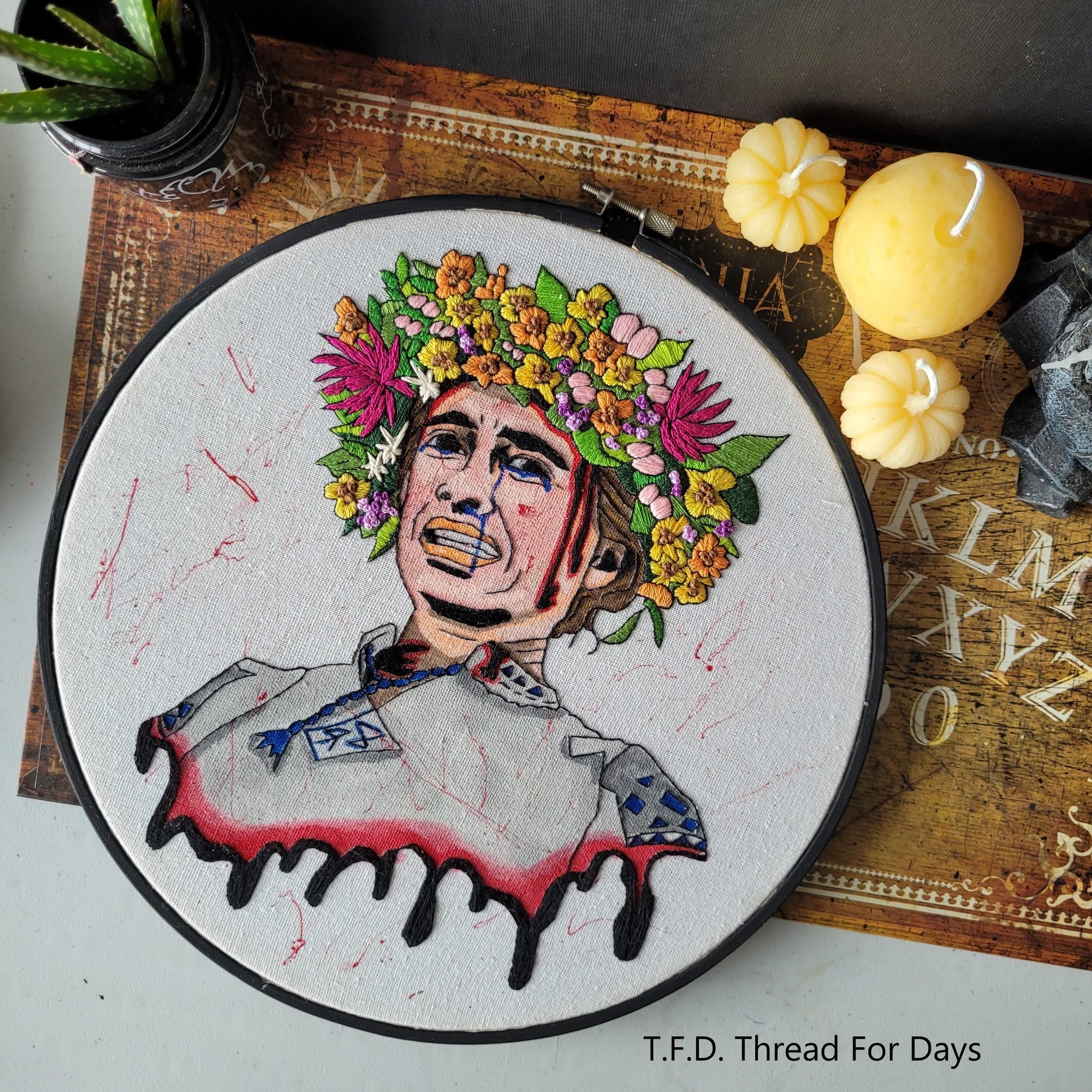
- Midsommar | 10 inch Embroidery Hoop: One-of-a-kind hoop art, digitally drawn, hand stitched, and painted with acrylic on the bamboo hoop and fabric paint on the fabric; about 25 hours of handiwork. Shows how embroidery art can combine stitching and painting, and why a 10-inch piece represents a significant time investment.
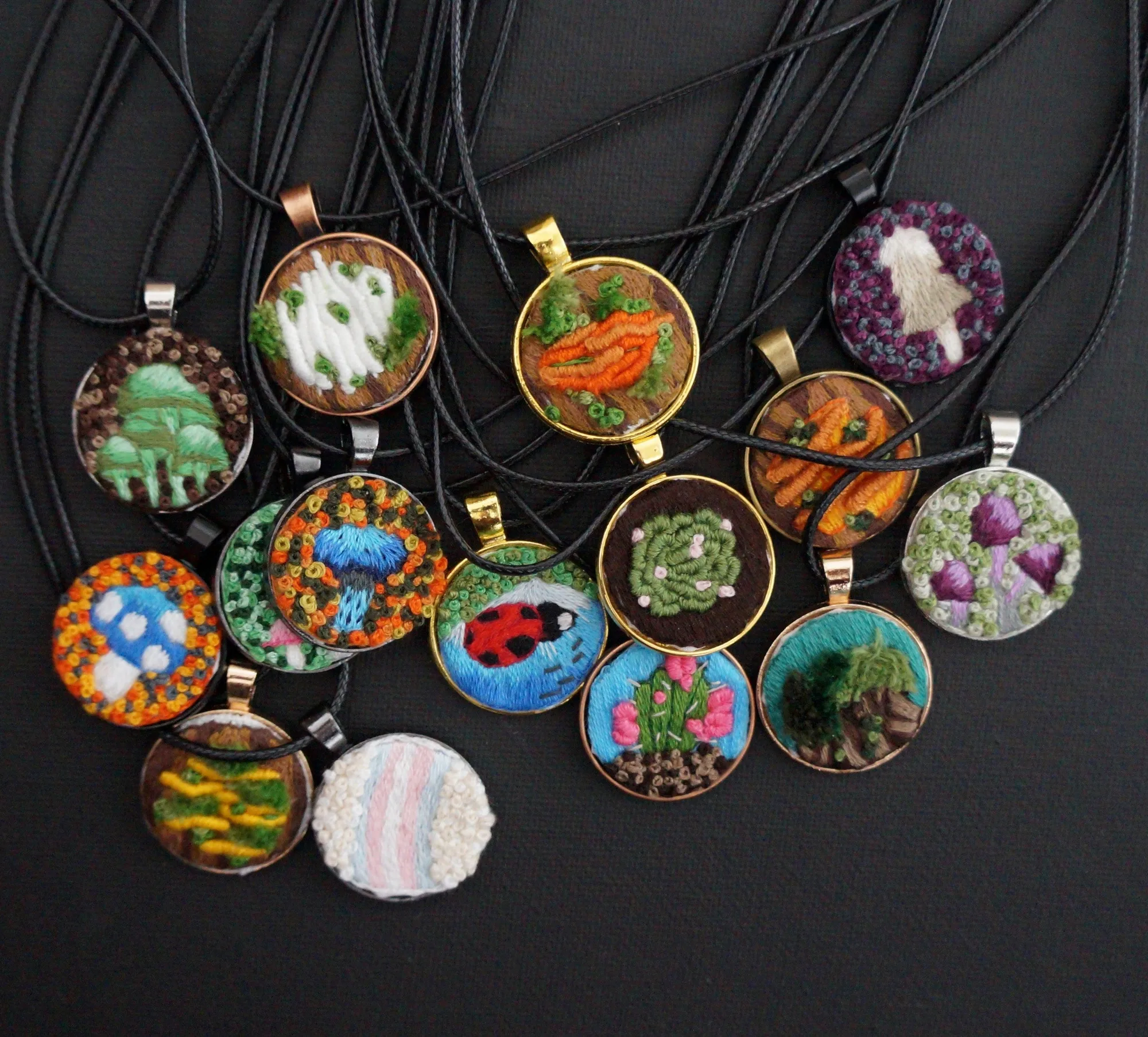
- Embroidered Pendants: Mini thread paintings intuitively designed, hand stitched, and set into 1-inch bezel blank pendant trays with a waxed necklace attachment; each piece is unique. Demonstrates that embroidery art can be small and wearable, not just wall art, and that custom requests are possible.
- Captain Spalding 12 inch Embroidery Hoop: One-of-a-kind hoop art, digitally drawn, hand stitched, and painted with acrylic and watercolours; about 30 hours of handiwork. Illustrates how mixed media and a larger hoop size increase the time and complexity of an embroidery art piece.
- Jigsaw Mask 4 inch Embroidery Hoop: One-of-a-kind hoop art, digitally drawn, hand stitched, and painted with acrylic and watercolours; about 8 hours of handiwork. Shows that a smaller 4-inch hoop can still be a detailed mixed-media piece, making it a more accessible entry point for collecting embroidery art.
Which should you choose?
Choose cross stitch if you:
- Want a clear chart and a predictable finished design
- Enjoy repetitive, portable projects you can pick up and put down
- Prefer framing your work behind glass for a clean, graphic look
Choose embroidery art if you:
- Want to design your own piece or work without a grid
- Like mixing thread with paint, beads, or other materials
- Prefer one-of-a-kind wall art or wearable pieces like pendants
Both crafts reward patience and a good needle, but they suit different temperaments. Cross stitch is the structured, chart-driven path; embroidery art is the open, mixed-media path. If you want to see where embroidery art can go, browse our one-of-a-kind hoops and pendants—each one is stitched by hand and designed to be displayed as it is.