When we think of the German army's field equipment, helmets, weapons, and uniforms often come to mind first. Yet the humble kitchen gear—mess kits, cooking utensils, and field stoves—played a vital role in sustaining troops through long campaigns. Understanding the evolution of German kitchen gear offers a unique window into military logistics, soldier life, and the practical needs that drove design changes from the Imperial era through World War II.
For reenactors and collectors, authentic mess kits and cooking gear are essential for completing a historically accurate impression. Whether you are assembling a kit for a living history event or adding to a collection, knowing the history behind each piece adds depth to your display. In this article, we explore the development of German army kitchen gear, from early field cooking methods to the standardized mess kits of WWII, and highlight reproduction items that help keep this history alive.
Early German Field Cooking: From the Franco-Prussian War to WWI
Before the mass armies of the late 19th century, soldiers often cooked for themselves using personal pots or communal kettles. The German army's first standardized field kitchen emerged during the Franco-Prussian War (1870–71), when horse-drawn Gulaschkanonen (goulash cannons) were introduced. These mobile kitchens could prepare hot meals for hundreds of men, but individual mess gear remained rudimentary—often just a simple tin cup or a bread bag.
By World War I, the German soldier's mess kit had evolved into a more practical design. The M1910 mess kit, made of aluminum or enamelled steel, consisted of a deep pot with a lid that doubled as a frying pan. It was carried in a leather or canvas strap attached to the bread bag. This kit was a significant improvement, allowing soldiers to cook rations over small fires or field stoves. The design proved so effective that it remained largely unchanged into the interwar period.
- The M1910 mess kit was the first standardized individual cooking vessel for German soldiers.
- Horse-drawn field kitchens (Gulaschkanonen) were used until the 1930s.
The Weimar and Early Third Reich Era: Standardization and Refinement
After WWI, the German military (Reichswehr) continued using surplus M1910 kits but began refining the design. In the 1920s, aluminum became the standard material due to its light weight and resistance to rust. The mess kit's shape was slightly modified to stack more efficiently in storage, and the lid's handle was improved for easier gripping. By the time the Wehrmacht was established in 1935, the M1931 mess kit had become the standard issue.
The M1931 kit featured a rounded, slightly tapered body with a tight-fitting lid that had a folding handle. It was designed to nest inside the bread bag (Brotbeutel) along with the field canteen (Feldflasche). This integration of personal gear was a hallmark of German military efficiency. Soldiers could prepare coffee, soup, or stews using their mess kit over a small fire or the portable Esbit stove, which became popular later in the war.
- The M1931 mess kit was made of stamped aluminum and weighed about 200 grams.
- It was often paired with the M1931 canteen for a complete field cooking system.
WWII Field Cooking: Mess Kits, Stoves, and Rations
During WWII, the German army relied on a combination of individual mess kits and larger field kitchens. The standard mess kit remained the M1931, though late-war versions sometimes used steel due to aluminum shortages. Soldiers also carried the Esbit folding stove, which used solid fuel tablets to heat water or food quickly. This compact stove was a game-changer for front-line troops who could not always rely on field kitchens.
Rations were often issued as canned goods, bread, and sausage, but soldiers supplemented these with foraged items or trade with locals. The mess kit was used to boil water for coffee or to cook potato soup, a staple of the German soldier's diet. Collectors today seek original mess kits, but high-quality reproductions are widely available for reenactors. For instance, the https://wildernessworks.shop/products/19mm-pebbled-tunic-buttons-fieldgray-9922819mm Pebbled Tunic Buttons, Fieldgray are a small but essential detail for authentic uniforms, while the Single Button M43 Cap completes the field look. Kitchen gear, however, remains the core of any field cooking impression.
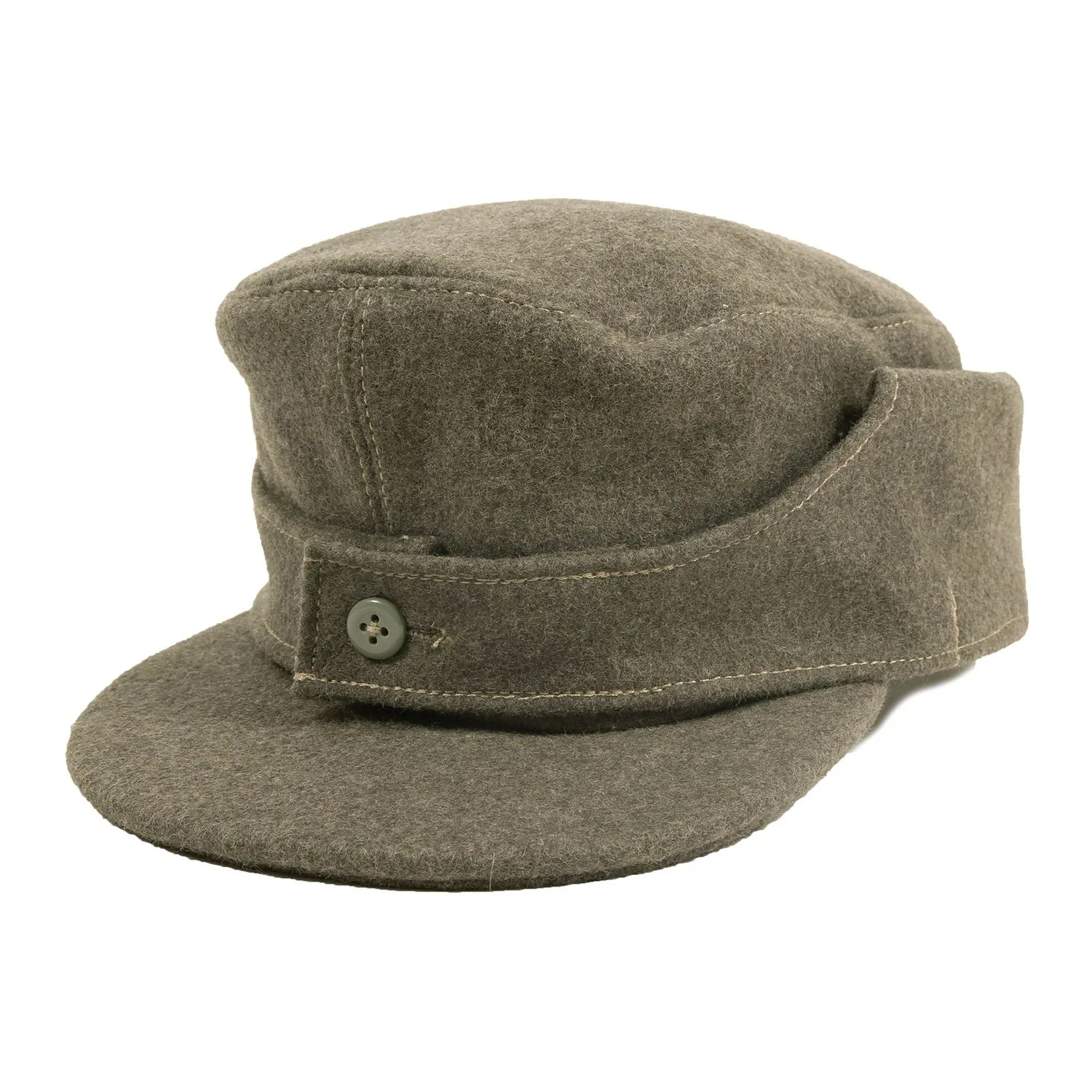
Single Button M43 Cap
- Esbit stoves were issued from 1936 onward and could boil water in 5–7 minutes.
- Late-war mess kits often omitted the lid handle to save materials.
Post-War and Modern Reproductions: Keeping History Alive
After WWII, German military mess kits were used by various European armies and civilian campers. The design influenced many post-war camping cookware sets. Today, original WWII German mess kits are highly collectible, but prices can be steep. Fortunately, several manufacturers produce accurate reproductions that match the original specifications in weight, material, and finish. These reproductions allow reenactors to build authentic kits without damaging historical artifacts.
When assembling a German reenactment kit, it is important to consider every piece of gear, from the mess kit to the smallest button. A well-rounded impression includes not only the kitchen gear but also the correct uniform details. For example, the 19mm Pebbled Tunic Buttons, Fieldgray are perfect for a Heer or Luftwaffe tunic, while the Single Button M43 Cap is a staple of late-war field dress. Together, these items create a cohesive and historically accurate portrayal.
- Reproduction mess kits are available in both aluminum and steel finishes.
- Always check the weight and markings to ensure authenticity.
Whether you are a seasoned reenactor or a new collector, understanding the evolution of German army kitchen gear enriches your appreciation of military history. From the early Gulaschkanonen to the compact M1931 mess kit, each piece tells a story of adaptation and survival. Explore our selection of authentic reproduction items, including the 19mm Pebbled Tunic Buttons, Fieldgray and the Single Button M43 Cap, to complete your German field kit and bring history to life.