Quick answer
Most fiberglass market tray problems—scratches, stains, and minor warping—can be fixed with simple cleaning, sanding, or gentle heat reshaping. For cracks or deep gouges, replacement is the safer choice to avoid contamination and preserve professional appearance.
Why fiberglass market trays develop problems
Fiberglass market trays are built tough with high-impact resistant material and aluminum-reinforced rims, but daily commercial use still takes a toll. Heat, acidic foods, abrasive scrubbing, and stacking heavy loads can gradually cause surface wear, discoloration, or shape changes. Understanding why each problem occurs helps you choose the right fix and extend the tray’s service life.
Diagnosis and fix guide
- Symptom: Scratches and scuffs on the surface: Caused by abrasive scrub pads, metal utensils, or sliding trays against rough surfaces. The fiberglass top layer is durable but not scratch-proof. Fix: Lightly sand with fine-grit sandpaper (400-600 grit) in the direction of the scratch, then wash thoroughly. For deep scratches, stop and replace the tray to avoid bacterial harborage.
- Symptom: Stains from foods or chemicals: Tomato sauce, turmeric, or acidic dressings can leave discoloration if left on the tray. Fiberglass is chemical-resistant but not stain-proof. Fix: Soak with a baking soda paste or a mild bleach solution (1:10 ratio) for 15 minutes, then rinse. Avoid harsh chlorine bleach that can damage the resin. If stain remains after three attempts, the tray is safe to use but may look worn.
- Symptom: Warping or uneven bottom: Exposure to high heat (dishwasher drying cycle, direct sun, or hot pans) or uneven stacking under heavy loads can distort the tray shape. Fix: Place the tray upside down on a flat surface and gently warm the underside with a heat gun (low setting) while pressing flat. Cool under a weight. If the warp exceeds 1/4 inch or the tray rocks, replace it to prevent spills.
Product facts
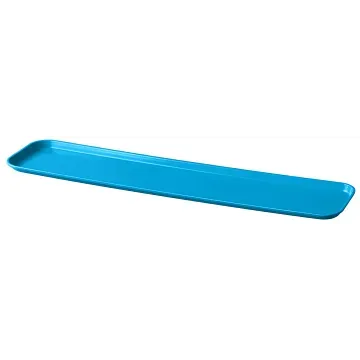
- Fiberglass Market Trays and Pans: Fiberglass Market Trays and Pans are made of high impact resistant fiberglass with aluminum reinforced rims, available in low profile trays and 2" deep pans. The aluminum rims add structural rigidity, reducing the chance of warping under heat or heavy loads, and the fiberglass body resists dents from daily handling.