Quick answer
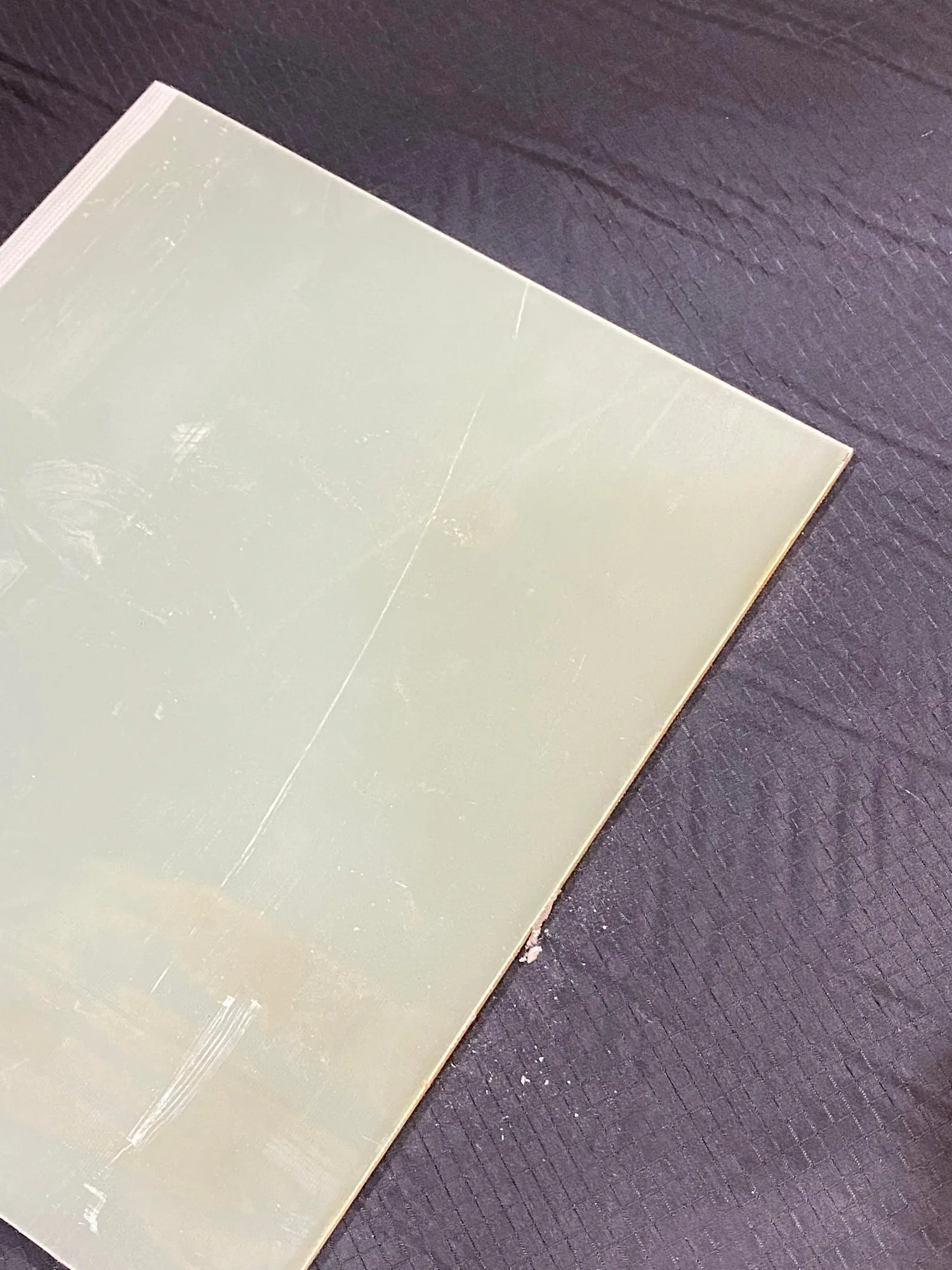
G-10 sheet stock is a glass-epoxy composite used in high power rocketry for fins, bulkheads, avionics sleds, and stiffening plates. Its strength, stiffness, and electrical insulation make it a reliable choice for structural and electronic components.
Why G-10 instead of plywood or aluminum?
Plywood can delaminate under high-G flight and moisture exposure. Aluminum is strong but adds weight and can interfere with radio signals if used near an antenna. G-10 sits between them: it is lighter than aluminum for the same stiffness, does not rot or corrode, and its electrical-grade epoxy makes it a natural insulator for electronic bay components.
Limitations to know before buying
G-10 is abrasive on cutting tools—carbide or diamond blades are recommended. It also produces fine glass dust, so always wear a respirator and work in a ventilated area. Because the sheets sold as "cut offs" can vary by up to 1/2 inch in dimensions, you may need to trim them to your exact layout.
Frequently asked questions
Can I use G-10 sheet stock for rocket fins?
Yes. G-10 is stiff, strong, and resists moisture—three qualities that make it a popular fin material for high power rockets. It holds up well to high-speed flight and landing impacts. Use a carbide blade to cut your fin shape and sand the edges smooth before bonding.
What thickness should I choose for fins?
For most mid- to high-power rockets, 1/16" or 1/8" G-10 works well for fins. Thicker stock (3/16" or 1/4") is used on larger, heavier rockets or when the fin span is long. Thinner sheets are easier to cut but may flex under heavy thrust. Match thickness to rocket size and expected flight loads.
How do I drill and cut G-10 without chipping?
Use sharp carbide or diamond-tipped bits. For holes, back the sheet with a scrap board and drill at moderate speed with light pressure. For straight cuts, a table saw with a carbide blade or a jigsaw with a fine-tooth blade works. Always wear a dust mask and eye protection. Carbide tooling and a backing board prevent chipping.
Is G-10 good for electronic bay sleds?
Yes. Because G-10/FR-4 is an electrical insulator with low thermal expansion, it is a standard material for mounting altimeters, GPS trackers, and other avionics. It does not conduct electricity, so you can mount components directly without worrying about shorts.
Can I bond G-10 with epoxy?
Yes. Standard 30-minute or slower epoxy bonds well to G-10 after you scuff the surface with 80-120 grit sandpaper. Clean the surface with isopropyl alcohol before applying epoxy. Avoid CA glues for structural joints—they are too brittle for high-G loads. Scuff and clean before bonding; use epoxy, not CA.
Product facts
-
G-10 Sheet Stock: G10/FR-4 consists of glass fabric and electrical grade epoxy resin, offering outstanding electrical properties and a low coefficient of thermal expansion. This makes it ideal for avionics sleds and bulkheads where dimensional stability and insulation matter under temperature swings.
G-10 Sheet Stock