Quick answer
A micro g-string like the Marcia Lace Micro G-String offers near-zero coverage and a barely-there feel, while a thong provides slightly more fabric for those who prefer a bit of support. Your choice depends on how much coverage you want and how sensitive your skin is to elastic edges.
Why coverage matters for comfort
The main difference between a g-string and a thong is the amount of fabric at the back. A g-string uses a thin elastic strip that sits between the cheeks, while a thong has a wider back panel that covers more area. If you dislike the feeling of fabric wedging, a g-string's minimal design may feel less intrusive. Conversely, if you want a barrier between skin and clothing, a thong's broader back can reduce chafing.
Front coverage also varies. Many g-strings, especially micro styles, have a narrow front triangle that sits low on the hips. Thongs often have a slightly wider front panel that offers more modesty and support. Your body shape and sensitivity will determine which feels better for all-day wear.
Fabric and elastic feel
The materials used in the waistband and leg openings directly affect comfort. Delicate galloon lace and ultra-thin elastic, as seen in the Marcia Lace Micro G-String, create a soft, nearly invisible edge that reduces pressure marks and irritation. Thicker elastic or rougher seams can dig in, especially during movement. If you have sensitive skin, look for styles with soft lace or seamless edges regardless of cut.
Breathability is another factor. Both cuts can be made from stretchy blends like polyamide and spandex, which move with you and wick moisture. A micro g-string uses less fabric overall, so it may feel cooler and less restrictive in warm weather.
G-string vs. thong trade-offs
- Back coverage: G-string: a thin strip that disappears between cheeks. Thong: a wider back panel that covers more area. Choose a g-string if you want the least visible panty line; choose a thong if you prefer a bit of fabric between skin and pants.
- Front coverage: G-string: often a narrow, low-rise triangle. Thong: typically a wider, higher-rise front for more coverage. Pick a g-string for a bolder, barely-there look; pick a thong if you want more front support or modesty.
- Fabric and elastic feel: G-string: ultra-thin elastic and soft lace reduce irritation. Thong: more seams and elastic can cause chafing if not well made. If you have sensitive skin, a lace g-string like the Marcia is often more comfortable than a thong with thicker edges.
Product spotlight
-
Marcia Lace Micro G-String: The Marcia Lace Micro G-String is made with soft galloon lace and ultra-thin elastic, with a G-string back and a micro mini front. Fabric is 90% polyamide, 10% spandex. The combination of delicate lace and thin elastic means the waistband and leg edges are less likely to pinch or leave marks, making it a solid choice for anyone who finds standard thongs uncomfortable.
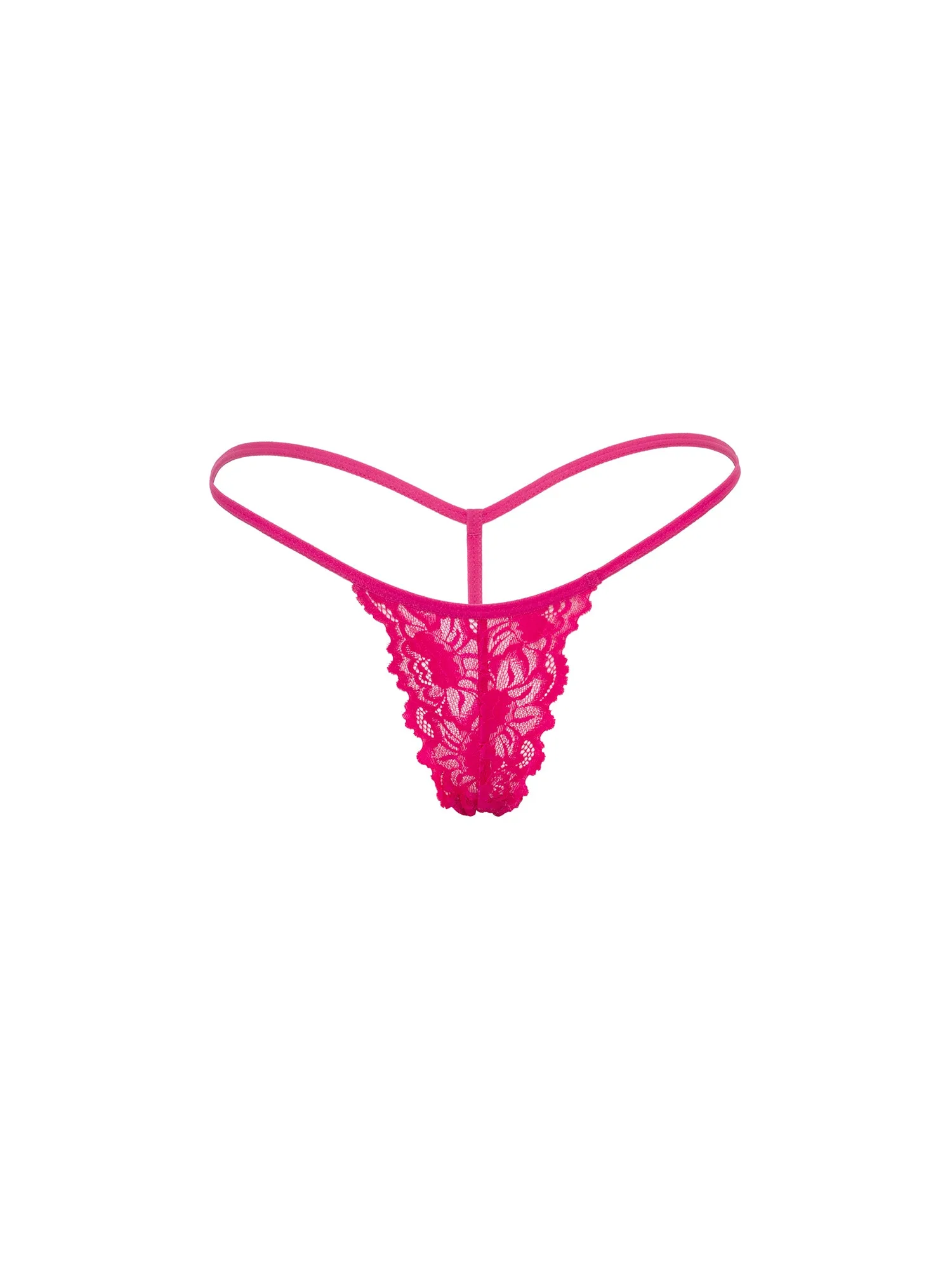
Marcia Lace Micro G-String
Which one fits you?
Best for
- Anyone who wants the least visible panty line under tight clothing
- People who prefer a barely-there feel and minimal fabric against the skin
- Those who enjoy delicate lace and ultra-thin elastic for sensitive skin
Not for
- Those who want moderate back coverage or a bit of fabric between cheeks
- Anyone who finds thin elastic uncomfortable or prefers a wider waistband