Quick answer
Most gluten-free pie crust problems come from three things: too little water, overmixing, or rolling cold dough. Add water one tablespoon at a time until the dough holds together when squeezed, handle it gently, and roll between two sheets of parchment. If the dough still crumbles after two extra tablespoons of water, stop adding liquid and press it into the pan instead.
Why gluten-free pie crust behaves differently
Gluten-free pie crust mix lacks the gluten network that gives wheat dough its stretch. That means the dough cannot be kneaded into submission or rolled thin without support. It also means the dough absorbs water more slowly, so it can feel dry right up until it suddenly becomes sticky. Mix with a fork until no dry pockets remain, then let the dough rest for 10 minutes before judging the texture. Resting gives the flours time to hydrate, which often solves a 'too dry' complaint without adding more water.
How to roll gluten-free pie crust without cracks
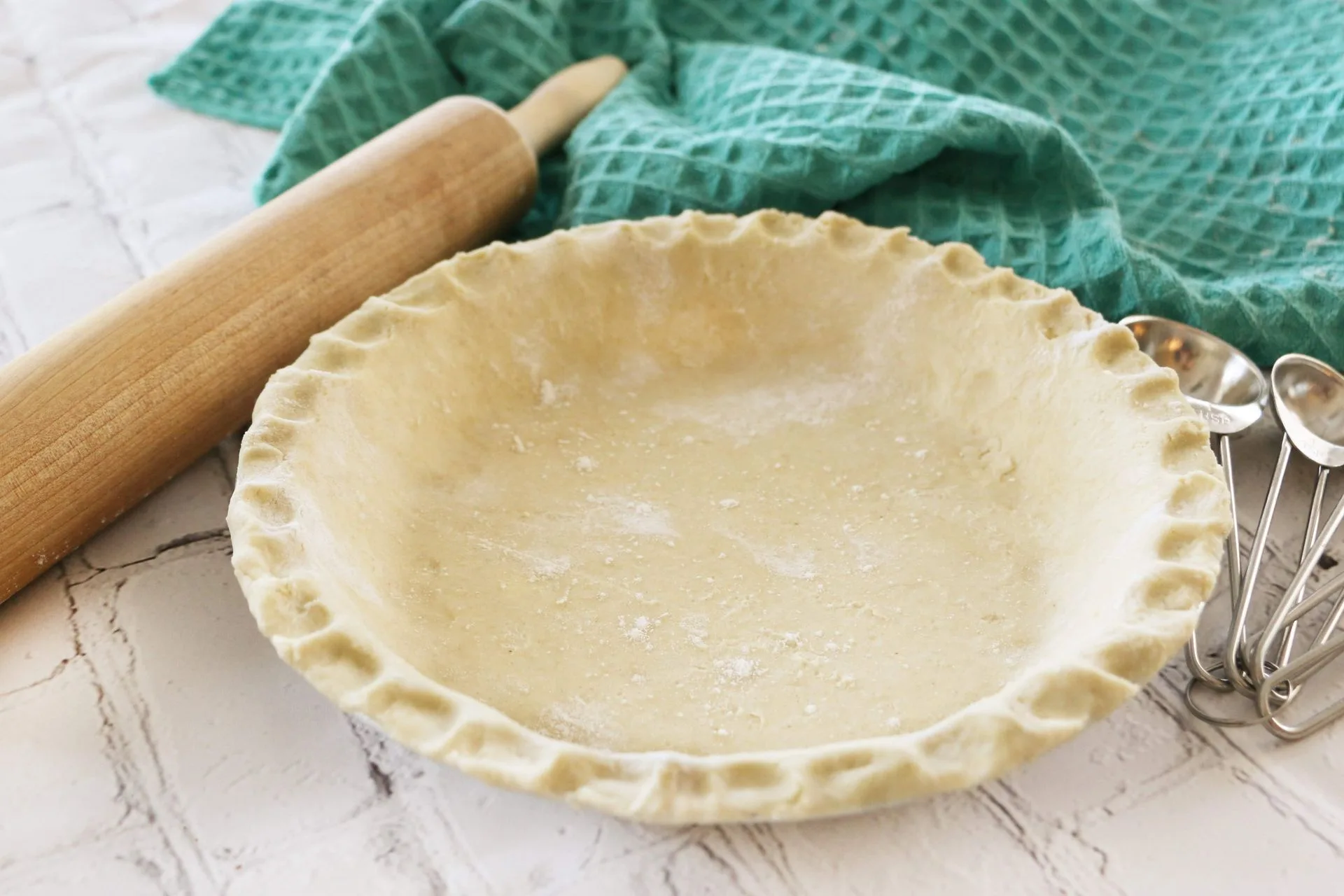
Roll gluten-free pie crust between two sheets of parchment paper or plastic wrap. This replaces the gluten strength with physical support and prevents the dough from sticking to the pin. Work from the center outward with light, even pressure, lifting the top sheet occasionally to prevent creases. If the edges crack, press them back together with your fingers and continue. For a double-crust pie, roll the top crust slightly thicker than the bottom so it can be lifted without tearing. If the dough feels warm or greasy, slide it onto a baking sheet and chill for 10 minutes before rolling.
When to stop fixing and press the crust instead
If the dough crumbles after you have added the full range of water and rested it, stop. Continuing to add water or re-roll will make the crust tough or gummy. Press the dough directly into the pie plate with your fingers, starting from the center and working outward. This method works for single-crust pies, tarts, and any recipe where the crust is a base rather than a fluted showpiece. A pressed crust browns evenly and holds fillings just as well. The only time to start over is if the dough is visibly oily or the mix was measured incorrectly.
Diagnosis: match the symptom to the fix
- Dough crumbles when squeezed: The mix is under-hydrated. Add water one tablespoon at a time, mixing with a fork after each addition, until a handful holds together without falling apart. Stop at two extra tablespoons. If it still crumbles, press the dough into the pan.
- Crust cracks while rolling: The dough is too cold or too dry at the edges. Let it rest at room temperature for 5 minutes, then roll between parchment sheets, pressing cracks closed as you go. If cracks keep reopening, the dough is too cold. Rest again, but do not add water.
- Crust tears when transferring to the pan: The dough is too warm or too thin. Slide the parchment onto a baking sheet, chill for 10 minutes, then invert the dough over the pan and peel back the paper. If it still tears, press the dough directly into the pan and skip the rolling step.
- Crust shrinks or slumps in the oven: The dough was stretched when fitted into the pan. Press it in gently without pulling, and chill the shaped crust for 15 minutes before baking. If shrinkage continues, the dough was overworked. Next time, press rather than roll.
Mix facts that affect troubleshooting
- Gluten-Free Blue Ribbon Pie Crust Mix: Gluten-Free Blue Ribbon Pie Crust Mix makes two 8-9 inch pie crusts. You can divide the dough and test one crust with extra water while keeping the second batch as a control.
- Gluten Free Key Lime Pie & Lemon Squares Mix Combo: Gluten Free Key Lime Pie & Lemon Squares Mix Combo includes one Key Lime Pie Mix and one Lemon Squares Mix. If pie crust continues to fight you, a crumb or press-in crust for these citrus fillings avoids rolling altogether.