Quick answer
Choose Himalayan pink salt if you want a mineral-rich, less processed option with a mild flavor, or sea salt if you prefer a brighter, saltier taste from evaporated seawater.
Origin and processing: ancient mines vs evaporated seawater
Himalayan pink salt is mined from ancient salt deposits in the East Karakoram range of the Himalayan Mountains in Pakistan. It is unprocessed and retains trace minerals like calcium, magnesium, potassium, copper, and iron, which give it its characteristic pink hue.
Sea salt is produced by evaporating seawater, so its mineral content varies by source. It can be refined or left unrefined, and it often has a brinier, more pronounced salt flavor compared to pink salt.
Mineral content: does it really matter?
Pink salt's minerals are present in trace amounts, so they do not significantly contribute to your daily nutrient intake. However, they do affect flavor and color, making pink salt a popular finishing salt.
Sea salt also contains trace minerals, but the levels depend on the water source. Neither salt is a meaningful source of minerals, so choose based on taste and texture rather than nutrition.
Taste and texture: fine vs coarse
Fine Himalayan pink salt dissolves quickly and has a mild, clean taste, making it ideal for everyday cooking and baking. Coarse sea salt, on the other hand, provides a crunchy texture and a stronger salty punch, which is why it is often used as a finishing salt.
Your choice depends on the application: fine salt for seasoning during cooking, coarse salt for sprinkling over finished dishes.
How to choose: tradeoffs at a glance
- Flavor intensity: If you want a mild, clean saltiness that blends into dishes, choose Himalayan pink salt. If you prefer a brighter, brinier taste, sea salt is the better pick.
- Texture preference: Fine pink salt dissolves quickly and is great for baking and cooking. Coarse sea salt adds crunch and is best used as a finishing touch. Keep both on hand: fine for cooking, coarse for finishing.
- Mineral content: Pink salt contains trace minerals like iron and magnesium, but the amounts are too small to affect your diet. Sea salt's mineral profile varies by source, so it is not a reliable mineral source either. Choose based on taste and appearance, not nutrition.
Product spotlight
-
Himalayan Pink Salt (Fine): Terrasoul's Himalayan Pink Salt (Fine) is 100% pure, unprocessed natural salt crystals from the East Karakoram range in Pakistan, containing minerals like calcium, magnesium, potassium, copper, and iron. This fine grind is ready for your salt shaker, making it a convenient choice for everyday seasoning with a subtle mineral boost.
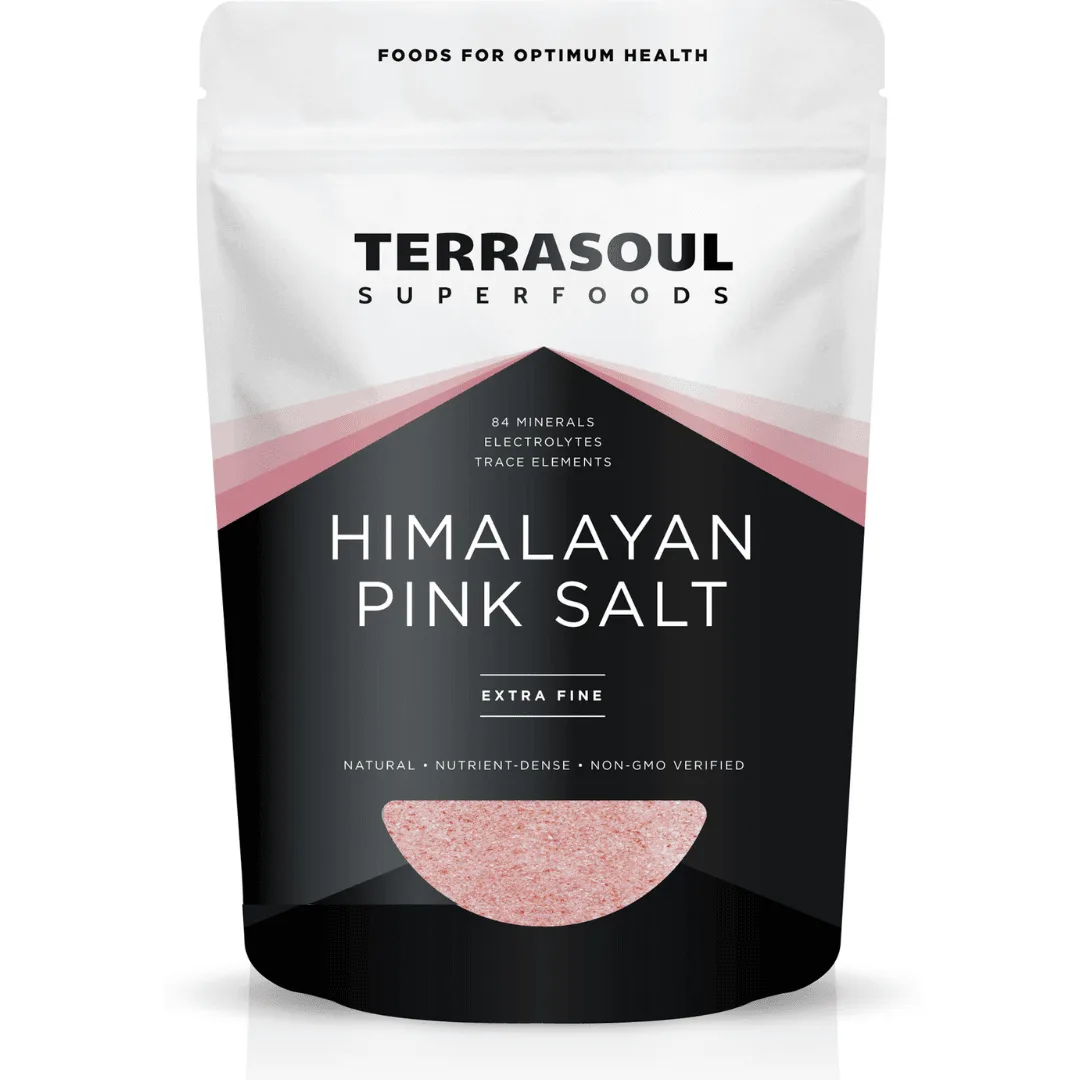
Himalayan Pink Salt (Fine)
Which salt fits you?
Best for
- Everyday cooking and baking when you want a fine, quick-dissolving salt
- Those who prefer a milder flavor and a visually appealing pink color
Not for
- Finishing dishes where a crunchy texture and strong salty bite are desired
- Anyone expecting significant mineral intake from salt