Quick answer
Bake a large country sourdough by building a strong dough with an active starter, using a long bulk ferment with folds, shaping tight, and baking in a covered pot or on a stone with steam. Your home oven can match professional results if you preheat thoroughly, control steam, and judge doneness by internal temperature and crust color.
A large country sourdough loaf is mostly about timing and dough strength, not special equipment. If you can read your starter and keep the dough from spreading, a home oven will give you a crisp crust and a moist, open crumb.
This guide walks through the process in order, with the mistakes that cause dense or pale loaves and the checkpoints that tell you when to move on. You will also find practical notes on scaling, steam, and storage so the loaf fits your schedule.
Before you start: equipment and timing
You need a digital scale, a large mixing bowl, a dough scraper, and something to bake in: a covered Dutch oven, a combo cooker, or a heavy baking stone with a metal bowl for steam. A proofing basket helps the dough hold shape, but a bowl lined with a floured towel works. For a large loaf, choose a vessel that gives the dough room to rise without touching the lid.
Plan around your starter, not the clock. A mature starter that doubles within 4 to 6 hours of feeding is ready. If it smells like acetone or rises slowly, feed it again and wait. Most of the work is hands-off fermentation, so a large loaf fits a weekend or an overnight schedule.
- Weigh everything in grams for consistency.
- Keep dough temperature near 75°F to 78°F for predictable timing.
Mix the dough and build strength
Combine flour, water, and starter, then rest for 30 to 60 minutes before adding salt. This rest hydrates the flour and makes the dough easier to handle. For a large country loaf, use a higher proportion of bread flour if you want a taller rise, or whole grain for more flavor. Add salt after the rest and mix until it disappears.
Strength comes from folds, not kneading. Do four to six sets of stretch-and-folds spaced 20 to 30 minutes apart during the first two hours of bulk fermentation. The dough should go from shaggy to smooth and hold a shape. If it tears, you are folding too aggressively; wait 10 minutes and try again.
- Wet your hands before folding to prevent sticking.
- Stop folding when the dough feels elastic and springs back slowly.
Bulk ferment and shape the large loaf
Let the dough rise until it is 50 to 75 percent larger, with visible bubbles on top and sides. In a cool kitchen this can take 6 to 10 hours; in a warm kitchen, 3 to 5 hours. Do not rely on time alone. The dough should feel airy and jiggle when you shake the bowl.
Turn the dough onto a lightly floured surface and shape it into a tight round or oval. For a large loaf, use a pre-shape, rest 20 minutes, then final shape and place it seam-side up in a floured proofing basket. If the dough spreads instead of holding, give it another set of folds or a longer bench rest.
- Use rice flour in the basket for a clean release.
- Cold retard overnight for a deeper flavor and easier scoring.
Bake with steam in a home oven
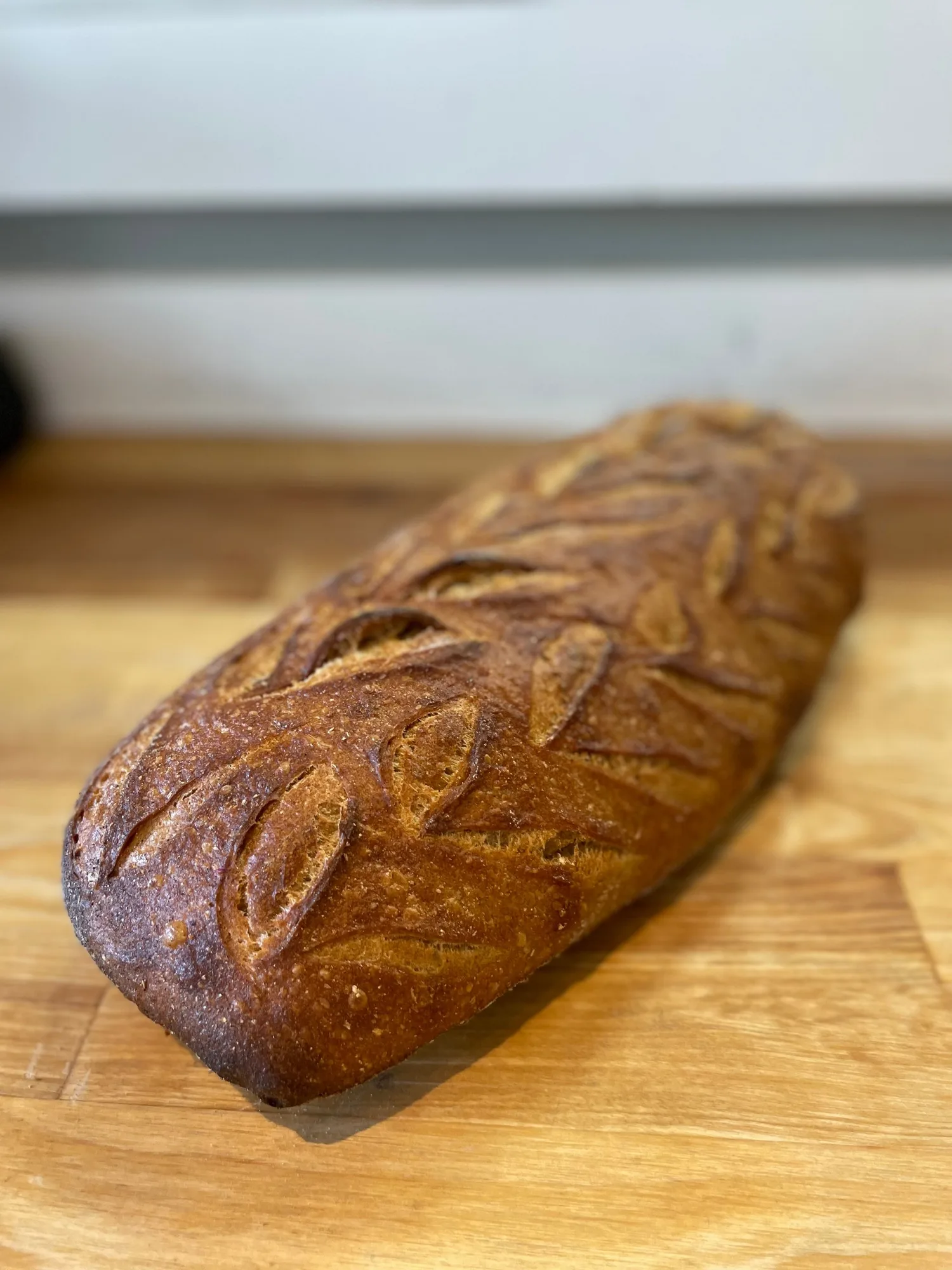
Preheat your oven and baking vessel to 475°F for at least 45 minutes. If you use a stone, place a metal pan on the rack below for steam. Transfer the dough to parchment, score it with a blade at a shallow angle, and load it into the hot vessel. Cover and bake for 20 minutes to trap steam.
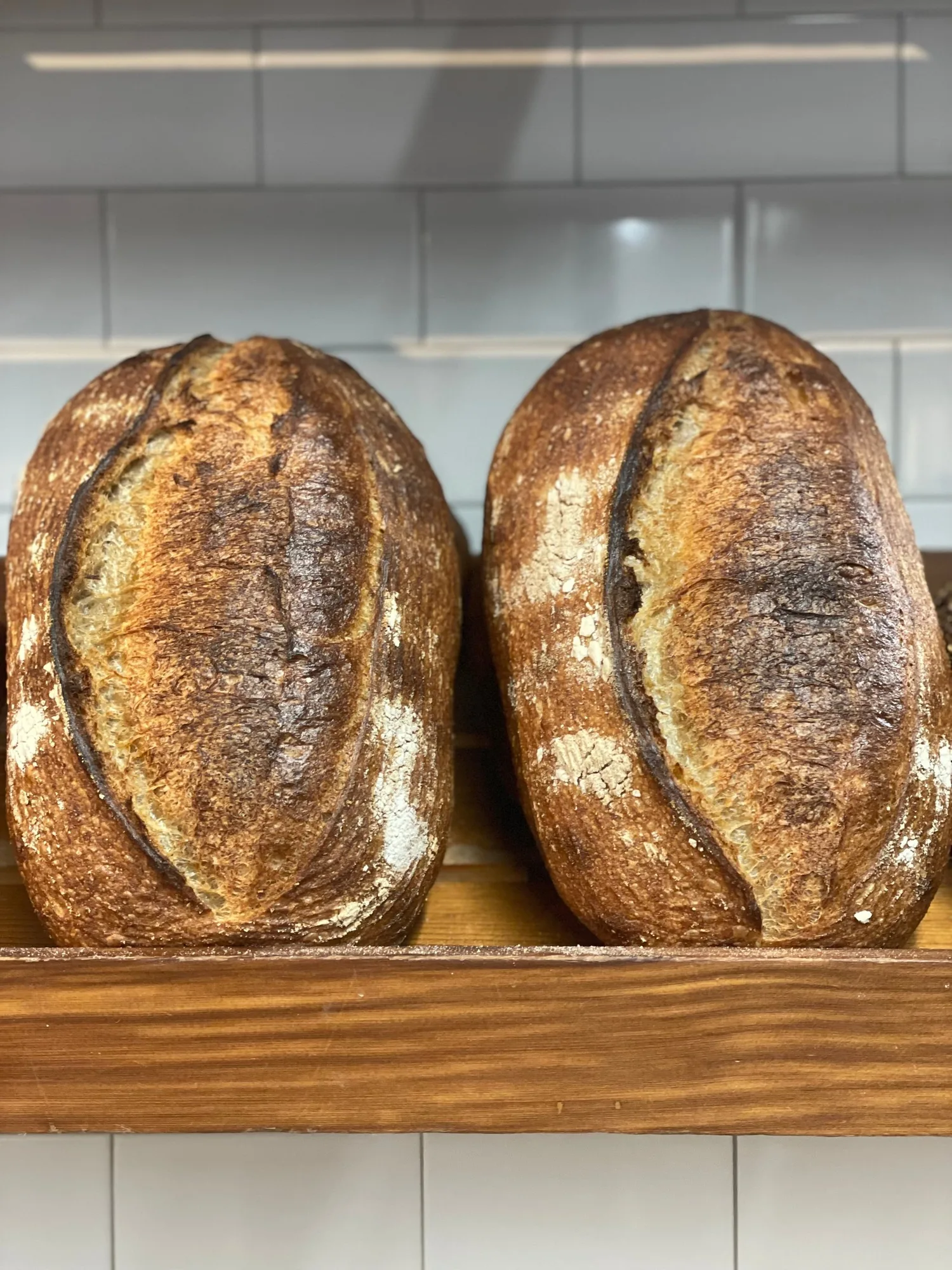
After 20 minutes, remove the lid and reduce heat to 450°F. Continue baking for 20 to 30 minutes, until the crust is deep brown and the loaf sounds hollow when tapped. A large loaf needs the longer end of that range. If the top browns too fast, tent with foil. Internal temperature should read 205°F to 210°F for a fully baked crumb.
- Do not skip the preheat; a cold vessel gives a pale crust.
- Let the loaf cool completely before slicing to avoid a gummy crumb.
Troubleshooting and storage
If the loaf is dense, the bulk ferment was too short or the starter was weak. If it spreads in the oven, the dough was over-proofed or under-shaped. If the crust is soft, return it to the oven uncovered for 5 to 10 minutes. These are common issues, not failures, and each bake teaches you how your kitchen behaves.
Store the cooled loaf cut-side down on a board for a day, then in a paper bag. For longer storage, slice and freeze. Reheat slices in a toaster or a hot oven to bring back the crust. A large loaf gives you several days of slices, so plan for toast, sandwiches, and croutons.
- Keep a baking log with times, temperatures, and results.
- Adjust hydration by 5 percent at a time if the dough is hard to handle.
Country sourdough bake steps
- 1. Activate your starter: Feed your starter and wait until it doubles and smells pleasantly sour, usually 4 to 6 hours at room temperature. Checkpoint: if it does not rise, feed again and wait before mixing dough.
- 2. Mix and rest: Combine flour, water, and starter, rest 30 to 60 minutes, then add salt and mix until incorporated. Mistake to avoid: adding salt directly to the starter before the rest, which can slow fermentation.
- 3. Fold for strength: Do four to six sets of stretch-and-folds every 20 to 30 minutes during the first two hours of bulk. Checkpoint: dough should feel elastic and hold a shape, not tear.
- 4. Bulk ferment: Let the dough rise until 50 to 75 percent larger, with bubbles on top and a jiggly feel. Mistake to avoid: going by time alone; judge the dough, not the clock.
- 5. Shape and proof: Pre-shape, rest 20 minutes, final shape, and place seam-side up in a floured basket. Retard overnight for flavor. Checkpoint: the dough should hold its shape and not spread when unmolded.
- 6. Bake with steam: Preheat oven and vessel to 475°F. Score, load, cover, and bake 20 minutes. Uncover, reduce to 450°F, and bake 20 to 30 minutes more. Checkpoint: internal temperature 205°F to 210°F and a hollow sound when tapped.
- 7. Cool completely: Transfer to a wire rack and wait at least 1 hour before slicing. Mistake to avoid: cutting hot bread, which makes the crumb gummy.
Bakery favorites to pair with your bake
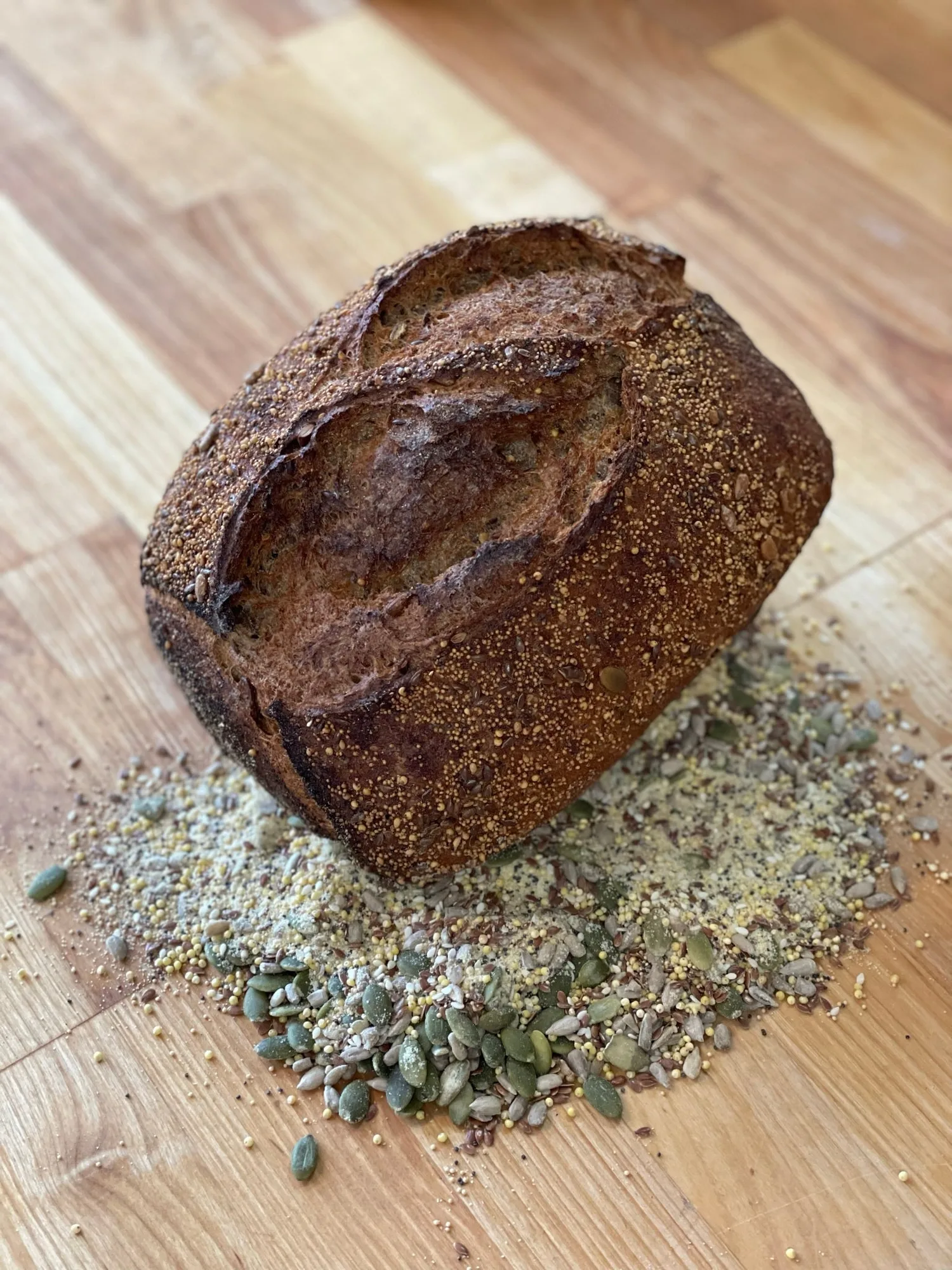
- Seeded Wheat Sourdough: Seeded Wheat Sourdough is a whole grain bread made with a blend of seeds and grains, including amaranth, sunflower, pumpkin, flax, sesame, poppy, millet, and corn. It shows what a seeded, whole grain sourdough loaf looks and tastes like, so you can compare your home bake or use it as a starting point for adding seeds to your own dough.
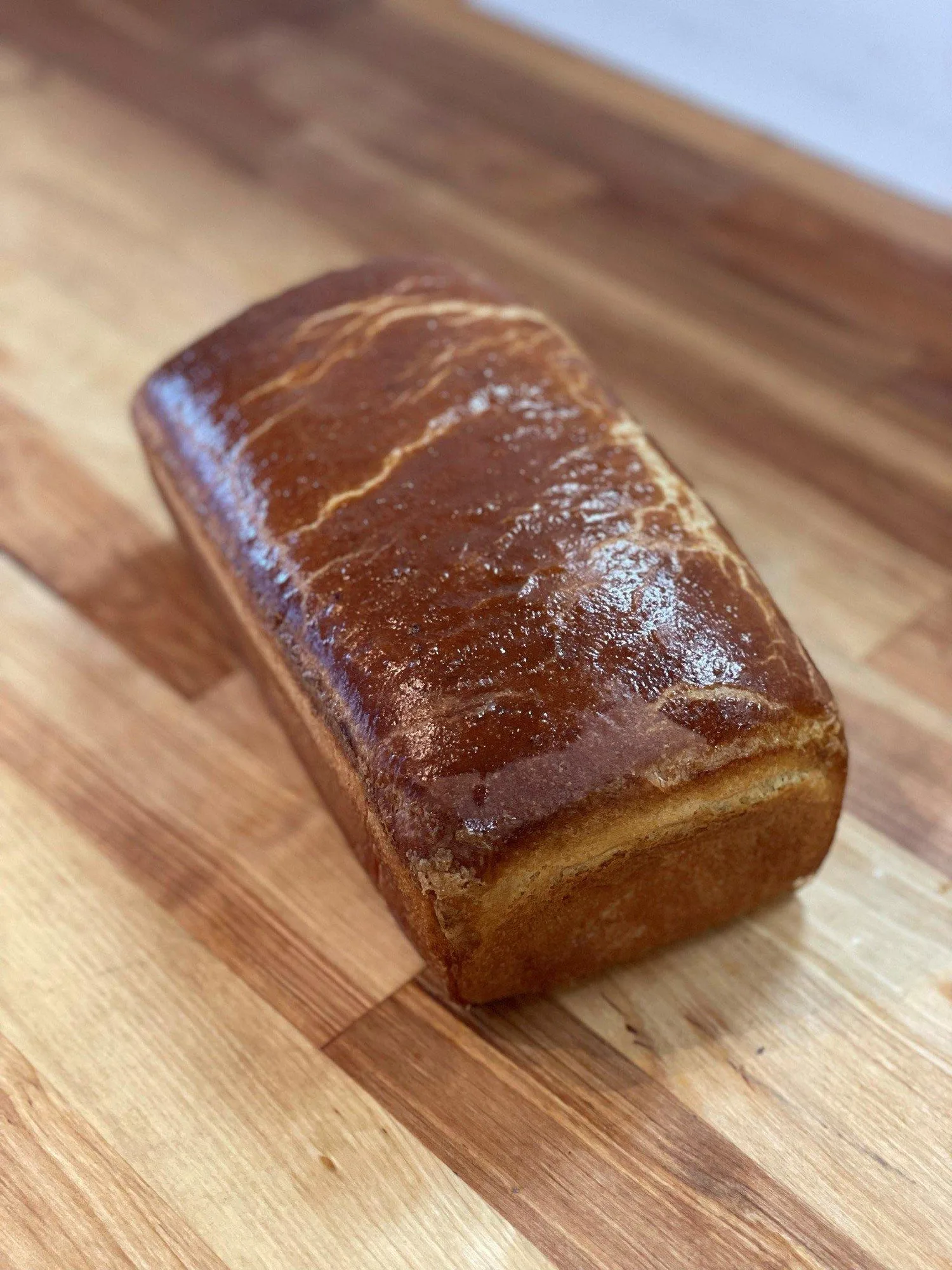
- brioche-buns-f882d83fe233fb82bf69a979-1645741">Brioche Buns: Brioche Buns are described as a buttery soft roll, available in a Standard option. If you want a soft, enriched bread for burgers or breakfast, this is a different style from lean country sourdough and a good reminder that not every loaf needs a long ferment.
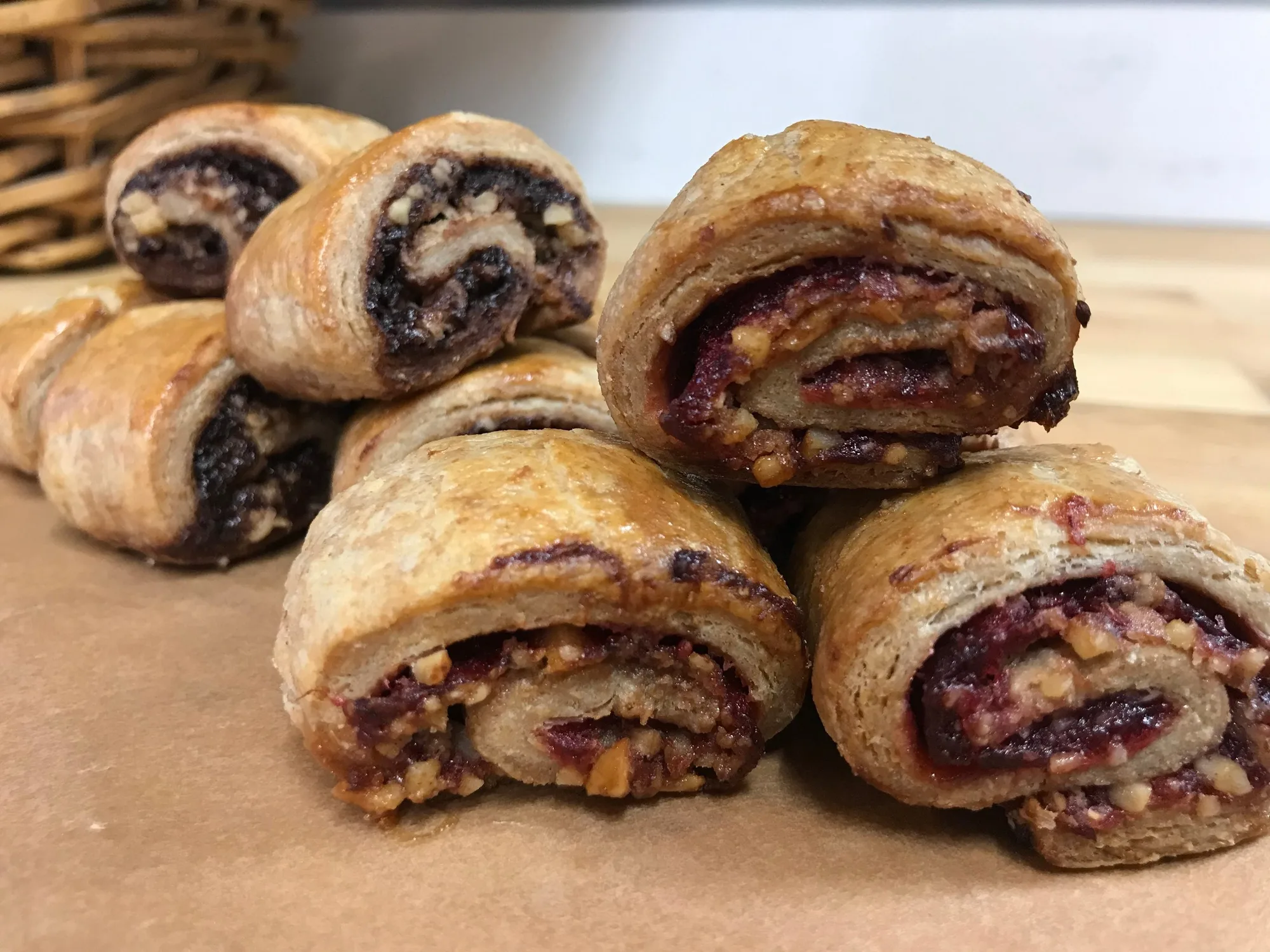
- Chocolate Walnut Rugelach: Chocolate Walnut Rugelach is a cream cheese whole wheat pastry with a chocolate walnut filling, tagged for Hanukkah and Rosh Hashanah. A practical bakery-style pastry to have on hand when you are spending the day baking bread and want a ready-made treat for guests.
A large country sourdough is a repeatable process once you focus on starter activity, dough strength, and steam. Start with the steps above, keep notes, and adjust for your kitchen. The loaf will improve with each bake.