Quick answer
Replace up to 100% of all-purpose flour with whole grain spelt flour in your everyday bread recipe, but increase hydration by 10–15% and reduce mixing time to avoid a dense crumb.
Why spelt flour behaves differently than white flour
Whole grain spelt flour contains more protein and fiber than all-purpose flour, which makes it absorb more water. If you swap it cup-for-cup without adjusting liquid, your dough will feel stiff and dry, and the bread may turn out heavy.
Spelt gluten is also more delicate than wheat gluten. Over-mixing or aggressive kneading can break down the structure, leading to poor oven spring. Gentle handling is key.
When to adjust your recipe further
If your everyday bread uses a preferment or long fermentation, spelt flour can handle a shorter bulk rise (2–3 hours at room temperature) without overproofing. For sourdough versions, reduce the starter amount by 10% to keep the acidity balanced.
For enriched doughs (with butter, oil, or eggs), spelt flour works well but may need an extra tablespoon of liquid per cup of flour to maintain softness.
Steps to bake everyday bread with spelt flour
- 1. Adjust the hydration: For every 1 cup (120g) of all-purpose flour replaced with spelt flour, add 2 to 3 tablespoons (30–45ml) of extra water. Start with the lower end if your recipe already uses a high hydration (75% or more). The dough should feel tacky but not sticky after mixing. If it feels dry, add water 1 tablespoon at a time.
- 2. Mix gently and briefly: Combine flour and water, then let the dough rest for 20 minutes (autolyse). After that, mix only until the dough comes together — about 2–3 minutes by hand or 1 minute on low speed in a stand mixer. Avoid extended kneading. A shaggy dough is fine; over-mixing is the most common mistake with spelt.
- 3. Use a shorter bulk fermentation: Let the dough rise at room temperature (70–75°F / 21–24°C) for 2 to 3 hours, performing 2–3 gentle stretch-and-folds in the first hour. Do not let it double in volume; a 50–60% rise is enough. Under-proofed spelt bread is better than over-proofed. If the dough feels slack or starts to flatten, shape it immediately.
- 4. Shape without degassing: Gently preshape into a round, rest 15 minutes, then final shape with a light tension pull. Do not punch down or roll aggressively — spelt dough loses gas easily. If the dough sticks to your hands, lightly wet them rather than dusting with extra flour.
- 5. Bake with steam for a better crust: Preheat your oven to 450°F (230°C) with a Dutch oven or a steam pan at the bottom. Bake covered for 20 minutes, then uncovered for 20–25 minutes until the internal temperature reaches 200°F (93°C). Whole grain spelt bread browns faster than white bread. Check the crust after 15 minutes uncovered and tent with foil if needed.
Product spotlight
-
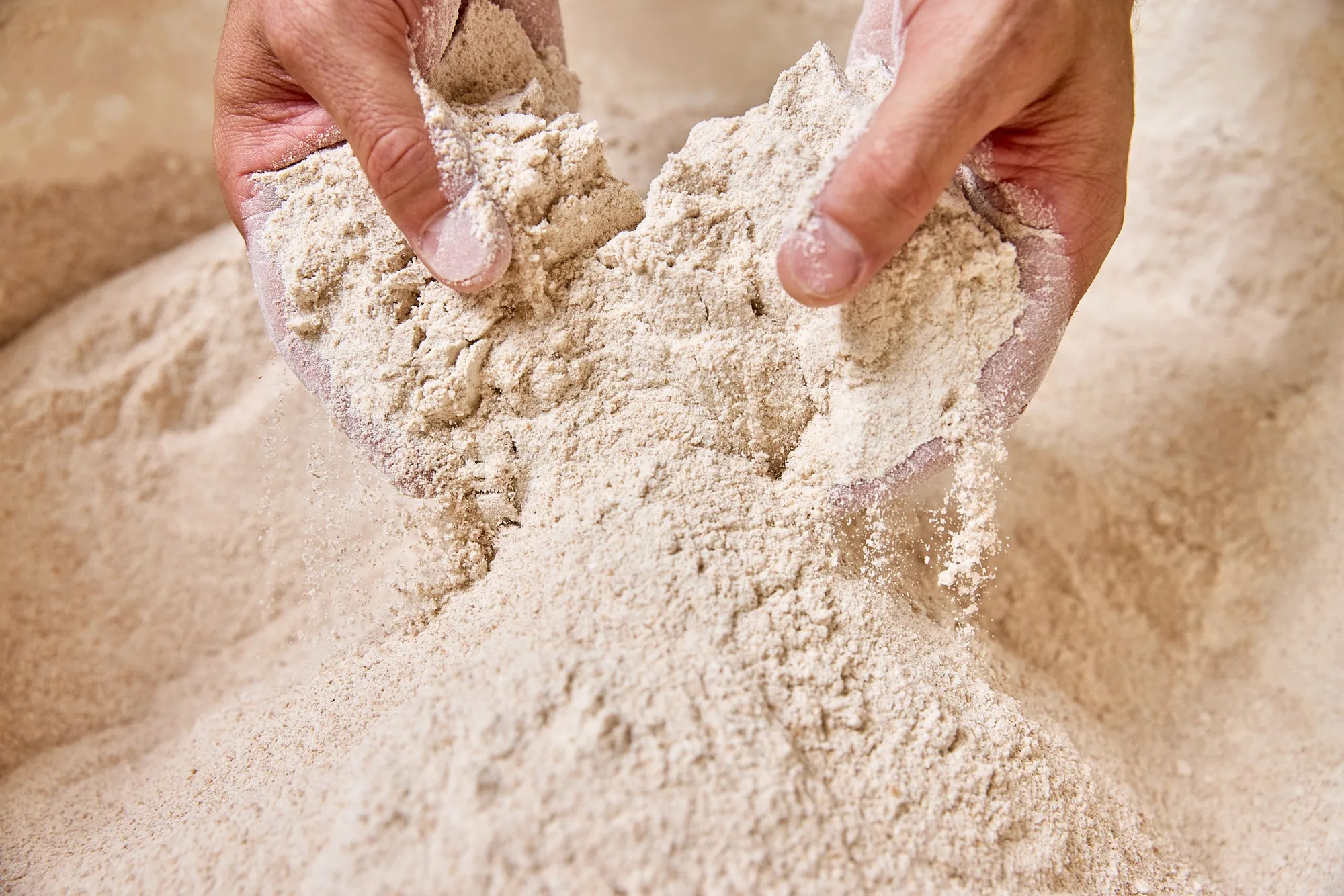
Spelt Flour 25#: Spelt Flour 25# from Kneads is a whole grain spelt flour freshly milled in store using a New American Stone Mill. Stone milling preserves the germ and bran, giving you more flavor and nutrients, but also means the flour is less refined — so expect a slightly coarser texture and higher water absorption than commercial spelt flour.
Spelt Flour 25#