Quick answer
To break in a new leather bag, use it regularly with light loads, flex the stiff areas gently by hand, and let the leather warm and mold naturally. Avoid heat, soaking, or heavy conditioning at first. Most bags soften within two to four weeks of consistent, gentle use.
A new leather bag can feel surprisingly stiff. That firmness is a sign of quality—it means the leather hasn't been over-processed—but it can make the bag awkward to open, carry, or wear crossbody. The good news is that leather is designed to adapt. With the right approach, you can soften a leather bag without risking cracks, stains, or stretched seams.
This guide walks through a safe, step-by-step break-in process. You'll learn how to work with the leather's natural flexibility, when to condition, and what mistakes to avoid. The steps work for any full-grain or calf-grain leather bag, including structured satchels and totes.
Why new leather feels stiff (and why that's normal)
Full-grain and calf-grain leathers start firm because the fibers are tightly packed and the surface hasn't been flexed. That stiffness protects the bag's shape and helps it resist sagging over time. It's not a defect—it's a characteristic of quality leather that will relax with use. The rate of softening depends on the leather type, the bag's construction, and how often you carry it.
Structured designs like the Soft Satchel or the Mini have reinforced panels and magnetic closures that can feel rigid at first. The leather needs to bend at the flap, strap, and handle points. Gentle, repeated flexing does more than any product—heat or excessive oil can actually weaken the fibers and cause long-term damage.
- Never use a hairdryer, radiator, or direct sunlight to speed up softening—heat dries out the leather and can cause cracking.
Step 1: Start with light loads and short carries
Resist the urge to stuff your new bag full. Instead, carry only the essentials—phone, wallet, keys—for the first week. This lets the leather flex naturally at the stress points without forcing the seams or stretching the shape. Carry it daily if you can, even for short trips, because consistent use is the most effective way to break in a leather bag.
If the bag has a crossbody strap, adjust it to a comfortable length and wear it that way. The strap will soften where it bends over your shoulder or hip. For top-handle bags, carry it by the handle to encourage the leather to mold to your grip.
- Checkpoint: After a few days, the bag should feel slightly more pliable at the flap and handle. If it still feels board-stiff, continue with light use before adding weight.
Step 2: Flex the stiff areas by hand
A few minutes of gentle manual flexing can jump-start the process. Open and close the flap or magnetic closures repeatedly. Bend the strap between your fingers, working along its length. For structured bags, gently press the gussets inward and outward. Do this for two to three minutes a day, but never force the leather beyond its natural give.
Pay attention to the areas that feel most rigid—often the flap, the handle attachments, and the base. These are the places where the leather needs to learn to bend. If you hear creaking, that's normal for new leather; it's the fibers loosening. Stop if you feel any resistance that seems excessive.
- Mistake to avoid: Don't bend the bag in half or twist it. That can crease the leather permanently and distort the shape.
Step 3: Let the leather warm and mold naturally
Body heat is one of the best tools for softening leather. Carry the bag close to your body—crossbody or under your arm—so it warms up gradually. The warmth makes the fibers more flexible, and the bag will start to mold to your shape. This is why a bag you carry every day softens faster than one you use occasionally.
After a week of daily wear, you may notice the leather feeling more supple, especially at the strap and handle. That's the sign that the break-in is working. Keep using the bag normally; it will continue to soften over the next few weeks.
- Checkpoint: If the bag still feels stiff after two weeks of daily use, try carrying slightly heavier items like a small notebook or water bottle to encourage more flex.
Step 4: Condition only if the leather feels dry
Conditioning is not a break-in shortcut. It adds moisture and oils, which can help soften leather, but over-conditioning can darken the color, clog the grain, and attract dirt. Only condition if the leather feels dry to the touch or looks dull—not simply because it's stiff. Use a small amount of a leather conditioner made for your bag's finish, and test on a hidden area first.
If you do condition, apply a pea-sized amount with a soft cloth, rub it in gently, and let it absorb for 20 minutes before buffing off any excess. Wait at least a day before carrying the bag to let the conditioner fully penetrate. Never condition a bag more than every few months unless it's exposed to harsh conditions.
- Mistake to avoid: Don't use olive oil, coconut oil, or baby oil. These can go rancid, stain the lining, and break down the leather's finish.
Step 5: Store the bag properly between wears
How you store your bag affects how it breaks in. When you're not using it, stuff it lightly with acid-free tissue paper or a clean cotton cloth to help it hold its shape. Don't overstuff—just enough to prevent creases. Store it in its dust bag in a cool, dry place away from direct sunlight.
If the bag has a strap, don't hang it by the strap for long periods; that can stretch the leather. Instead, lay it flat or stand it upright. Proper storage between wears gives the leather time to recover and helps it maintain the softness you've worked to achieve.
- Checkpoint: After a month of consistent use and proper storage, the bag should feel noticeably more comfortable and easier to open and carry.
Break-in steps at a glance
- Carry light for the first week: Use the bag daily with only essentials—phone, wallet, keys. This encourages natural flex without strain. Checkpoint: The flap and handle should feel slightly more pliable after a few days.
- Flex stiff areas by hand: Open and close closures, bend the strap gently, and press the gussets. Two to three minutes daily is enough. Mistake to avoid: Never force the leather or bend the bag in half.
- Let body heat and use do the work: Wear the bag crossbody or under your arm so it warms and molds to your shape. Consistency matters more than intensity. Checkpoint: After two weeks, the bag should feel noticeably softer.
- Condition only if dry: Use a leather conditioner sparingly if the leather feels dry or dull. Test on a hidden area first. Mistake to avoid: Don't use cooking oils or over-condition.
- Store properly between wears: Stuff lightly with tissue, keep in a dust bag, and store in a cool, dry place. Don't hang by the strap. After a month, the bag should feel comfortable and easy to use.
How these bags break in
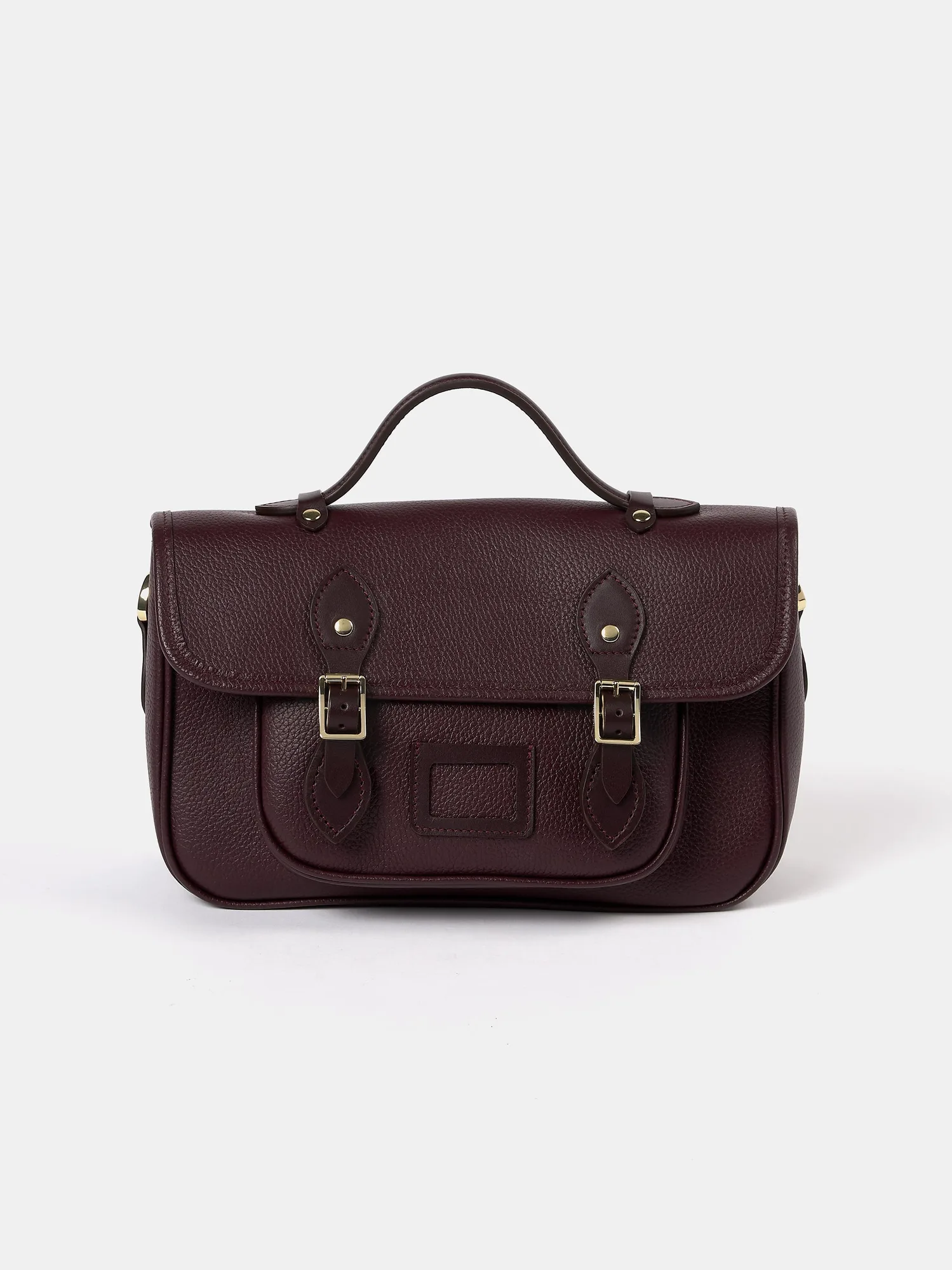
- The Soft Satchel - Bordeaux Calf Grain: Supple leather with relaxed proportions, magnetic closures, and an adjustable crossbody strap. The soft calf grain and relaxed shape mean less initial stiffness—this bag may break in faster than a structured satchel, and the crossbody strap softens quickly with wear.
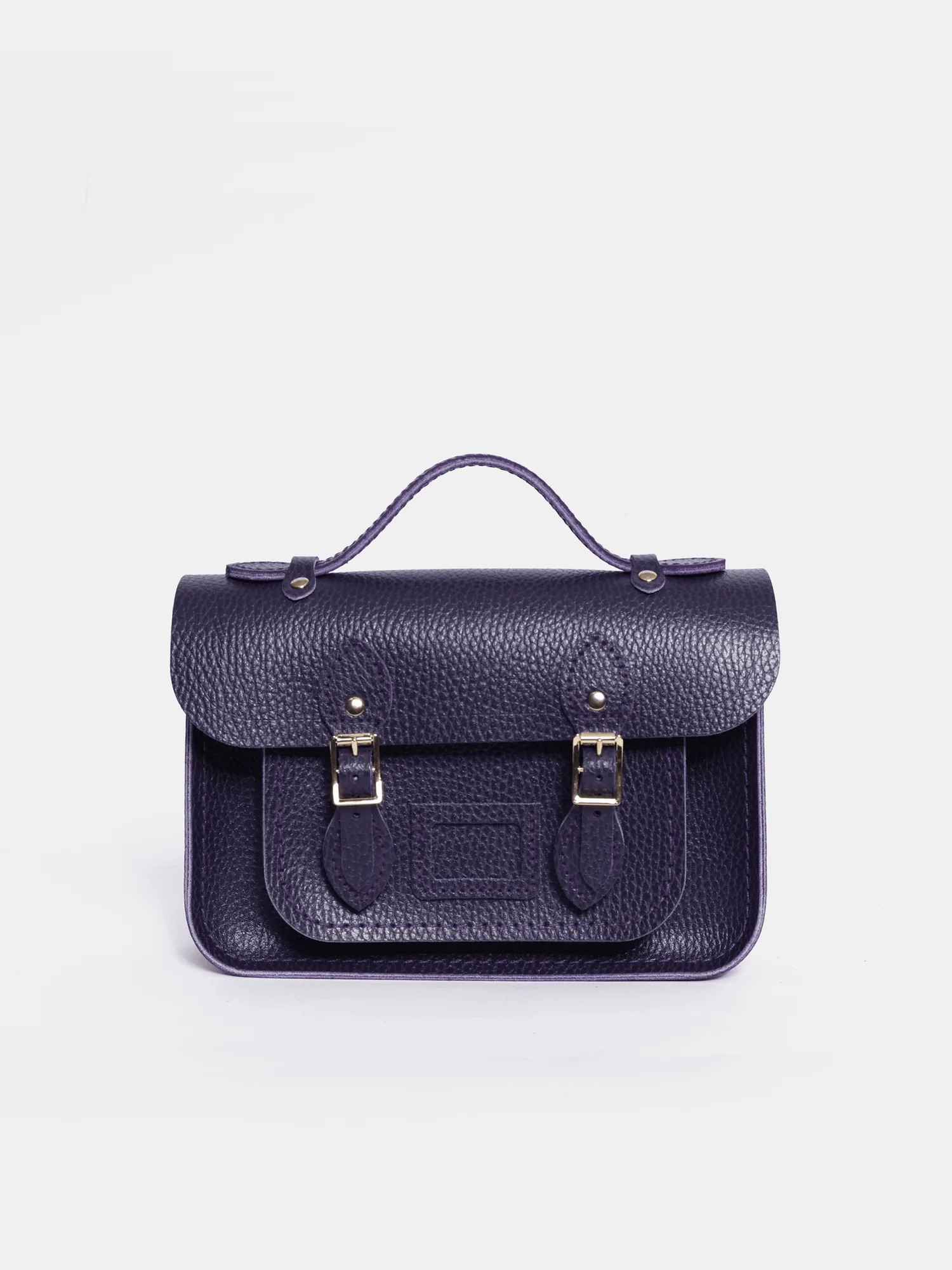
- The Mini - Deep Purple Celtic: Compact Satchel design with a top handle and detachable, adjustable shoulder strap, plus magnetic closures. The small size and multiple carrying options let you vary how you wear it, which helps flex different parts of the leather and speeds up break-in.
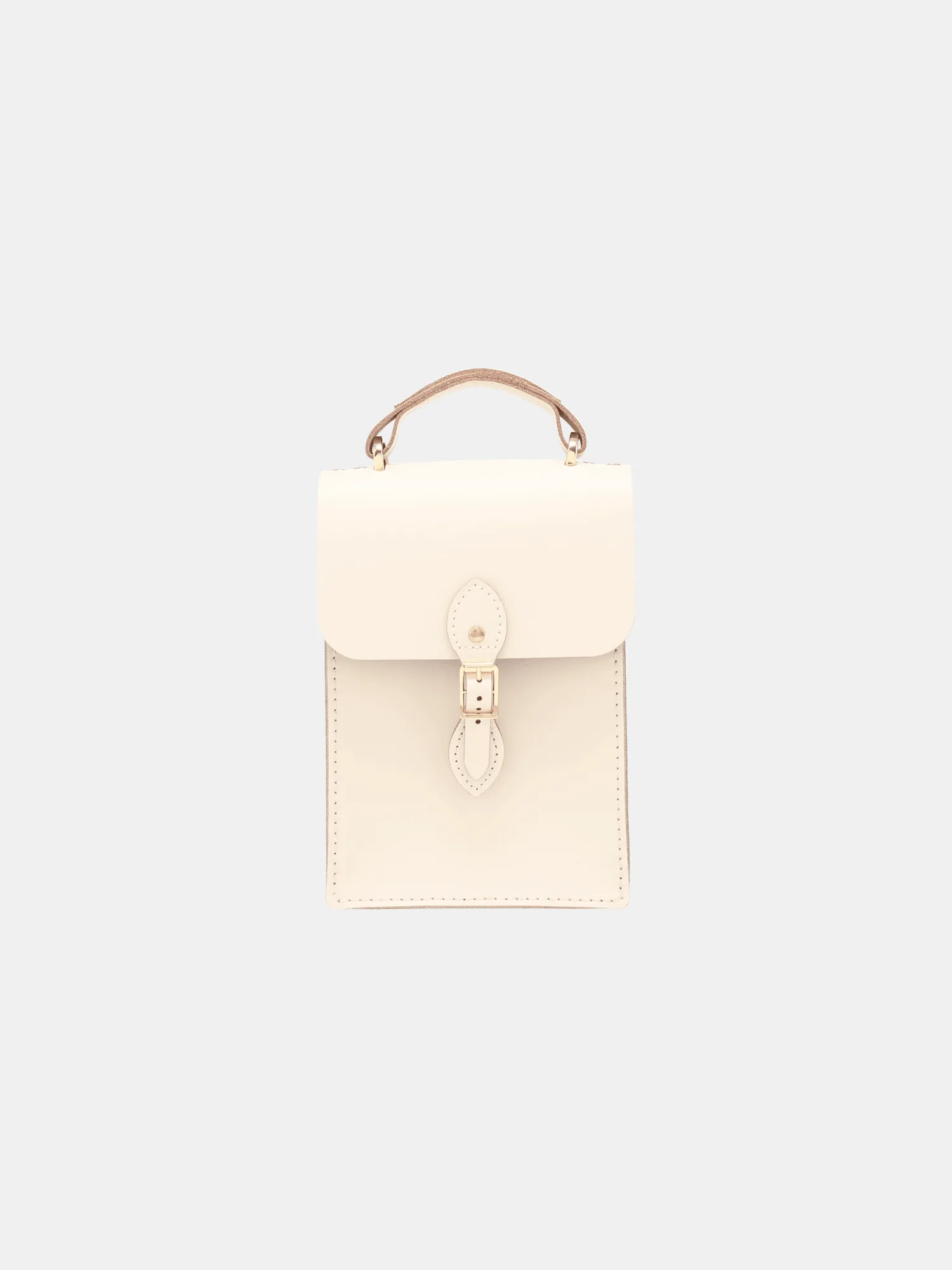
- The Flâneur Binocular Bag - Cream: Structured, portrait shape with a flat base, magnetic closure concealed in a buckle, and a detachable, adjustable strap. The structured shape may feel stiff at first, especially at the flap and base. Gentle flexing and light loads will help it soften without losing its form.
Breaking in a new leather bag is a matter of patience and gentle, consistent use. Avoid shortcuts like heat or heavy conditioning, and let the leather adapt naturally. With the steps above, your bag will soften within a few weeks and become more comfortable with every wear.