Quick answer
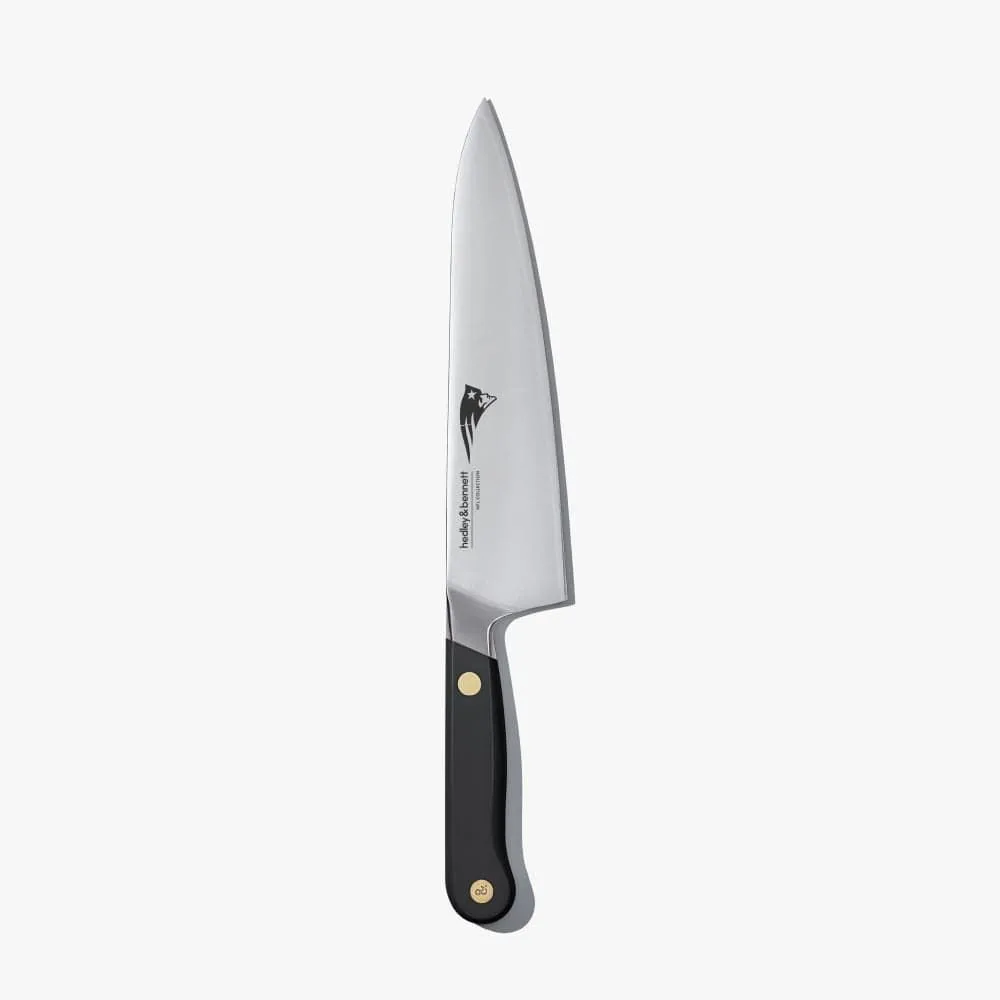
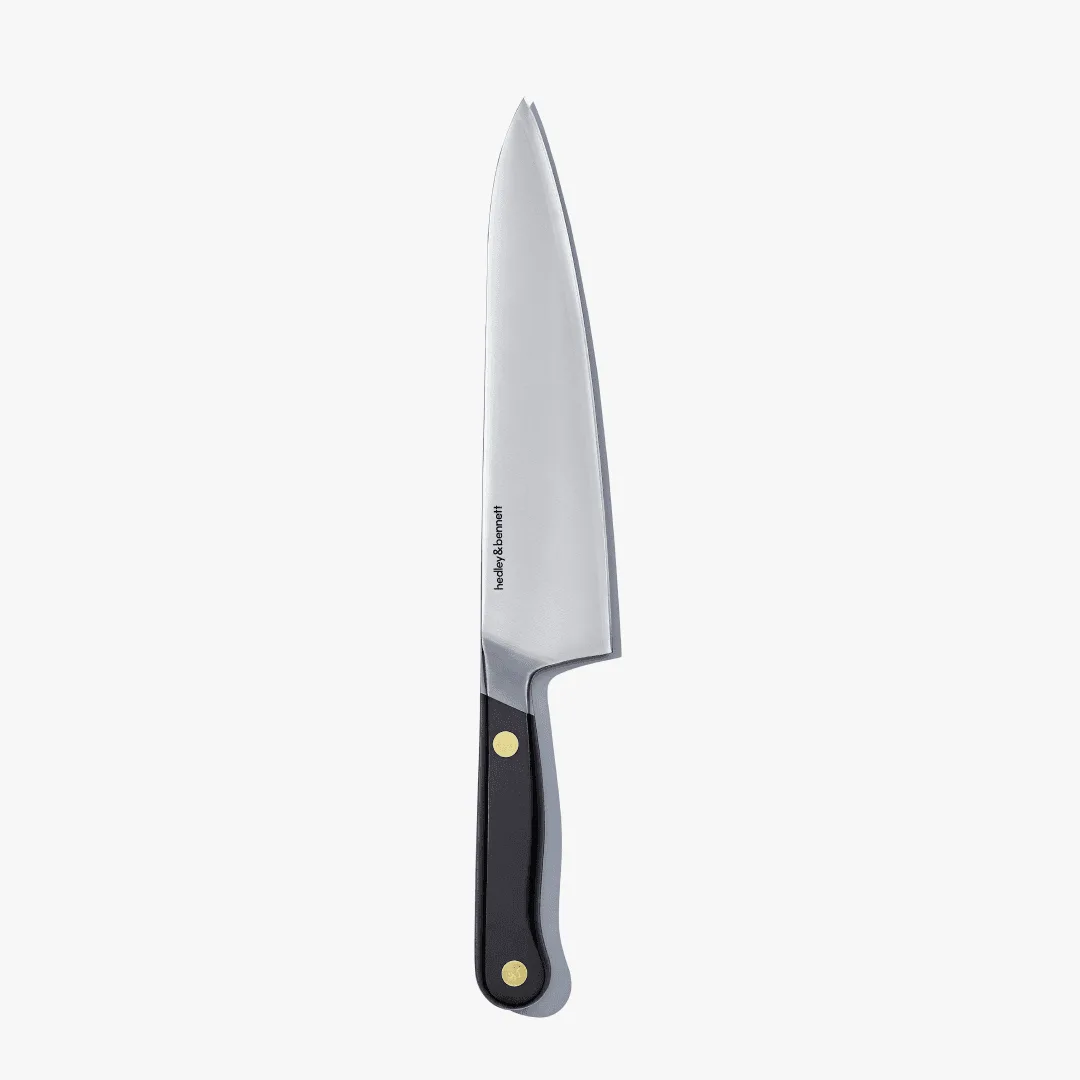
Don't sharpen a brand-new knife right away. Use it for a few meals to let the factory edge settle, then hone it lightly before each use to realign the edge. Only sharpen when honing no longer restores a clean cut—usually after several weeks of regular cooking. A full-size chef knife like the Buffalo Bills Chef Knife is a good candidate for this gentle break-in because its blade is built for everyday slicing, dicing, and chopping.
Why new knives need a break-in period
A new knife often arrives with a sharp but slightly brittle factory edge. The burr left by machine grinding can feel sharp yet fold under pressure. Breaking in the knife means using it on soft foods first—onions, tomatoes, herbs—so the edge stabilizes without chipping. Avoid hacking through bones, frozen food, or dense squash during the first week. This isn't about coddling the knife; it's about letting the steel settle so your later sharpening sessions last longer.
Honing vs sharpening: what your knife actually needs
Honing realigns the edge. Sharpening removes metal to create a new edge. Most home cooks confuse the two and over-sharpen, which shortens a knife's life. During the break-in period, a few passes on a honing steel or ceramic rod before each use is enough. If the knife still slides off a tomato after honing, it's time to sharpen. For beginners, a pull-through sharpener or a guided stone system is safer than freehand sharpening because it holds a consistent angle.
Set up a safe sharpening station
A stable, uncluttered workspace prevents the most common sharpening injury: a slipping blade. Place a damp towel under your cutting board or sharpening stone to stop movement. Keep your fingers behind the blade's spine, never in front of the edge. If you're using a stone, orient it so the coarse side faces up for dull knives and the fine side for maintenance. Work in a well-lit area so you can see the angle you're holding.
Match the tool to the task
You don't need a full sharpening kit to maintain a new knife. A honing steel handles daily realignment. A 1000/6000-grit water stone covers sharpening and polishing for most kitchen knives. If you prefer low-maintenance, a carbide pull-through sharpener works but removes more metal, so use it sparingly. For ceramic knives, skip the steel and use a diamond sharpener. The right choice depends on how often you cook and how much control you want.
Step-by-step: break in and sharpen your new knife
- Use the knife on soft foods for the first week: Slice tomatoes, onions, herbs, and boneless proteins. Let the factory edge adapt to your cutting motion without stressing it. Mistake to avoid: cutting frozen food or bones, which can chip a new edge.
- Hone lightly before each use: Hold a honing steel vertically, angle the knife about 15–20 degrees, and draw the blade down each side 3–5 times with light pressure. Checkpoint: if the knife still crushes tomato skin after honing, move to sharpening.
- Sharpen only when honing stops working: Use a 1000-grit water stone or a guided sharpener. Maintain a consistent angle, make 5–10 passes per side, then check the edge on paper. Mistake to avoid: over-sharpening. Once the knife slices paper cleanly, stop.
- Clean and dry the blade immediately: Wash by hand with mild soap, dry with a towel, and store on a magnetic strip or in a knife block. Never leave a knife soaking in the sink. Next step: repeat honing before each use; sharpen again only when needed.
Products that fit this routine
- Buffalo Bills Chef Knife: The Buffalo Bills Chef Knife is a full-size chef knife designed for slicing, dicing, and chopping, with a distinctive team-color design. Its full-size blade gives you enough length to practice a consistent sharpening angle, and the everyday prep tasks it's built for are exactly the soft foods you should use during the break-in period.
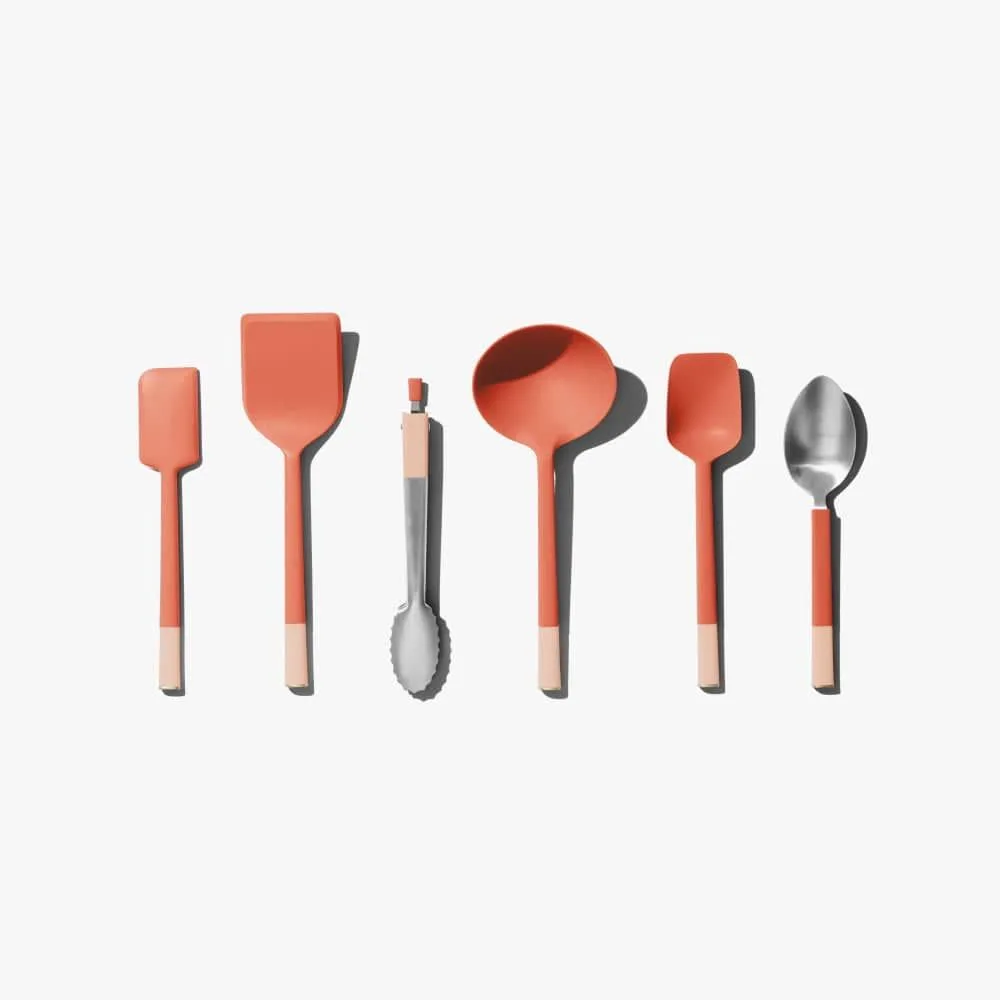
- The 6-Piece Tool Set - Enoki White: The 6-Piece Tool Set in Enoki White includes six essential kitchen tools for cooking and prep tasks, finished in a clean, versatile color. Having dedicated tools for prep means you're less likely to grab your new knife for jobs it shouldn't do—like prying or scraping—which protects the edge while you break it in.