Quick Answer
Care for your seasoned cast iron wok by washing it with hot water and a stiff brush, drying it thoroughly over heat, and applying a thin layer of oil after each use to maintain its nonstick seasoning.
Why Proper Care Matters for Your Cast Iron Wok
A seasoned cast iron wok, like the 14 Inch Seasoned Cast Iron Wok, relies on its cured oil layer to provide a natural nonstick surface and protect against rust. Unlike enameled cookware, the seasoning is part of the iron itself and needs regular maintenance to stay effective. High-heat cooking methods such as stir-frying and deep frying can wear down seasoning over time, so consistent care is key.
The graduated slope design of a cast iron wok concentrates heat at the bottom for searing proteins, while the sides stay cooler for steaming or gentle cooking. This temperature gradient means the seasoning may thin faster at the hottest point. Without proper cleaning and oiling, the exposed iron can rust, especially in humid climates. Following a simple after-use routine prevents damage and keeps your wok ready for the next meal.
Step-by-Step Wok Care Routine
- Step 1: Rinse and Scrub While Warm: After cooking, let the wok cool slightly, then rinse it with hot water. Use a stiff brush or a non-abrasive scrub pad to remove food residue. Avoid soap unless the wok has stuck-on food; if you must use soap, use a tiny amount and rinse thoroughly. A common mistake is letting the wok soak in water, which can cause rust.
- Step 2: Dry Thoroughly Over Heat: Place the wok on a burner over low heat for 1–2 minutes to evaporate all moisture. Wipe it dry with a clean cloth first, but the heat ensures no hidden water droplets remain. A common checkpoint is to look for steam rising; if you see it, keep drying until the wok is completely dry. Rust forms quickly on damp iron, so never store a wet wok.
- Step 3: Apply a Thin Layer of Oil: While the wok is still warm, add about 1 teaspoon of a high-smoke-point oil (such as vegetable, canola, or grapeseed oil). Rub it over the entire interior surface with a paper towel, then wipe away any excess. The wok should look slightly shiny but not greasy. A common mistake is using too much oil, which can become sticky or rancid over time.
- Step 4: Store in a Dry Place: Place the wok in a dry, well-ventilated area. Avoid stacking other cookware inside it, as trapped moisture can lead to rust. If you must stack, place a paper towel between the wok and the next pan to absorb humidity. A common checkpoint is to check the wok before each use; if you see any rust spots, scrub them off with steel wool and re-season the area. Regular re-seasoning every few months keeps the surface nonstick.
Product Facts
-
14 Inch Seasoned Cast Iron Wok: The wok’s seasoned cooking surface is designed with a graduated slope that’s ideal for quickly searing proteins and veggies. The slope creates a hot zone at the bottom for searing and a cooler zone up the sides, but the seasoning at the bottom may need more frequent touch-ups to stay nonstick.
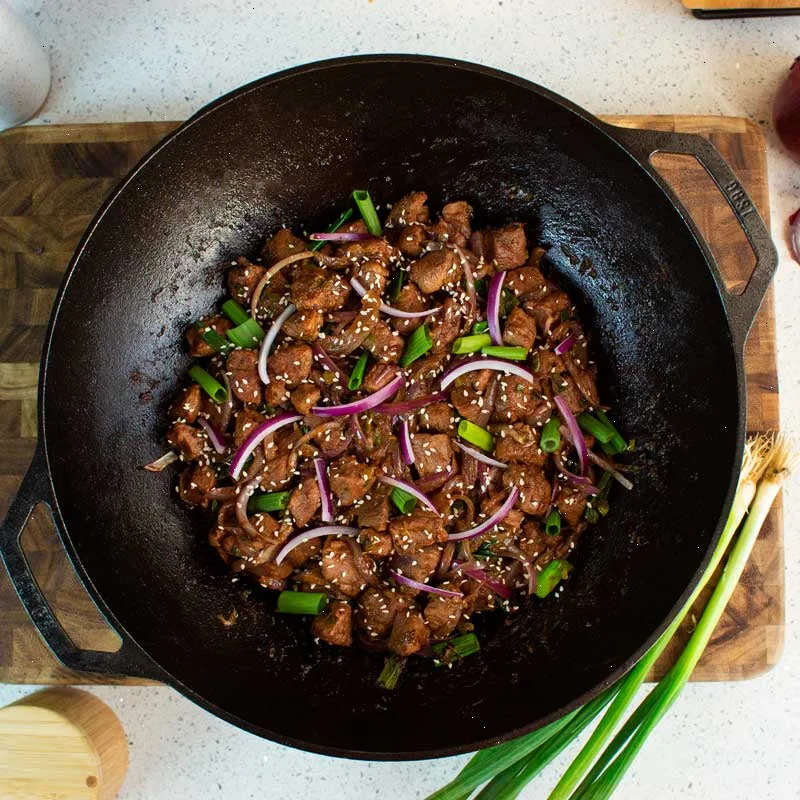
14 Inch Seasoned Cast Iron Wok