Quick answer
For most preschoolers, a lightweight cotton sack or small backpack without metal frames is the safest and most practical choice. Focus on size, material safety, and ease of opening rather than extra features.
Why size matters most for preschoolers
A preschooler's backpack should not be wider than their torso or hang below their hips. An oversized bag encourages slouching and can strain developing muscles. Look for a bag that sits high on the back and leaves room for the child to move freely.
Material safety and weight
Young children are more sensitive to chemicals, so choose backpacks made from unbleached, untreated natural fibers. Cotton sacks are naturally lightweight—often under 200 grams—so the bag itself doesn't add unnecessary weight. Avoid vinyl or heavily dyed fabrics that may contain phthalates or lead.
Ease of use: zippers vs. drawstrings
Preschoolers often struggle with zippers and buckles. A simple drawstring closure or a wide opening sack lets them pack and unpack independently. If you choose a zippered backpack, test that the zipper pulls smoothly and has a large tab a small hand can grip.
How to pick the right preschool backpack
- Check the width and height: The backpack should be no wider than your child's back and no taller than from their shoulders to their waist. A sack or small backpack (about 8–10 inches tall) is usually sufficient for a snack, a change of clothes, and a small toy.
- Prioritize natural, untreated materials: Choose unbleached cotton, hemp, or organic canvas. These materials are free from chemical finishes and breathe well, reducing sweat and irritation. Avoid plastic or synthetic linings that can trap moisture. If the label doesn't list the material, skip it. Safe fabrics are clearly stated.
- Test the closure yourself: Before buying, try opening and closing the bag one-handed. If you struggle, a preschooler will too. Drawstring sacks and wide-mouth totes are easiest. If you prefer a zipper, look for a chunky zipper pull.
- Keep it under 1 pound empty: A preschool backpack should weigh less than 1 pound (450 grams) when empty. Heavier bags tempt parents to overpack, which strains the child's back. A cotton sack typically weighs around 200 grams. Weigh the bag on a kitchen scale if you're unsure.
Product spotlight
-
sack - backpack: Secret Garden - moon: Thick cotton sack made from unbleached cotton, free of harmful chemicals. Made in the Beskidy Mountains, Poland. This sack is lightweight, safe for sensitive skin, and simple enough for a preschooler to open and close on their own—no zippers or buckles to struggle with.
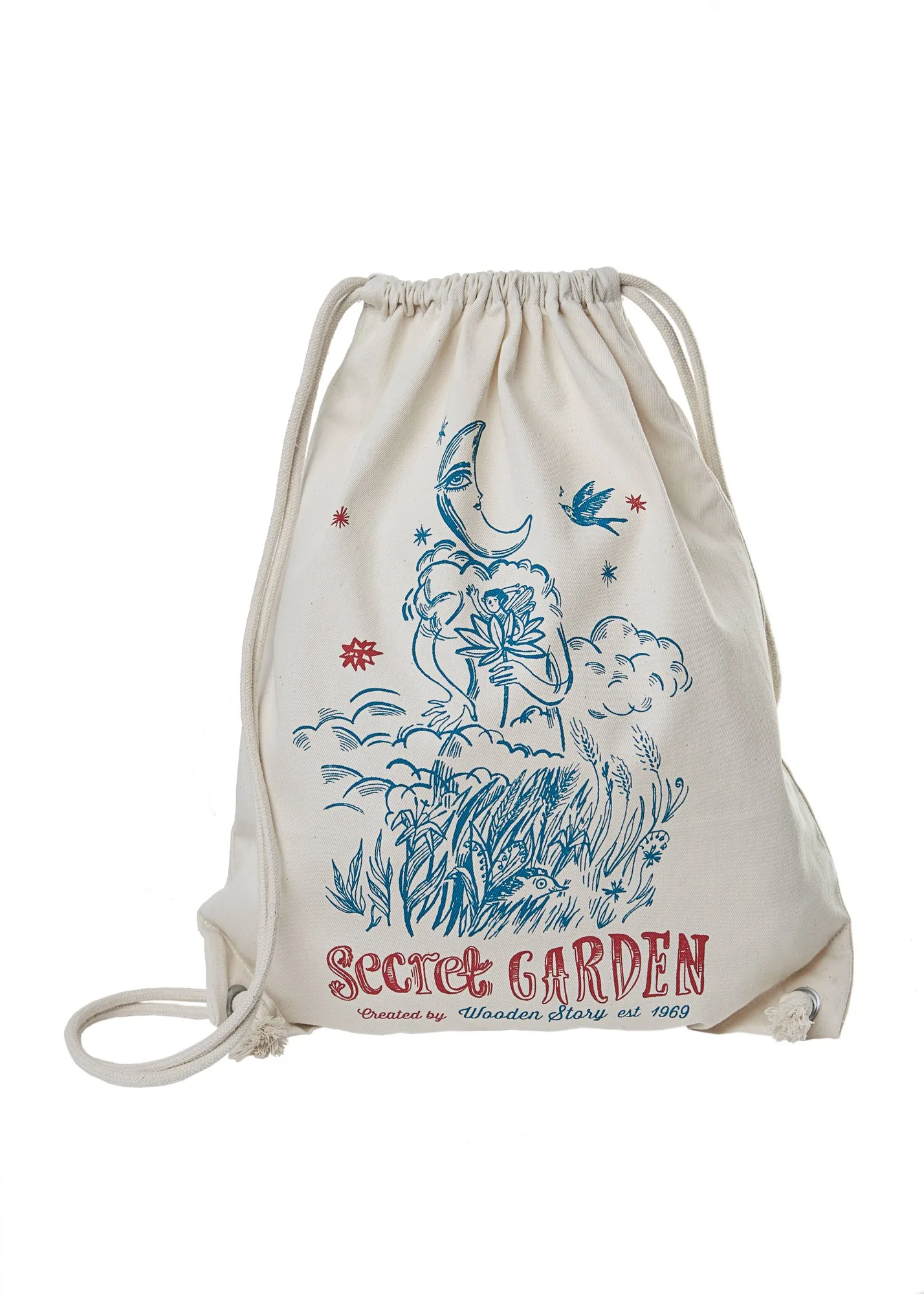
sack - backpack: Secret Garden - moon
Is this type of backpack right for your child?
Best for
- Preschoolers aged 3–5 who need a simple bag for light daily items
- Parents who prioritize chemical-free materials and lightweight design
- Children who can manage a drawstring closure independently
Not ideal for
- Older children (ages 6+) who carry heavier books or laptops
- Families who need padded straps or a chest clip for long walks
- Parents who prefer a structured backpack with multiple compartments