Quick answer
Choose an iron supplement that matches your iron needs—ferrous forms for faster absorption or gentler options like iron bisglycinate if you have a sensitive stomach. Check your ferritin levels first to avoid over-supplementing.
Why iron needs differ for women
Women have unique iron requirements due to menstruation, pregnancy, and breastfeeding. Up to 16% of individuals in certain populations are iron deficient, according to the CDC. Low ferritin (stored iron) is a common early sign. Choosing the right supplement depends on your current levels, diet, and any underlying conditions like anemia.
Forms of iron: absorption vs. gentleness
Ferrous sulfate and ferrous gluconate are well-absorbed but can cause stomach upset. Iron bisglycinate (chelated) is gentler and less likely to cause constipation. If you have a sensitive stomach or are prone to nausea, a gentler form may be better. Always check the elemental iron content per serving, not just the total salt weight.
Decision rules for choosing your iron supplement
- Check your ferritin level first: Get a blood test for ferritin and hemoglobin. If ferritin is below 30 ng/mL, you likely need supplementation. If above 100 ng/mL, avoid iron supplements unless directed by a doctor. Start with a lab result, not a guess.
- Match the dose to your deficiency: For mild deficiency (ferritin 12-30 ng/mL), 18-27 mg elemental iron daily is often enough. For anemia (low hemoglobin), 60-120 mg elemental iron may be needed temporarily. Do not exceed 45 mg daily without medical supervision. Higher doses are for short-term correction only.
- Choose the right form for your stomach: Ferrous sulfate works well but may cause nausea. Iron bisglycinate is gentler. If you have a sensitive stomach, start with a lower dose or a gentler form. Always take with vitamin C (e.g., a glass of orange juice) to boost absorption. Gentler forms reduce side effects.
- Consider prenatal needs separately: Pregnant women need about 27 mg iron daily. Many prenatal multivitamins include this amount. If your prenatal lacks iron or you have anemia, add a separate iron supplement. Do not exceed 45 mg during pregnancy unless prescribed. Check your prenatal label before adding extra iron.
Product facts
-
Advanced Iron Complex: Iron is essential to the formation and function of healthy red blood cells. According to the CDC, up to 16 percent of individuals in certain populations are deficient in iron. This highlights why many women may need an iron supplement—especially those with heavy periods, vegan diets, or pregnancy.
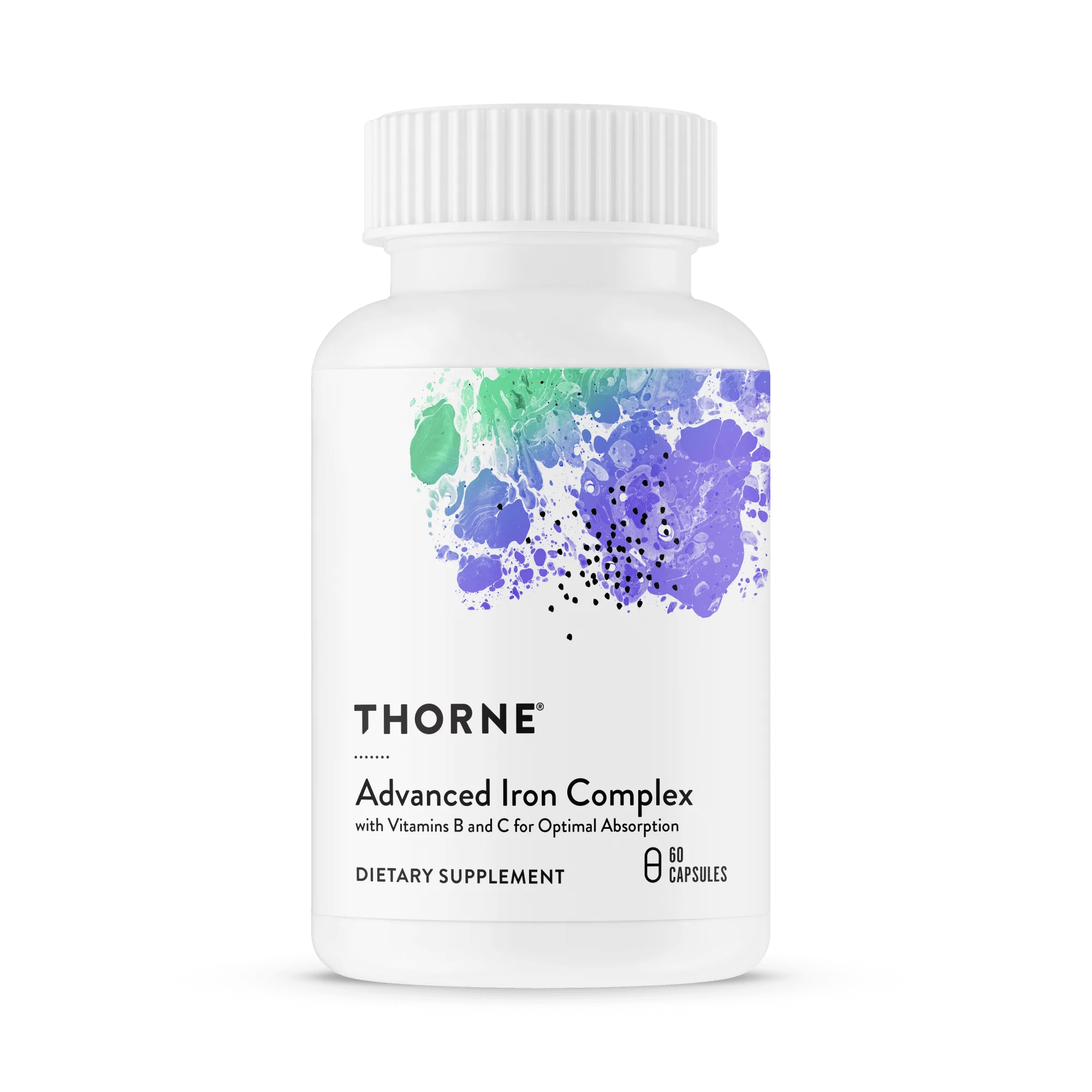
Advanced Iron Complex
Who should choose what
Best for
- Women with confirmed low ferritin or iron-deficiency anemia
- Pregnant women who need extra iron beyond their prenatal vitamin
Not for
- Women with high ferritin (above 100 ng/mL) unless directed by a doctor
- Anyone with hemochromatosis or iron overload disorders