Quick answer
For most birding and outdoor use, choose 10x42 binoculars if you prioritize brightness and stability over weight. Choose 10x30 binoculars if you want a lighter, more packable option for daytime hikes.
Why magnification and objective lens size matter
The first number (10x) means the image appears 10 times closer. The second number (42 or 30) is the objective lens diameter in millimeters—larger lenses gather more light, which helps in low-light conditions like dawn or dusk. A 42mm lens delivers a brighter image than a 30mm lens, but it adds weight and bulk. For daytime birding in open areas, 10x is a sweet spot; for dense forests or shaky hands, 8x is steadier, but 10x gives more detail at range.
Waterproofing and fogproofing are not optional
Birding often happens in damp or unpredictable weather. A waterproof binocular lets you keep watching through light rain or near bodies of water without worry. Fogproofing (nitrogen or argon purging) prevents internal lens fogging when moving between warm and cold air—common during early morning outings. Both the Nikon PROSTAFF P7 and Trailblazer ATB lines are fully waterproof and fogproof, so you don't have to choose between weather protection and optical quality.
Coatings and field of view affect image quality
Multilayer coatings on lenses reduce glare and improve color fidelity. A wider field of view (measured in feet at 1,000 yards) makes it easier to track fast-moving birds in flight. The PROSTAFF P7 series uses Nikon's multilayer coatings for brightness and clarity, plus an oil- and water-repellent coating on the outer lenses that makes cleaning easier after a dusty or misty outing. The 10x42 model typically offers a wider field of view than the 10x30, which helps when scanning tree lines or flocks.
Decision rules for choosing binoculars
- If you bird mostly at dawn, dusk, or in shaded forests: Choose 10x42 binoculars. The larger objective lens gathers more light, giving you a brighter image when light is low.
- If you bird during midday or in open fields and want to save weight: Choose 10x30 binoculars. They are significantly lighter and more packable, with enough brightness for well-lit conditions.
- If you bird in damp climates or near water: Confirm the binoculars are both waterproof and fogproof. All Nikon PROSTAFF P7 and Trailblazer ATB models meet this requirement. Check the product description for nitrogen or argon purging—this ensures internal fogging won't ruin your view.
- If you wear glasses: Look for twist-up eyecups with multiple positions and long eye relief (at least 16mm). The PROSTAFF P7 series has twist-up eyecups that adjust for comfortable viewing with or without glasses.
Product highlights
-
Nikon PROSTAFF P7 Waterproof Binoculars 10X42 with Tactical Bundle: Nikon PROSTAFF P7 10x42 delivers high-definition views with multilayer coatings, a wide field of view for tracking fast subjects, and a locking diopter ring. The wider field of view and locking diopter make it easier to follow birds in flight and keep focus consistent between users.
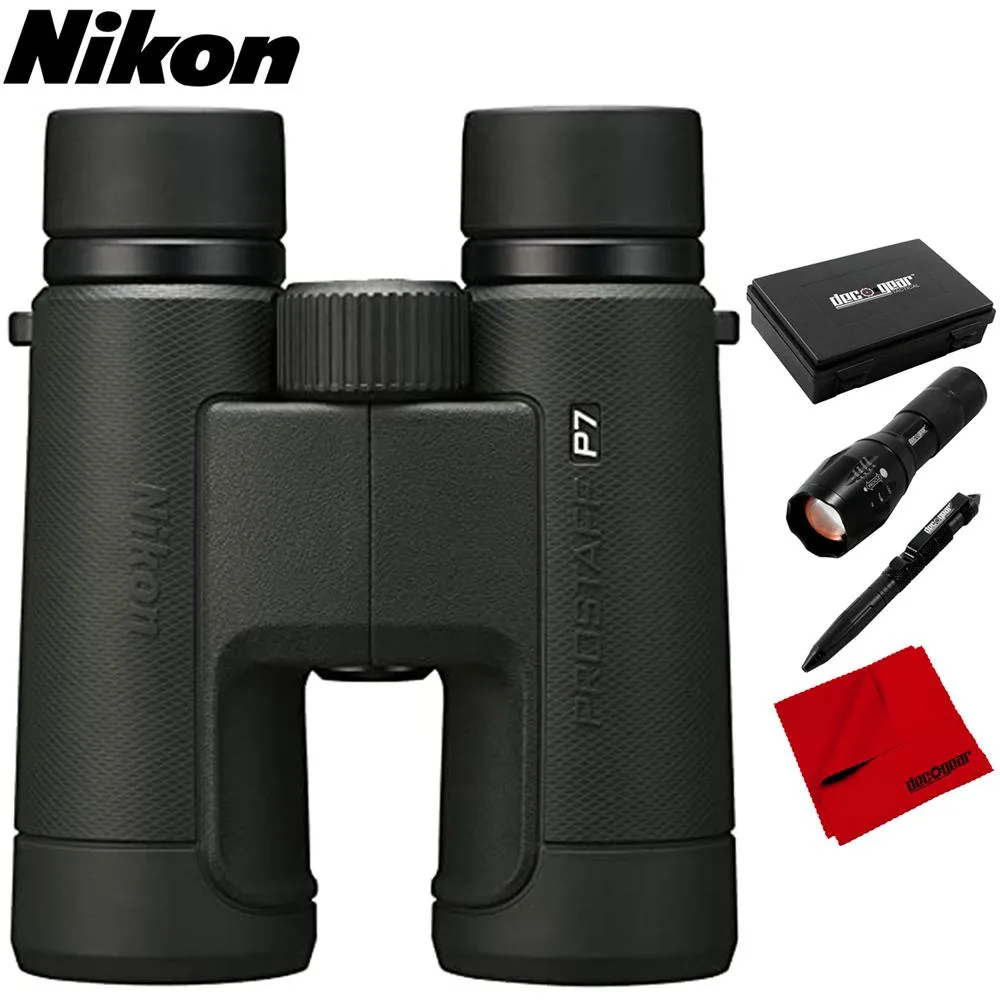
Nikon PROSTAFF P7 Waterproof Binoculars 10X42 with Tactical Bundle
-
Nikon PROSTAFF P7 Waterproof Binoculars, 10X30 - 16771: Nikon PROSTAFF P7 10x30 offers the same optical coatings and weather sealing in a lighter, more compact body. It's ideal for day hikes or travel where every ounce counts, though it gathers less light in dim conditions than the 10x42.
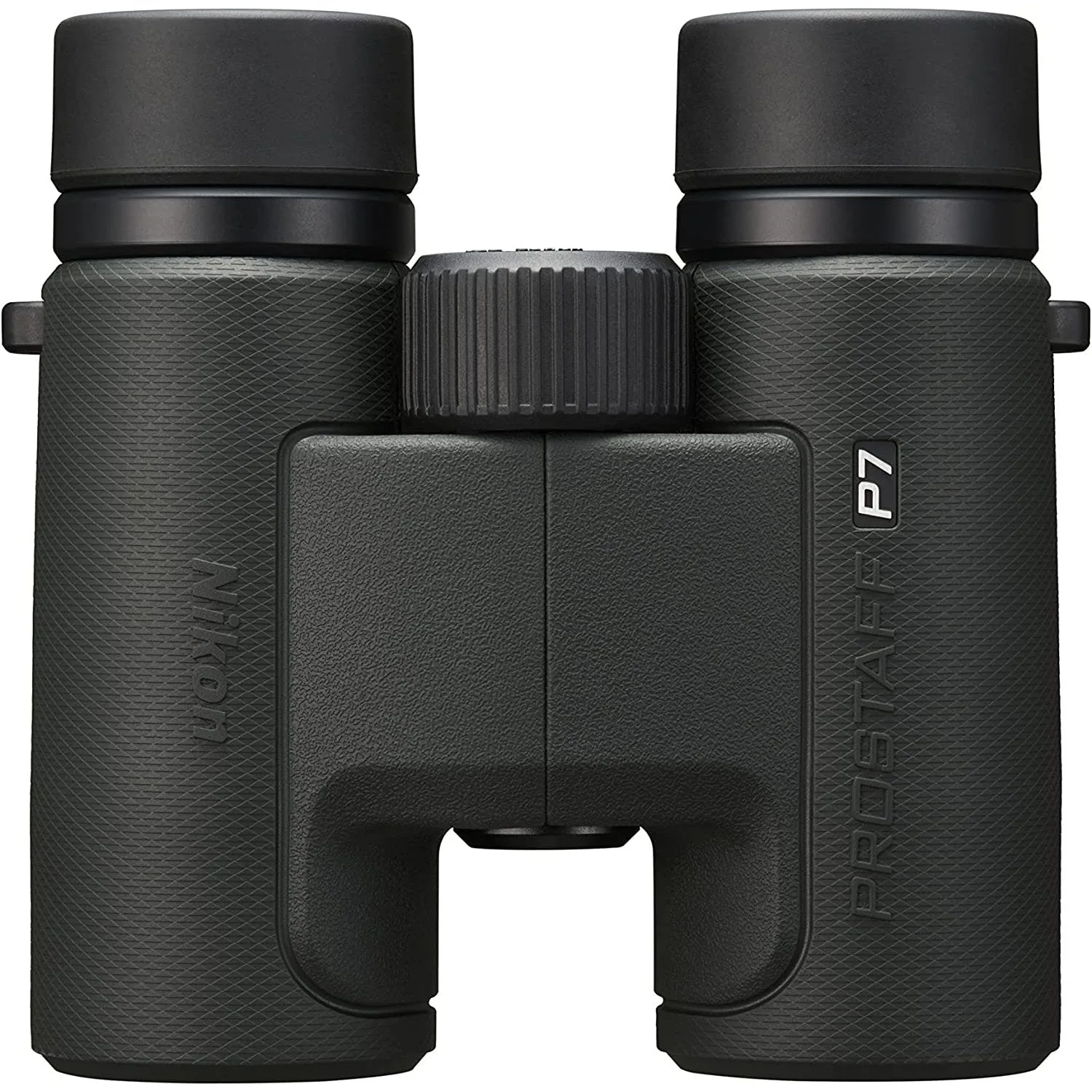
Nikon PROSTAFF P7 Waterproof Binoculars, 10X30 - 16771
Which binocular is right for you?
Best for
- Birders who want maximum brightness and a wide field of view in variable light (choose 10x42)
- Hikers or travelers who prioritize a lightweight, compact binocular for daytime use (choose 10x30)
Not for
- Extreme low-light conditions like night sky observation (consider a 50mm objective lens or larger)
- Budget buyers who need a sub-$100 option (the PROSTAFF P7 is a mid-range investment; look at the Nikon Trailblazer 8x25 for a lower-cost entry point)