Quick answer
For cold morning birding, choose a vacuum-insulated bottle in the 16–24 oz range with a leakproof lid you can open one-handed, and pre-warm it with hot water before filling. That combination keeps drinks warm for hours without weighing down your binoculars or field bag. If you only carry a small shoulder bag, size down to 12–16 oz; if you hike long trails, 24 oz is the practical ceiling before the bottle becomes a burden.
Why ordinary bottles fail on a frosty stakeout
A single-wall plastic bottle loses heat fast, and the condensation that forms on the outside can soak the inside of your bag. On a 30°F morning, a thin bottle of coffee may be lukewarm before the first mixed flock arrives. Vacuum insulation solves both problems: it slows heat transfer and keeps the exterior dry, so your fingers stay warmer when you reach for a drink.
Match capacity to your birding style
Capacity is the main trade-off between warmth and weight. A 16 oz bottle suits a two-hour local patch walk; a 24 oz bottle makes sense for a half-day Christmas Bird Count or a refuge drive where refills are impossible. Larger than 24 oz starts to feel heavy on a shoulder strap and may not fit a standard cup holder or side pocket. If you carry a spotting scope and tripod, stay at 16 oz and accept that you may finish your drink early.
Lid type: the detail that decides whether you actually drink
On a cold morning you are usually wearing gloves or keeping your hands in pockets, so the lid has to work without fine motor control. A wide-mouth screw cap is easy to fill and clean but awkward to sip from while scanning a tree line. A flip-top or push-button lid lets you open the bottle one-handed, but the hinge and gasket need regular cleaning to avoid a sour smell. A narrow-mouth screw lid is the simplest and least likely to leak, though it is slower to open and close. Pick the one that matches how you hold your binoculars: if you often set the bottle on a fence post and forget it, a bright color helps you find it again.
Insulation quality: what to check before you buy
Look for double-wall vacuum insulation rather than foam or a single wall. The vacuum layer is what keeps drinks warm for hours; foam insulation is lighter but loses heat faster. A copper-coated inner wall is a bonus, not a requirement, and it can add cost without a huge difference on a two-hour walk. If a product page does not list the insulation type, treat that as a limitation: you cannot assume it will hold heat through a long stakeout. Also check whether the bottle is dishwasher-safe, because hand-washing a narrow mouth every week gets old quickly.
Cleaning and care that keeps the bottle trail-ready
Rinse the bottle and lid with warm water after each use, and leave both parts open to dry completely before storing. Gaskets and flip-top hinges are the usual places for mold and stale odors, so remove them if the design allows. Avoid abrasive brushes on painted exteriors, since they can chip the finish and expose bare metal. If you use your bottle for both coffee and water, a baking-soda soak once a week removes lingering flavors without harsh chemicals.
How drinkware fits into your cold morning birding gear
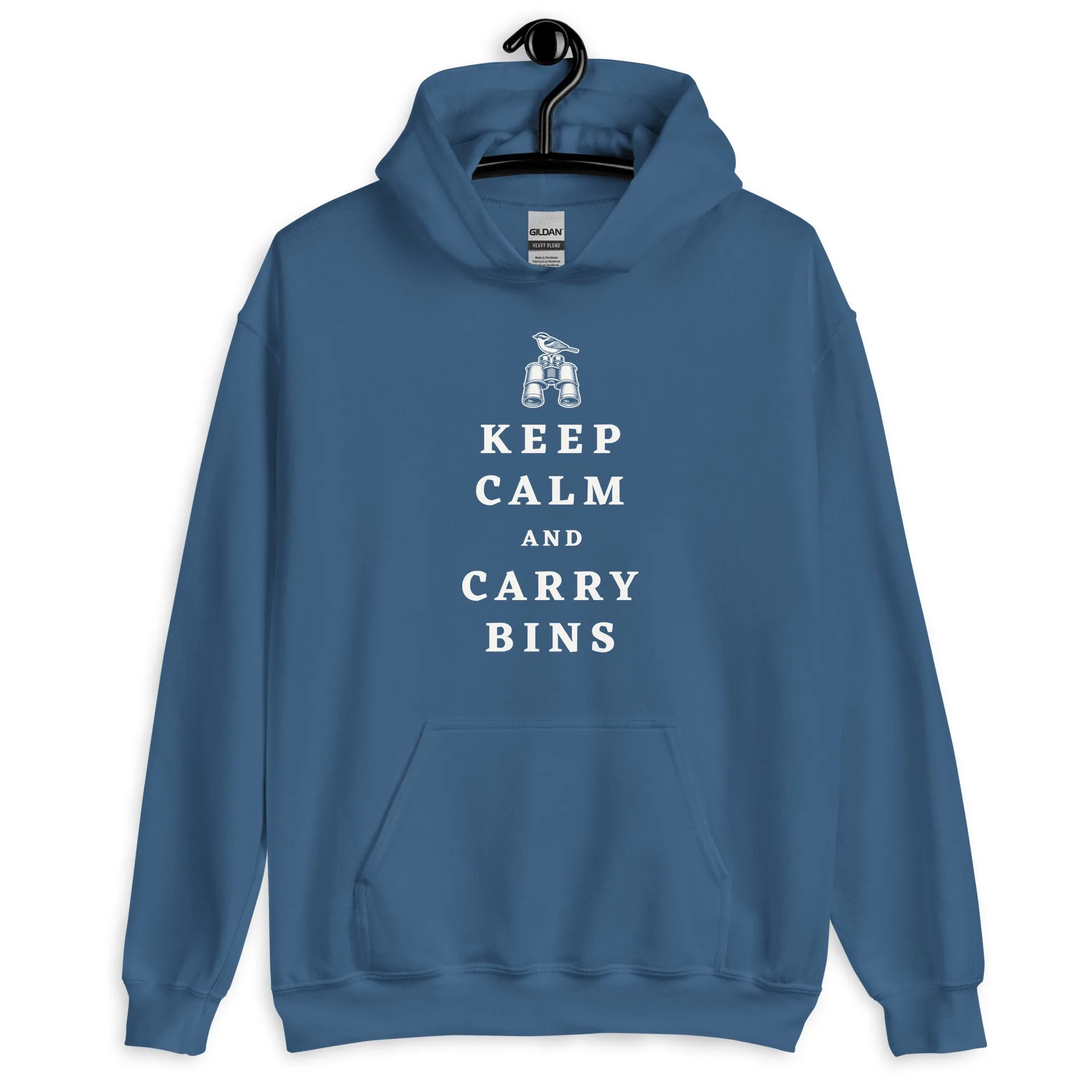
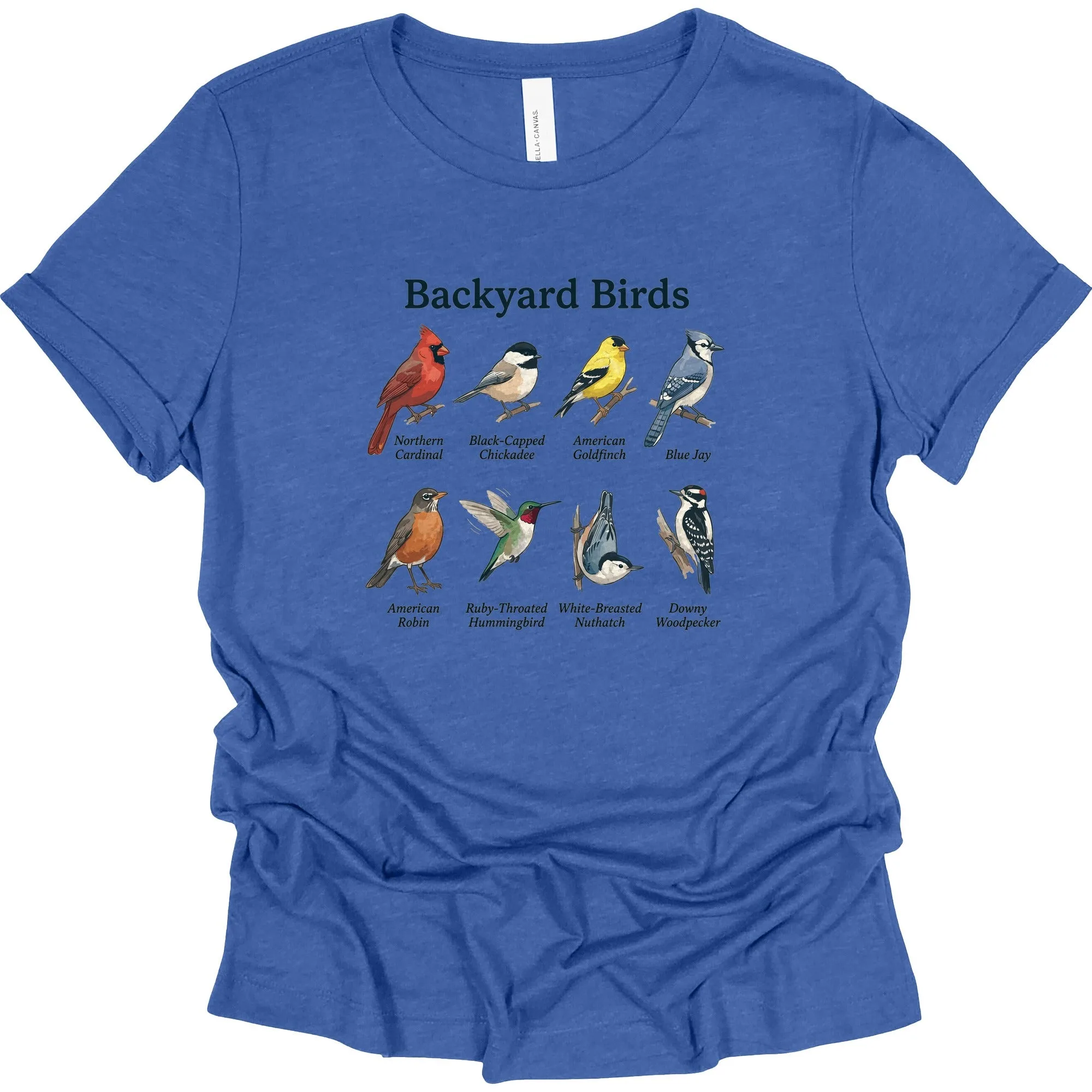
Your bottle is one layer of a system. A hoodie with a brushed lining keeps your core warm so you are not relying on hot drinks alone, and a lightweight cotton tee underneath manages sweat during the walk back to the car. The Keep Calm and Carry Bins Unisex Hoodie has air-jet spun yarn for reduced pilling and double-needle stitching, which matters when you are pulling a bottle in and out of a pocket repeatedly. The Backyard Birds Women's T-Shirt lists eight labeled North American backyard birds, a good base layer for warmer afternoons when the thermos is the only cold-weather gear you still need. None of these garments are insulated, so pair them with a windproof shell if the forecast is below freezing.
Seven steps to pick and pack your cold-morning bottle
- Set your walk length and temperature: Decide whether you are out for two hours or half a day, and check the forecast low. Below 35°F, lean toward a larger insulated bottle; above 45°F, a smaller one is fine. Checkpoint: if you cannot name your walk length, you will likely overpack.
- Choose capacity from your bag, not the shelf: Measure the side pocket or cup holder you actually use. A 24 oz bottle that does not fit will end up in your hand, which defeats the purpose. Common mistake: buying the biggest bottle and then leaving it in the car.
- Pick a lid you can open with gloves on: Test the lid motion in the store or read the product description carefully. Flip-top and push-button lids are fastest; wide-mouth screw caps are easiest to fill and clean. Checkpoint: if you need two hands and bare fingers, keep looking.
- Confirm double-wall vacuum insulation: Look for the words vacuum insulated on the label. If the listing only says insulated, assume it is foam or single-wall and will not hold heat as long. Common mistake: trusting a vague insulated claim on a budget bottle.
- Pre-warm the bottle before you leave: Fill it with hot tap water for two minutes, empty it, then add your coffee or tea. This raises the starting temperature so the first sip is still hot at the trailhead. Checkpoint: skip this step and you lose roughly the first hour of warmth.
- Pack it where it will not leak on your layers: Stand the bottle upright in an outer pocket or a separate dry bag. A leakproof lid still fails if grit gets in the gasket, so wipe the rim before closing. Common mistake: laying a full bottle sideways against a hoodie or tee.
- Clean and dry the same day: Rinse the bottle and lid with warm water, remove gaskets if possible, and air-dry both parts fully before storing. This prevents the stale smell that ruins the next cold morning. Next step: set a weekly baking-soda soak if you switch between coffee and water.
Birding apparel that works with your drinkware routine
- Keep Calm and Carry Bins Unisex Hoodie: Unisex hoodie with air-jet spun yarn for reduced pilling, double-needle stitching, and a cozy brushed lining, built for chilly mornings and migration days. The brushed lining and durable stitching hold up to repeated pocket use and cold starts, so you can layer it over a tee without the fabric balling up after a few washes.
- Backyard Birds Women's T-Shirt: Women's t-shirt featuring eight labeled North American backyard birds, illustrated like a pocket field guide. A breathable base layer for mild mornings when a full hoodie is too warm, and the labeled species give you something to check against your feeder list while you sip.
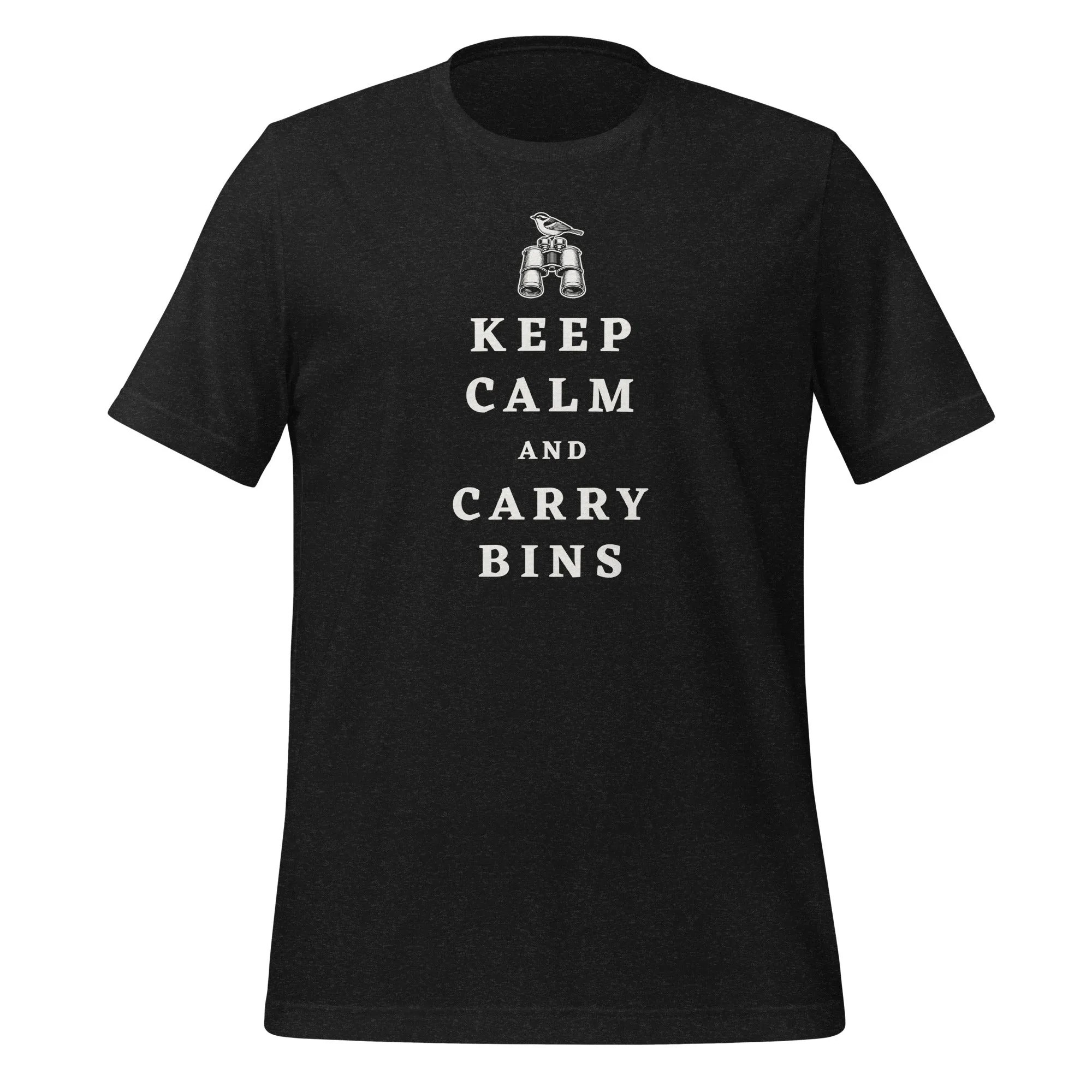
- Keep Calm and Carry Bins T-Shirt (Lightweight): Lightweight cotton t-shirt with a witty birding slogan, soft fabric for birding adventures or casual outings. A simple, low-bulk option under a hoodie or shell, so your drinkware and binoculars are the only things adding weight to your walk.