Quick answer
Choose a blender by matching wattage, jar size, and preset programs to the jobs you do most. For single smoothies and shakes on the go, a rechargeable personal blender like the Dash Portable Blender covers the basics. For hot soups, frozen cocktails, and larger batches, a full-size machine such as the Dash Chef Series Deluxe Digital Blender gives you the power and capacity those tasks need.
Start with wattage, not marketing claims
Wattage tells you how much work the motor can do before it stalls or overheats. Blending fibrous greens, frozen fruit, or small ice cubes demands more torque than pureeing cooked vegetables or whisking a thin sauce. If your recipes regularly include ice or dense frozen ingredients, look for a higher-wattage motor; for soft ingredients and single servings, a lower-wattage personal blender is usually enough.
The trade-off is noise and counter space. Higher-wattage full-size blenders are louder and heavier, while compact personal models are quieter and easier to store but may need you to pause and shake the jar when the load is thick. Match the wattage to your hardest regular task, not your easiest one.
Jar size and shape: personal vs full size
Personal blenders typically use a 12–20 oz blending bottle that doubles as a travel cup. They excel at one smoothie or protein shake at a time, and cleanup is often just rinsing the bottle and blade base. The limitation is batch size: you cannot easily blend soup for four or a large sauce in one go.
Full-size blenders use a 48–64 oz jar, which lets you process family portions, multiple servings, or a whole pot of soup base. The wider jar also gives ingredients more room to circulate, so you spend less time stopping to scrape down the sides. If you often cook for more than one person, the larger jar usually wins on convenience despite taking up more cabinet space.
Presets and programs that actually help
Preset programs automate speed changes and timing so you do not have to stand over the machine. Useful presets include smoothie, soup, frozen dessert, and a self-cleaning rinse cycle. A soup preset is especially handy because it can blend hot ingredients without you transferring them to a stove—but only if the manufacturer explicitly supports hot blending.
Do not pay extra for presets you will never press. If you make the same green smoothie every morning, a simple high/low pulse control may be all you need. If you like frozen cocktails, purees, and fondue, a model with several dedicated programs saves guesswork and delivers more consistent texture.
Sauces and soups: what changes
Sauces are usually small-volume and thick, so they need a jar that can keep ingredients moving without constant scraping. A narrow personal bottle can work for a single serving of pesto or dressing, but a full-size jar with a tamper or a wide base handles larger batches of tomato sauce or curry paste more evenly.
Soups add heat to the equation. If you want to blend hot soup directly in the jar, confirm the blender is rated for hot liquids and has a vented lid to release steam. Otherwise, let the soup cool slightly and blend in batches, never filling the jar more than halfway. A full-size blender with a soup preset is the safer route for hot blending; a personal blender is best reserved for cold soups like gazpacho.
Decision rules for your blender purchase
- If you blend one serving at a time: A personal blender with a 12–20 oz bottle is lighter, easier to store, and lets you drink directly from the blending cup. Check that the motor can handle your typical frozen fruit or ice load. Pick a rechargeable personal blender for gym bags, offices, and small kitchens.
- If you make hot soup in the blender: Look for a full-size model with a soup preset and a vented lid rated for hot liquids. Never fill a personal blender with hot soup; the sealed bottle can build pressure. A full-size blender with a soup program is the safer, faster route for hot blending.
- If you make sauces, dips, or nut butters: Choose a jar wide enough to keep thick mixtures moving. A tamper helps push ingredients into the blades without stopping. Small personal jars struggle with stiff, low-liquid mixtures. For thick sauces, prioritize jar width and motor torque over preset count.
- If you want the fewest decisions: Presets like smoothie, frozen dessert, and rinse remove guesswork. Count how many presets you will actually use; paying for programs you never press is wasted money. Match presets to your three most frequent recipes, not the longest feature list.
Product facts to know
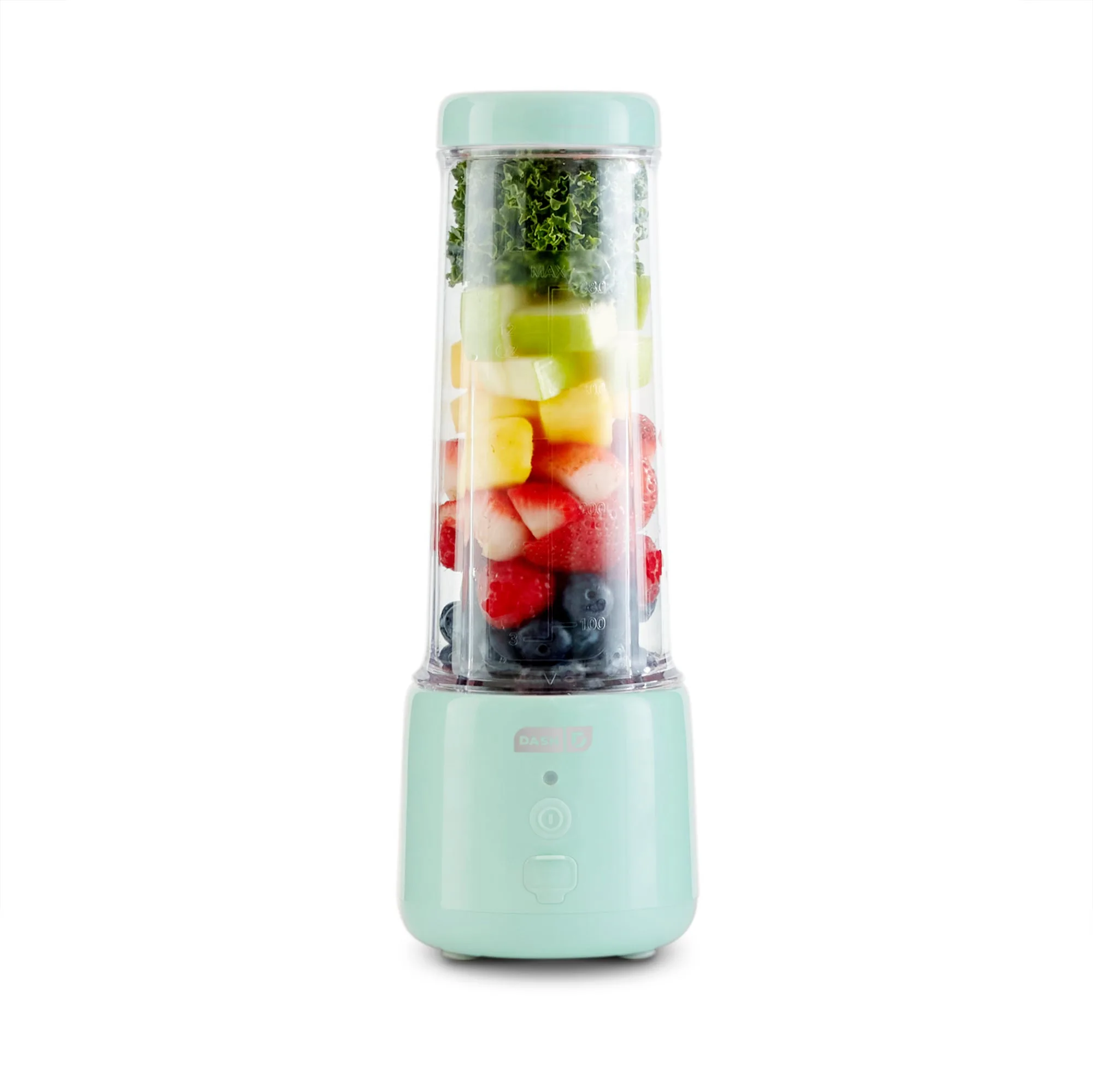
- Portable Blender: The Dash Portable Blender has a powerful DC motor that can handle fruits, veggies, and small ice cubes, and its 12.8 oz blending bottle holds a single serving. It is rechargeable and comes with a leak-resistant drinking lid. This is a practical choice if you blend one smoothie or shake at a time and want to drink straight from the bottle without transferring to another cup.
- Chef Series Deluxe Digital Blender: The Dash Chef Series Deluxe Digital Blender offers 8 unique presets, including Rinse and Soup, and a 64 oz Tritan jug. The Soup setting can mix hot blended soup in minutes without using the stove. Choose this if you regularly make hot soup, frozen cocktails, or large batches and want preset programs to handle timing and speed changes for you.
Who should buy which
Best for
- Single-serve smoothies, protein shakes, and cold drinks on the go
- Small kitchens or dorm rooms with limited counter and cabinet space
- Anyone who wants to blend and drink from the same bottle
Not for
- Blending hot soup directly in the jar
- Large batches for families or meal prep
- Crushing large amounts of ice or hard frozen blocks