Quick answer
Pull the stock insole out of your Astral shoe or sandal and measure it before you buy anything. Match the replacement to that length and width, keep the thickness close to the original so the fit does not change, and choose a material that drains and dries rather than trapping water. If your Astral footwear already fits well, a thin replacement is usually the safer choice than a thick cushioning insole.
Why the stock insole is your best template
Astral footwear is built around a specific footbed, so the insole that ships with the shoe is the most accurate template you have. Pull it out, trace it on paper, and note the length, the width at the ball of the foot, and the thickness at the heel and forefoot. Those three numbers tell you whether a replacement will actually sit flat and stay put.
This matters more in water shoes than in casual sneakers because the upper is often softer and less forgiving. A replacement that is even a few millimeters too thick can push your foot up into the ankle collar, which changes how the shoe locks down. That is a fit problem, not an insole problem, and it is the most common reason people give up on replacements.
Match the insole to how you actually use the shoe
A shoe worn for paddling, wading, and beach walks has different demands than one worn around town. Water exposure means the insole needs to drain and dry, so closed-cell foam and perforated designs beat dense memory foam that holds moisture. If you mostly wear the shoe on pavement, cushioning and odor control matter more than drainage.
Arch support is the other variable worth deciding on deliberately. Some people want a neutral, flat replacement that preserves the shoe's natural feel; others want a contoured arch for longer days on hard surfaces. Neither is universally better, but the choice should follow your foot and your typical day, not the label on the packaging.
Check the shoe before you blame the insole
Before buying a replacement, confirm the original insole is actually the problem. Look for a compressed heel, a curled edge, or a worn-through forefoot. If the shoe's midsole or outsole is worn unevenly, a new insole will not fix the ride. In that case, the footwear itself may be due for replacement rather than repair.
Also check that the insole is removable in the first place. Some footwear uses a cemented footbed that is not designed to come out. Forcing one out can damage the lining, and there is no reliable way to know from a product page alone whether a given model is removable, so inspect the pair you own.
Step-by-step: choosing and fitting a replacement insole
- Step 1: Remove and measure the stock insole: Take the original insole out and trace it on paper. Record length, width at the ball, and thickness at the heel and forefoot. If the insole will not come out without force, stop here. Checkpoint: if your trace is wider than the replacement you are considering, the insole will curl at the edges.
- Step 2: Decide on arch support before you shop: Choose neutral if you want to keep the shoe's original feel, or contoured if you want more support for long days on hard ground. Write this down so you are not swayed by whatever is on the shelf. Checkpoint: a contoured insole that is too aggressive can make a snug water shoe feel tight across the top of the foot.
- Step 3: Pick a material that suits water exposure: For paddling, wading, and beach use, favor closed-cell foam or perforated designs that drain and dry. For dry everyday wear, denser cushioning and odor control become more useful. Checkpoint: if the insole feels soggy hours after a soak, it is the wrong material for that shoe.
- Step 4: Trim only if the design allows it: Some insoles are meant to be cut to size along a printed guide; others are not. Trim a little at a time from the toe, never the heel, and test the fit after each pass. Checkpoint: cut too short and the insole will slide forward; there is no way to add material back.
- Step 5: Re-lace and walk before you commit: Put the insole in, re-lace the shoe, and walk for a few minutes indoors. Check for heel slip, pressure across the instep, and any bunching under the arch. Next step: if the fit changed noticeably, try a thinner insole or return to the original rather than forcing the new one.
Astral models and what they mean for insole choice
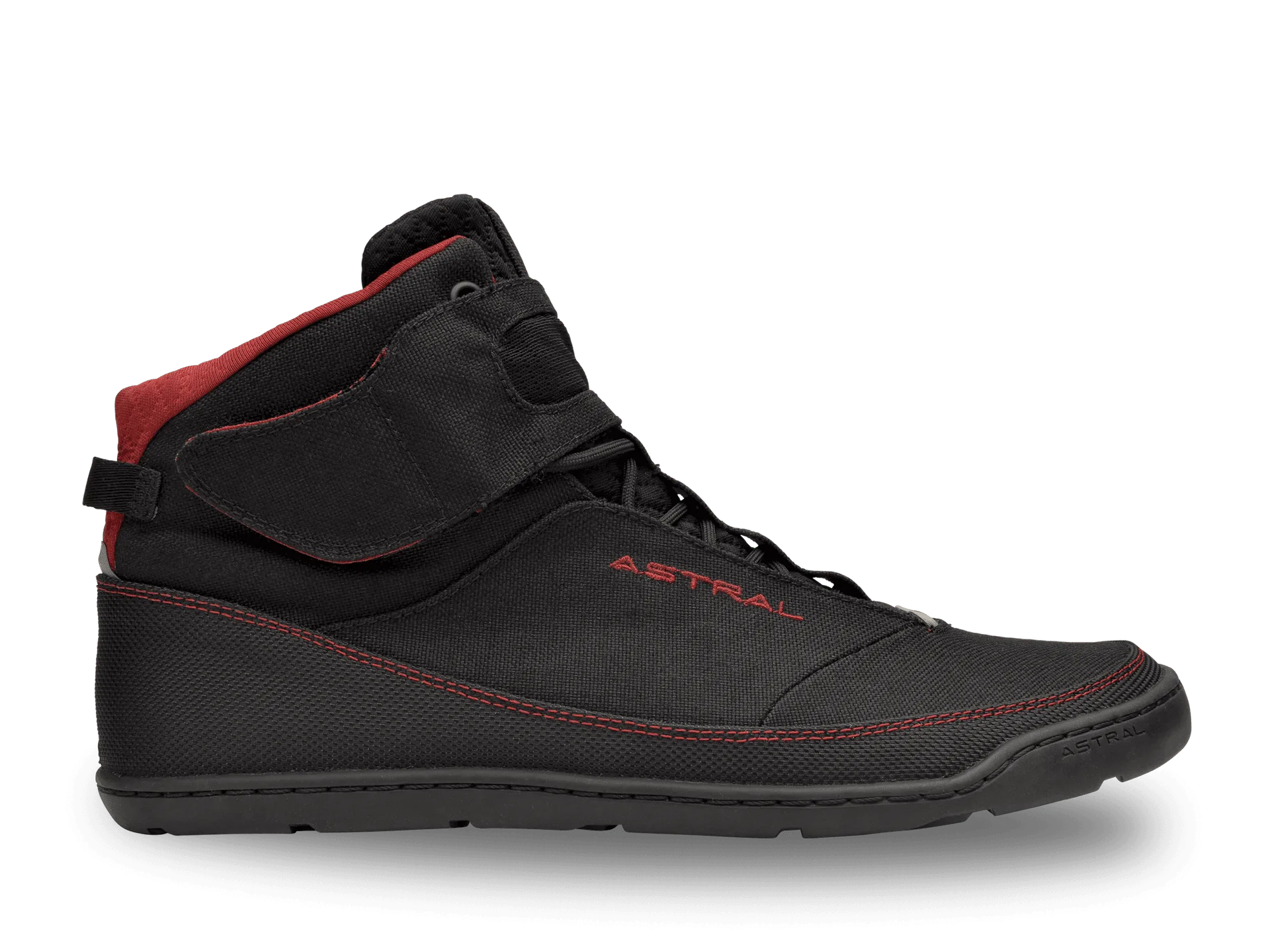
- Hiyak: The Hiyak is a modern water bootie with a Zero Drop platform, ankle support, and the stickiest sole in its class for wet surfaces. Because the platform is already Zero Drop, adding a thick heel-lifting insole changes the shoe's natural stance. Keep any replacement thin and flat to preserve that geometry.
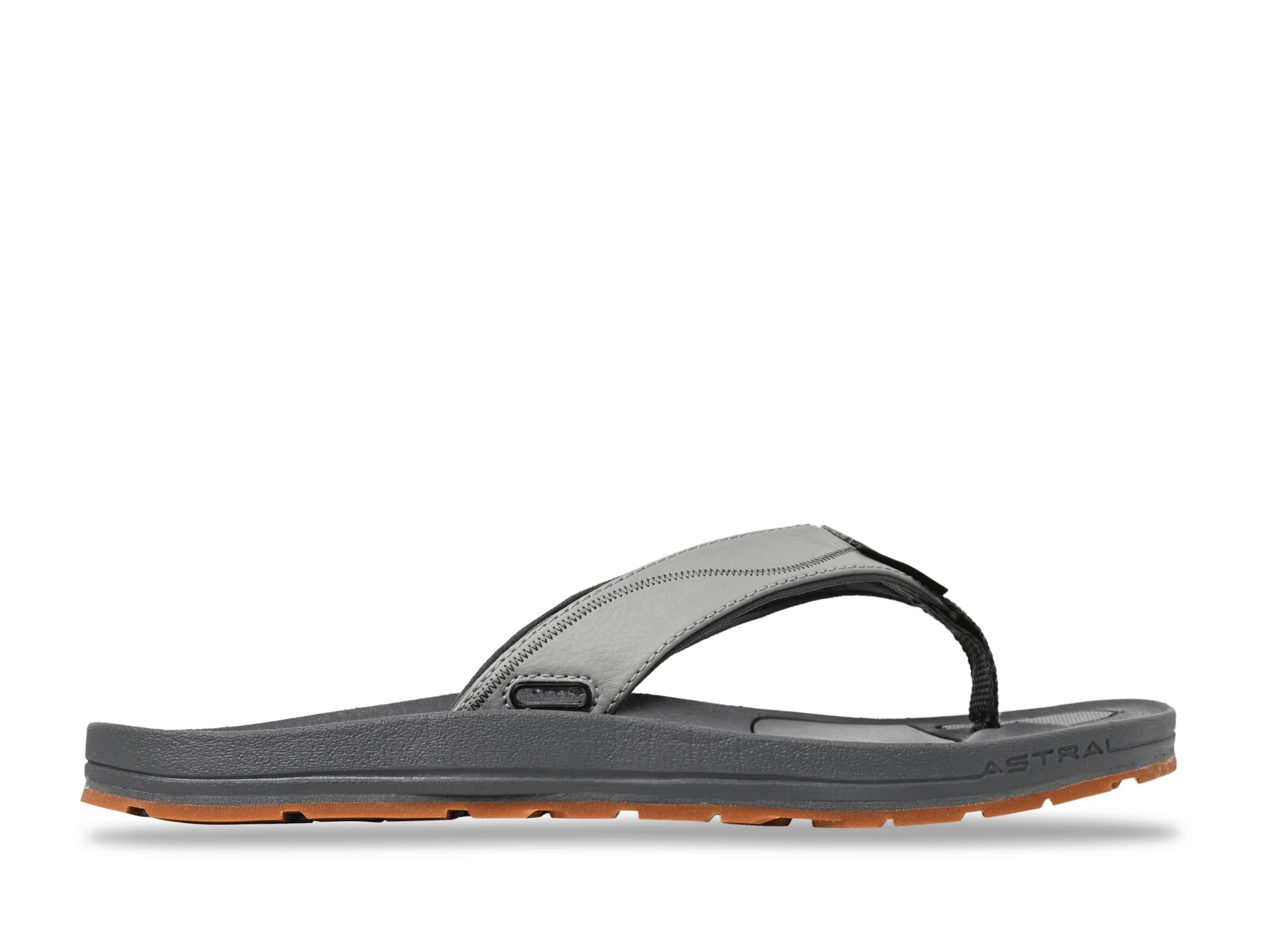
- Loyak M's: The Loyak M's is a minimalist shoe with max ventilation and a zero-drop design, made with recycled materials and a vegan construction. A minimalist shoe has less material between you and the ground, so a bulky insole works against the design. A thin, breathable replacement fits the intent better than a cushioned one.
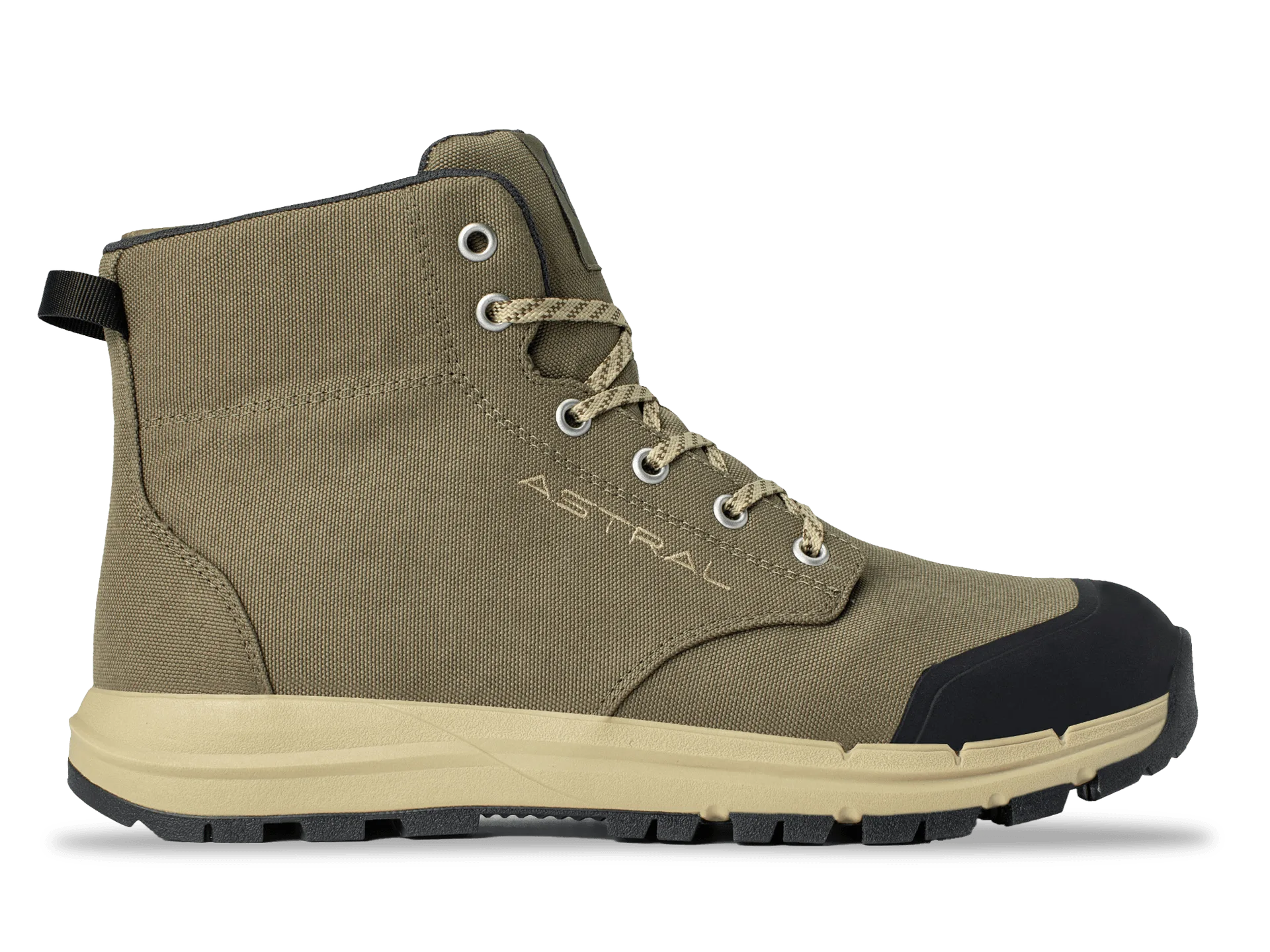
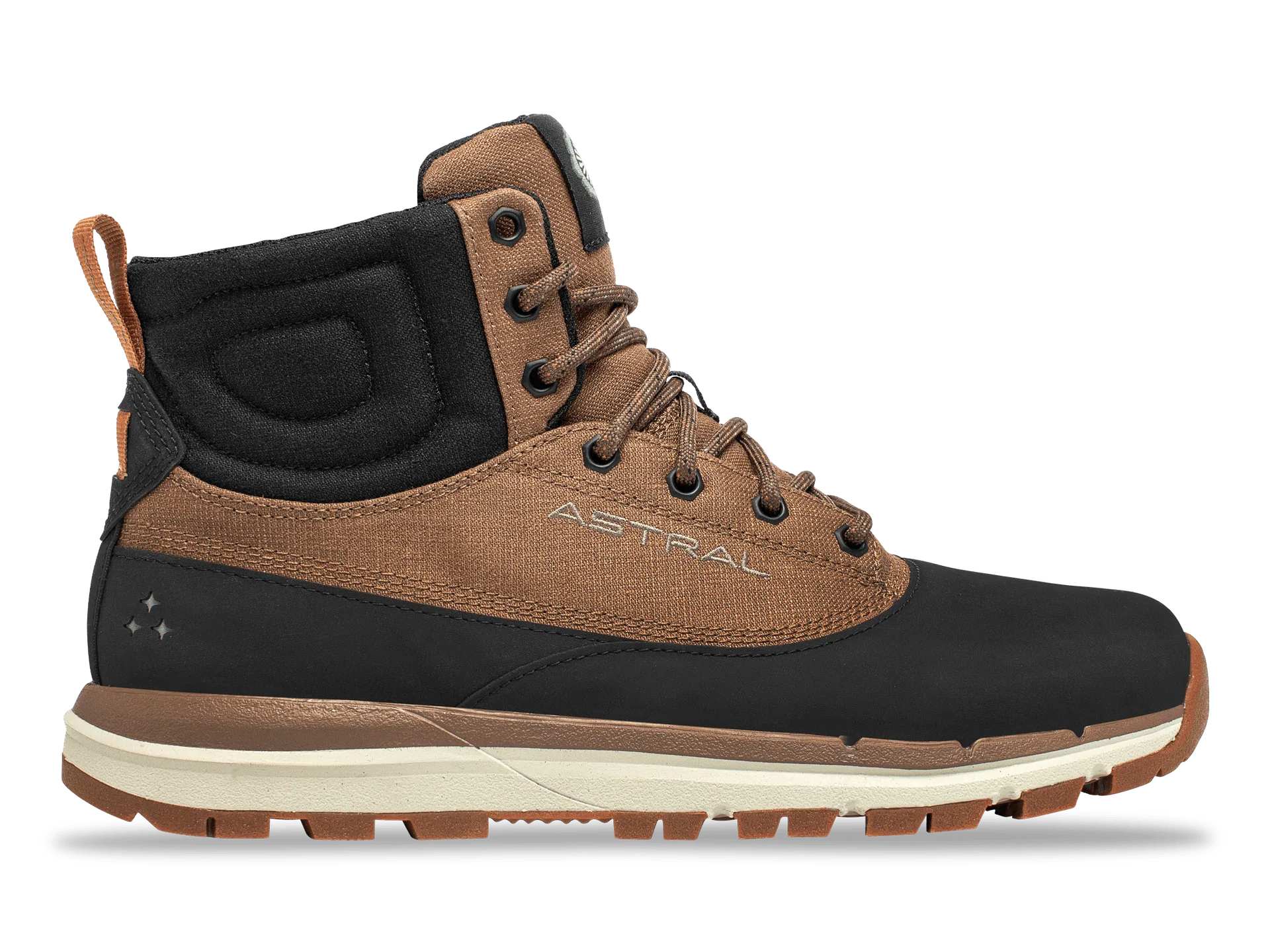
- Halestorm 2.0: The Halestorm 2.0 is a hemp duck boot with waterproof construction, ankle support, and a Zero Drop platform for everyday wear and trail use. Waterproof construction keeps water out, but it also slows drying if water gets in. Choose an insole that drains and dries quickly rather than one that holds moisture inside the boot.