Quick answer
For low-cut tops, choose a plunge bra with underwired cups and a longline underband—it gives you the deep neckline you want without sacrificing everyday support. The Lydia Plunge Bra is a solid pick because its stretchy mesh and soft-lined cups shape you naturally while the longline band keeps everything secure.
Why plunge bras are different
A plunge bra is built around a deep V neckline, so the cups meet lower on the chest than a balconette or full-coverage style. That low center front is what lets you wear tops and dresses with a deep neckline without showing bra fabric. The trade-off is that plunge bras rely more on the underband and side support than on the cup itself, so fit precision matters more than with other styles.
If you are choosing between a plunge bra and a balconette, think about the neckline first. Balconettes sit higher and create a horizontal line, which can peek out of a deep V. A plunge bra keeps the front open, so it works under wrap tops, plunging necklines, and low-cut evening wear.
Why Support Changes with the Neckline
A plunge bra trades some upper-cup coverage for a lower neckline. That means the support has to come from elsewhere: the underband, the side panels, and the straps. If you are choosing a plunge bra for a deep neckline, check that the underband sits firmly and the cups keep their shape. A longline underband adds structure and can make a medium-support bra feel more secure for longer wear.
Plunge vs. Balconette: Know the Difference
A balconette lifts from below and usually has a horizontal cup line, which suits square or boat necklines. A plunge bra has a deep V-shaped front that stays hidden under low-cut tops and dresses. If your neckline dips below the sternum, a plunge bra is the practical choice; if you need more coverage and shaping, a balconette may work better.
For very deep necklines, check the plunge depth of the bra against the actual V of your top. A longline underband can add stability, but it also means more fabric below the cups, so it may not work with cropped or high-waisted styles.
Support trade-offs in plunge styles
Plunge bras trade a higher neckline for a deeper dip. That means less fabric between the cups, so support relies more on the underband and the side panels than on the cup itself. A longline silhouette adds structure and can feel more secure than a standard plunge, especially for fuller busts.
If you need serious lift for a heavy bust, a plunge bra may not deliver the same support as a balconette or full-coverage style. For low-cut tops where the neckline is the priority, a plunge bra with a supportive underband is usually the better trade-off.
Plunge bra decision rules
- Neckline depth: Measure the vertical distance from the center of your collarbone to the lowest point of the neckline. A plunge bra works when the cups sit below that line; if the neckline dips lower than the bra's center gore, the bra will show. Bring a tape measure when shopping and check the gore height against your top's plunge.
- Support level: For everyday wear, choose a plunge bra with medium support and an underwire. If you need more lift for a fuller bust, look for a longline underband or wider side wings.
- Fabric and edge: Pick a smooth, soft mesh-lined cup that follows the neckline. A stretchy geometric mesh keeps the bra invisible under clingy or sheer low-cut tops. Check the cup edge in a mirror under the exact top you plan to wear.
- Straps and closure: Adjustable straps and a hook-and-eye fastening let you fine-tune the fit so the band stays anchored and the plunge sits flat against your chest. Test the band level: it should stay horizontal and not ride up during movement.
Plunge bra options worth considering
-
Lydia Plunge Bra : Crimson Blush: Underwired plunge cups with a longline underband provide natural shaping with comfortable everyday support. The longline underband adds stability, so the bra stays put under a deep neckline without constant adjusting.
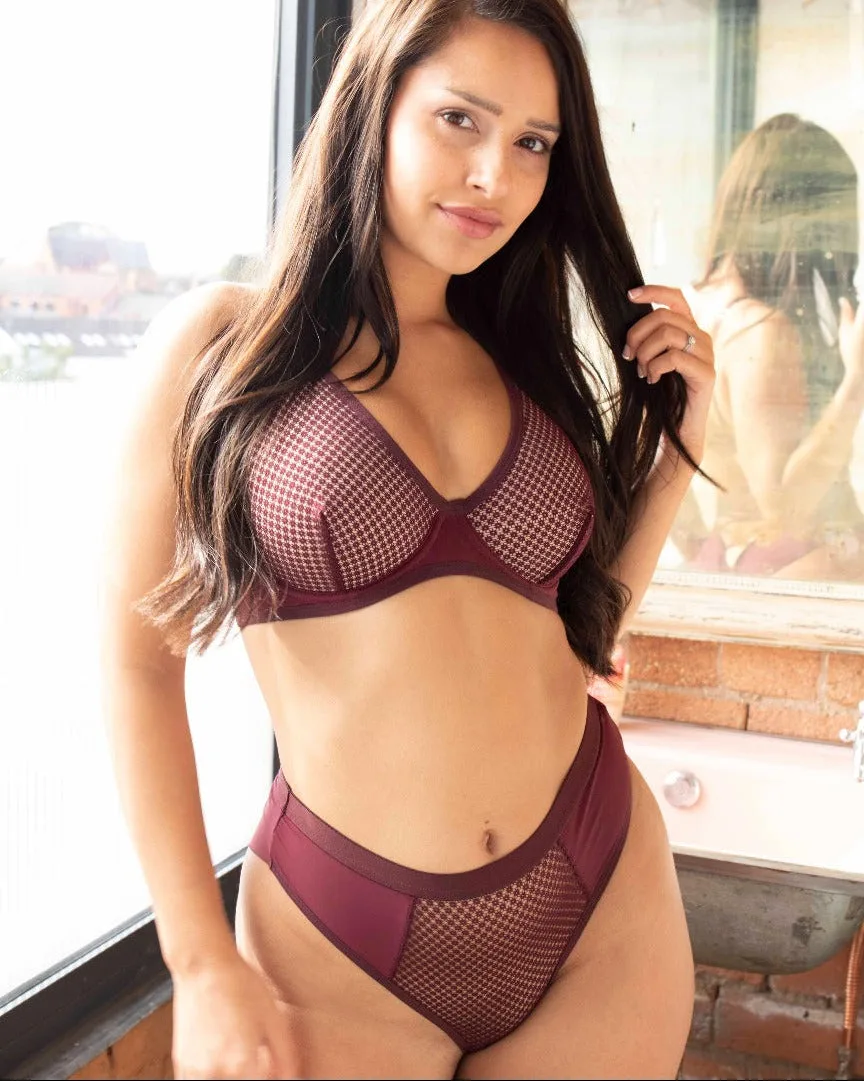
Lydia Plunge Bra : Crimson Blush
How to choose the right plunge bra
Best for
- Low-cut tops and deep necklines where a regular bra would show
- Evening wear, date nights, and special occasions that call for a sleek, minimal look
Not for
- High-impact workouts or heavy activity (choose a sports bra instead)
- Full-coverage or modest necklines where a balconette or t-shirt bra gives a smoother line