Quick answer
To choose the right 9-pocket page, match the page thickness and security features to how often you handle your cards and whether they need extra protection from slipping out.
Why page material and thickness matter
Card storage pages are made from different plastics. The most common are PVC and polypropylene (PP). PVC pages can contain plasticizers that may damage cards over time. Archival-safe polypropylene pages, like those from Ultra PRO, are acid-free and non-PVC, making them the safer choice for long-term storage.
Thickness affects both durability and how the page fits in a binder. Thicker pages resist tearing and lay flatter, but they also take up more space. Thinner pages are more flexible and can hold more pages in a binder, but they may not protect as well against bending or wear.
Security flaps vs. open pockets
Some 9-pocket pages have a clear flap that folds over the top of each pocket to keep cards from sliding out. This is useful if you transport your binder frequently or store it upside down. The trade-off is that flaps add a small amount of bulk and can make it slightly slower to insert or remove cards.
Standard open-pocket pages are lighter and allow quicker access. They work well for binders that stay on a shelf and are not handled roughly. Choose based on how much movement your collection will see.
How to choose your 9-pocket page in 4 steps
- Check the card size: Standard 9-pocket pages fit cards up to 2.5" x 3.5", like Magic: The Gathering and Pokémon. Measure your cards if they are smaller or larger. Using the wrong size can cause slipping or damage. Always measure your cards before buying pages.
- Decide on material safety: Look for pages labeled acid-free, non-PVC, and archival-safe. Polypropylene pages meet these standards. Avoid PVC pages for long-term storage, as they can cause chemical damage over years. Archival-safe polypropylene is the best choice for preserving card condition.
- Choose thickness based on use: Thinner pages (like standard 9-pocket pages) are fine for bulk storage and casual binders. Thicker pages (like Platinum Series) offer more protection and lay flatter, but reduce the total number of pages a binder can hold. Use thicker pages for valuable cards; thinner pages for everyday sorting.
- Decide if you need a security flap: If you travel with your binder or store it vertically, choose pages with a flap (like Premium Series Secure Pages). For stationary binders on a shelf, standard open pockets are easier to use and cost less. Flaps add security but slow down access; choose based on how much your binder moves.
Product facts
-
9-Pocket Page for Standard Size Cards (35ct): Ultra PRO 9-Pocket Pages are archival quality, acid-free, and made from non-PVC material with UV protection. This means your cards are safe from chemical damage and fading, making these pages a solid everyday choice for standard-sized cards.
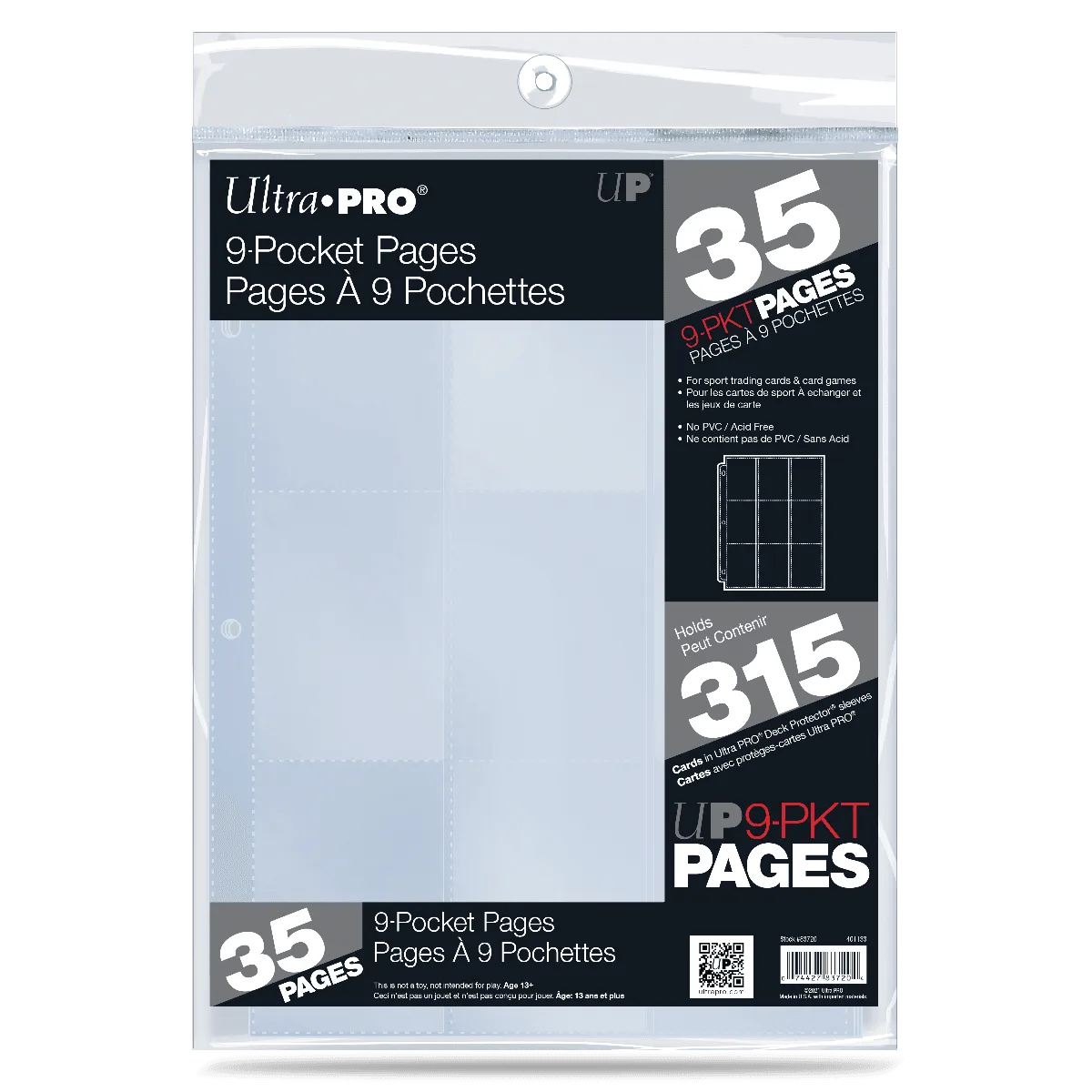
9-Pocket Page for Standard Size Cards (35ct)
-
Premium Series 9-Pocket Secure Pages (100ct) for Standard Size Cards: Premium Series Secure Pages include a security flap to keep cards from falling out, made from the same non-PVC material as other Premium Series pages. If you carry your binder to events or store it vertically, the flap prevents cards from slipping out during transport.
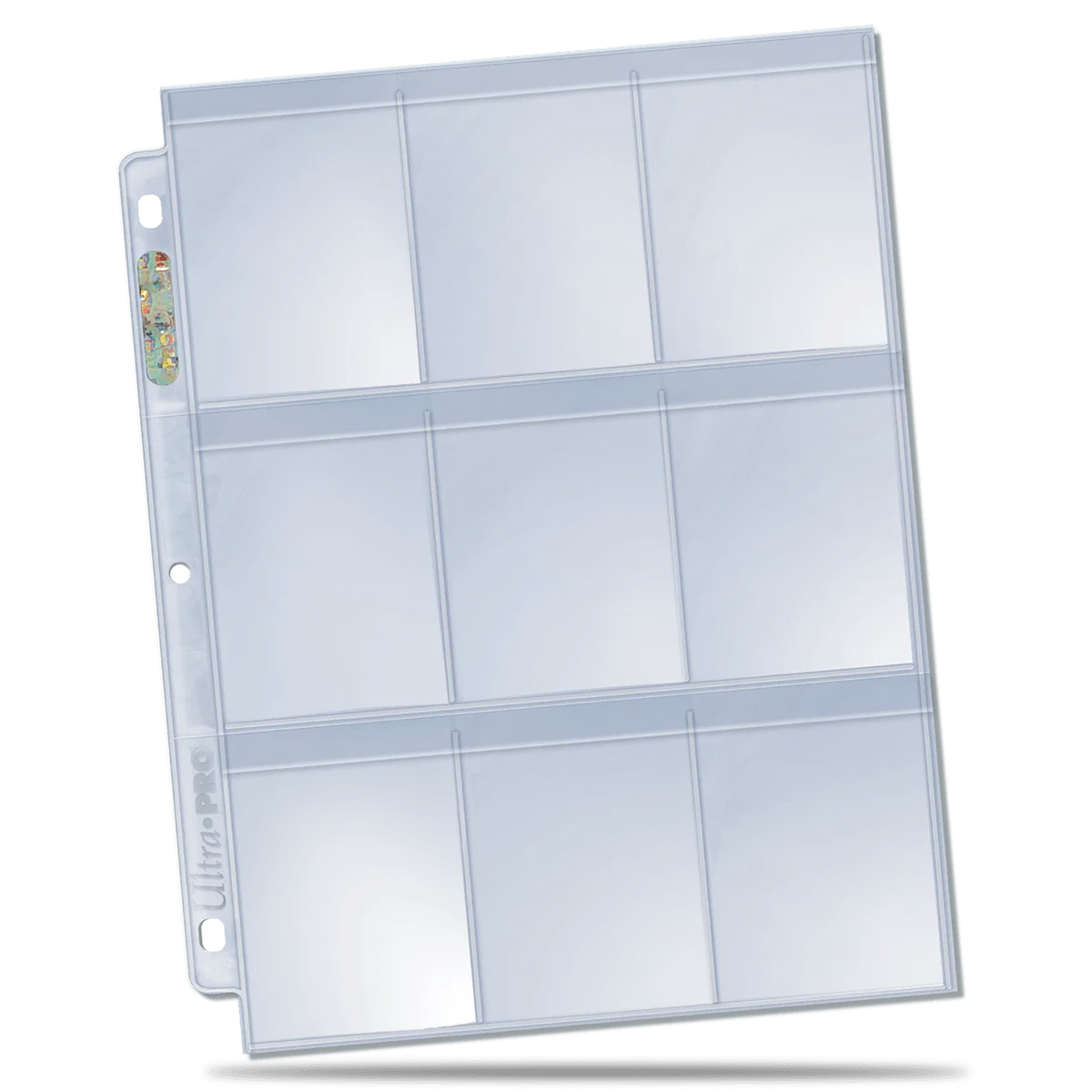
Premium Series 9-Pocket Secure Pages (100ct) for Standard Size Cards
-
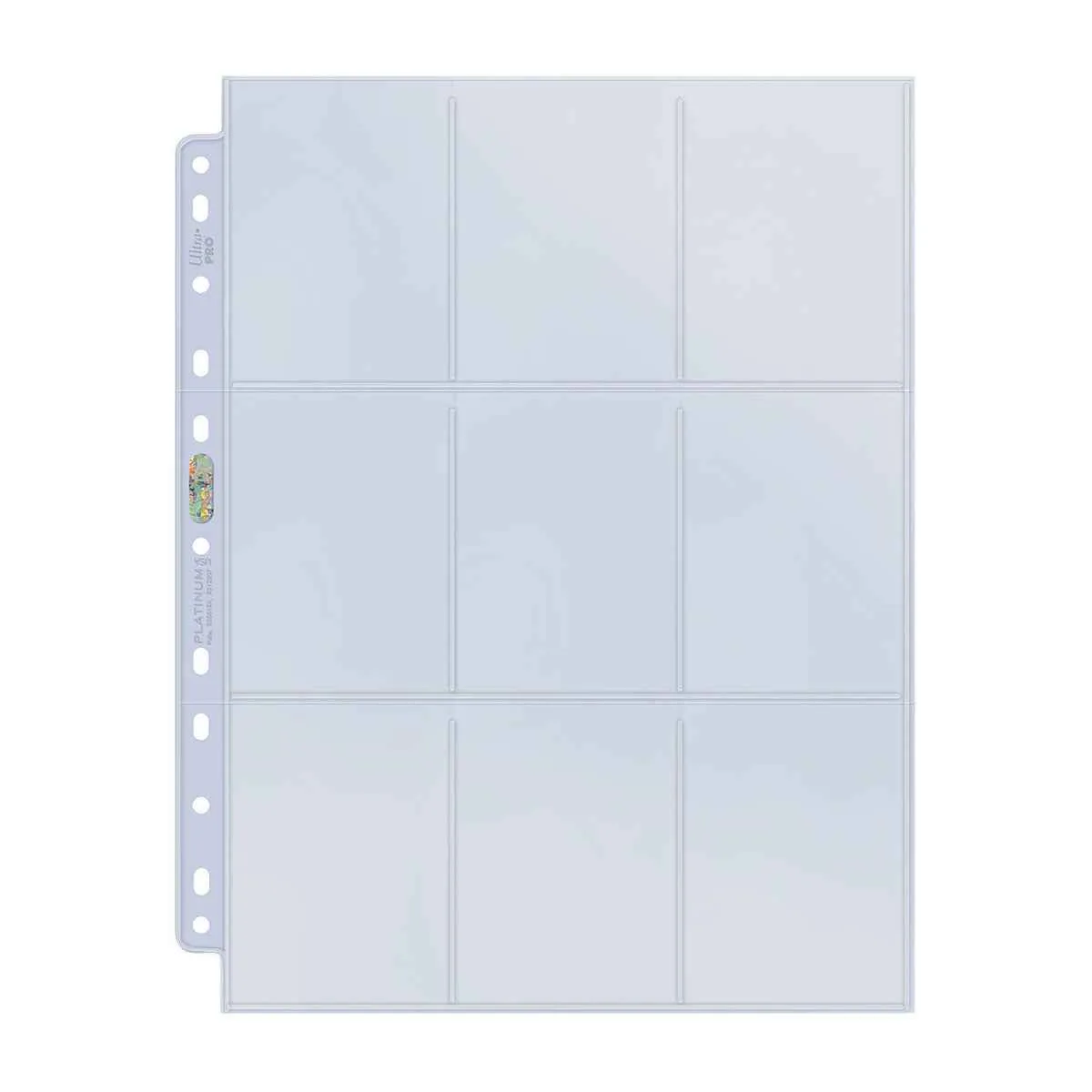
Platinum Series 9-Pocket 11-Hole Punch Pages (10ct) for Standard Size Cards: Platinum Series pages use the thickest polypropylene film with solid bar seals for superior seal strength and improved lay-flat qualities. The extra thickness and strong seals protect valuable cards from bending and keep the page flat in the binder, ideal for high-value collections.