Quick Answer
Choose an enteral feeding spike that matches your feeding tube connector type, prioritizes safety features like a screw spike to prevent disconnections, and fits your setting's sterility requirements.
Why Spike Compatibility Matters
Not all feeding spikes fit every tube. The spike's connector must match your enteral feeding tube's port to avoid leaks or accidental disconnections. A mismatch can interrupt feeding and increase infection risk.
Always check the spike's intended use—some are designed for specific brands or systems. The Kangaroo 924 Safety Screw Spike, for example, works with Kangaroo feeding sets and uses a screw mechanism for a secure fit.
Sterility vs. Non-Sterile Options
Enteral feeding spikes come in sterile and non-sterile versions. Sterile spikes are required for immunocompromised patients or when connecting to a sterile formula container. Non-sterile spikes, like the Kangaroo 924 Safety Screw Spike, are suitable for general use with standard formulas.
The trade-off is cost and convenience: non-sterile spikes are typically cheaper and easier to store, but sterile spikes offer an extra layer of safety for vulnerable patients.
Material and Durability Considerations
Most enteral feeding spikes are made from PVC, which is flexible, durable, and cost-effective. However, PVC spikes may not be suitable for patients with latex allergies (though PVC itself is latex-free).
If you need a spike for long-term or repeated use, look for reinforced materials or spikes designed for multi-use sets. Single-use spikes should be disposed of after each feeding to prevent contamination.
Decision Rules for Choosing an Enteral Feeding Spike
- Match the connector type: Verify that the spike's connector is compatible with your feeding tube's port. Use a screw spike for a secure, twist-lock connection. Check your tube's connector before purchasing.
- Assess sterility needs: Choose a sterile spike for immunocompromised patients or sterile formula. Use a non-sterile spike for standard home or clinical feeding. Non-sterile is fine for most adults; sterile is safer for vulnerable patients.
- Consider material and reusability: PVC spikes are standard and latex-free. For repeated use, select a spike from a durable set; otherwise, opt for single-use disposable spikes. Single-use spikes reduce infection risk but increase waste.
- Check purchase size: Spikes are often sold individually or in cases. A case (e.g., 30 units) is more economical for facilities or frequent use. Buy in bulk if you use spikes daily.
Product Facts
-
Kangaroo 924 Safety Screw Spike: The Kangaroo 924 Safety Screw Spike is a non-sterile PVC spike from Cardinal Health, available in sizes 1/EACH and 30/CASE. Its screw design reduces accidental disconnection, and the non-sterile format keeps costs low for routine enteral feeding.
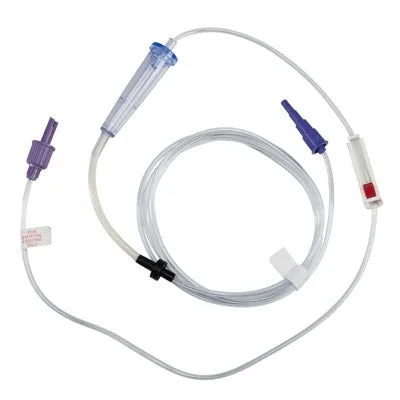
Kangaroo 924 Safety Screw Spike
Who Should Use This Spike?
Best for
- Home caregivers using Kangaroo feeding sets who want a secure, screw-on connection
- Clinics and hospitals needing a cost-effective non-sterile spike for routine enteral feeding
Not for
- Patients requiring sterile spikes for immunocompromised care or sterile formula
- Users with feeding tubes that do not accept a screw-type connector