Quick answer
Buy the pan that fits your most frequent meal, not the one that looks biggest on the shelf. For most households, a 10-inch pan is the daily workhorse, an 8-inch handles eggs and single servings, and a 12-inch is the right call for family portions and steak. If you cook for one or two, start with 8 and 10 inches; if you regularly feed three or more, add a 12-inch.
What pan diameter actually changes
Pan size is not just about volume. A wider pan gives you more surface area for browning, which means food releases moisture faster and sears instead of steams. A smaller pan concentrates heat and keeps food contained, which is why eggs and small portions behave better in an 8-inch pan than in a 12-inch one. The trade-off is crowding: put too much food in a small pan and you lose the sear you wanted. Match the pan to the number of servings and the moisture level of the food, not to the size of your stove burner.
8-inch pan: eggs, single servings, and quick sides
An 8-inch pan is the right size for two to three eggs, a single omelet, a small sauté of onions, or a portion of fish for one. It heats quickly and keeps fragile food from spreading across a wide surface. The limitation is capacity: two chicken breasts or a family-sized stir-fry will crowd it and steam rather than brown. If you mostly cook for one or two people, this is the pan you will reach for at breakfast and lunch.
10-inch pan: the daily all-rounder
A 10-inch pan is the most useful single size for most cooks. It holds two to three chicken thighs, a full pan of vegetables, or a generous omelet without crowding, and it still fits comfortably on a standard burner. This is the size to buy first if you are building a set. The trade-off is that it is slightly large for a single egg and slightly small for a family of four's main course, so it works best as part of a two-pan setup rather than the only pan in the kitchen.
12-inch pan: family portions and steak
A 12-inch pan gives you the surface area to sear a large steak, brown a batch of meatballs, or cook a full family-sized sauté without stacking food. For steak in particular, the wider surface lets the crust develop instead of trapping steam. The trade-off is weight and heat management: a 12-inch pan takes longer to heat evenly and is harder to handle when full. If you regularly cook for three or more people, this is the size that earns its cabinet space.
Carbon steel vs nonstick: how material changes the size decision
Material affects how forgiving a given size feels. Carbon steel is responsive and takes high heat well, so a 12-inch carbon steel pan is a strong choice for steak and high-heat searing. Nonstick surfaces are more forgiving for eggs and delicate food, which is why an 8-inch or 10-inch nonstick pan is often the practical pick for breakfast. If you are choosing between 8 inch vs 10 inch frying pan for eggs, the smaller size usually wins because it keeps the egg contained and easy to flip. A carbon steel pan size guide should start with what you cook at high heat, while a nonstick pan size comparison should start with what you cook gently.
Decision rules for choosing your pan size
- If eggs are your main use: Choose an 8-inch pan for two to three eggs or a single omelet; it keeps the egg contained and easy to flip. 8-inch nonstick or carbon steel is the breakfast default.
- If you cook one daily meal for two: Choose a 10-inch pan; it holds two to three chicken thighs or a full pan of vegetables without crowding. 10-inch is the most versatile single size.
- If you regularly cook for three or more: Choose a 12-inch pan for family portions and steak; the wider surface browns instead of steams. 12-inch earns its space in family kitchens.
- If you want one pan only: Start with a 10-inch pan and add an 8-inch or 12-inch later based on whether you cook more small breakfasts or larger dinners. Build a two-pan setup rather than forcing one size to do everything.
Product facts to match pan size to your cooking
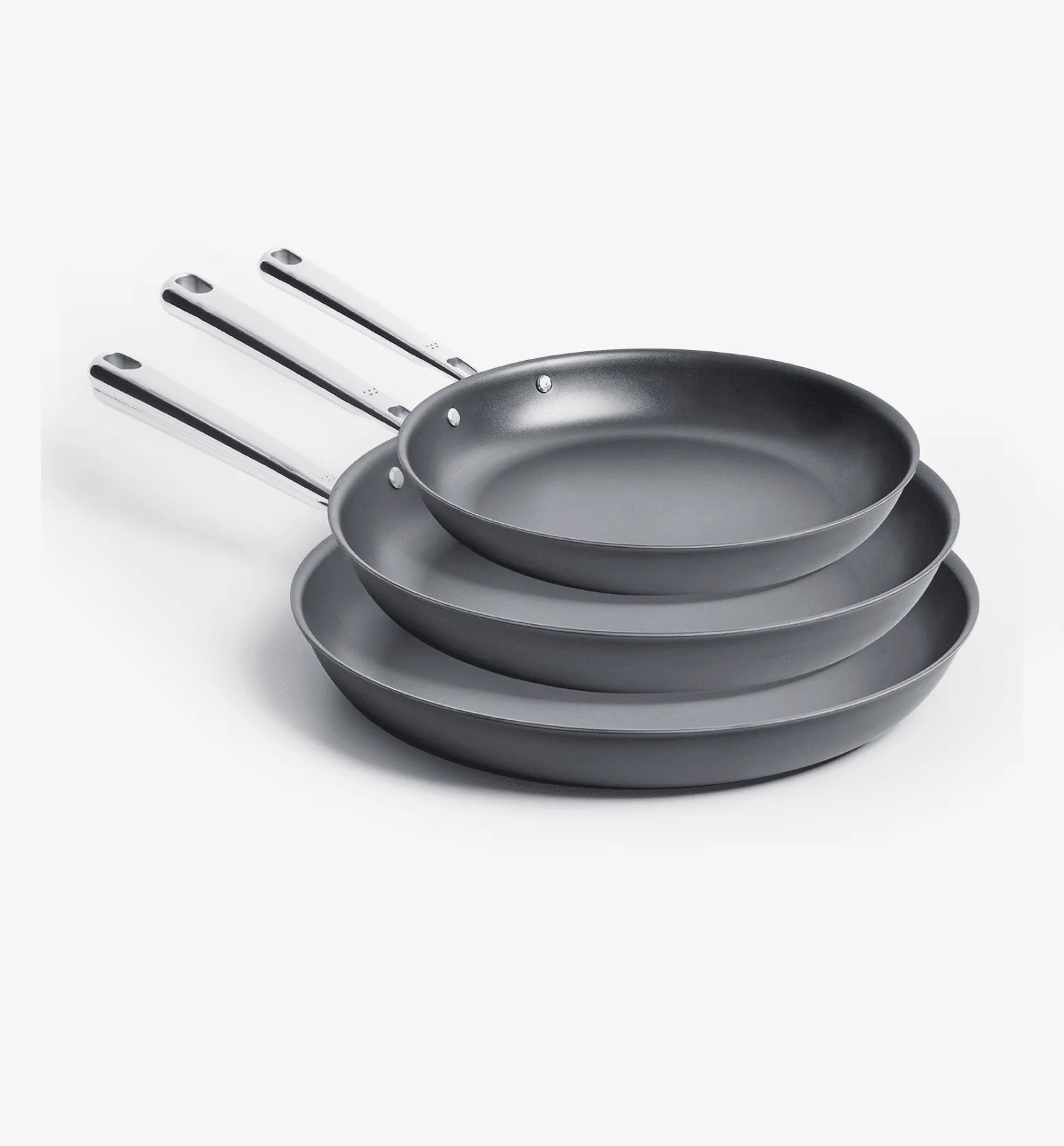
- 8" + 10" + 12" Pre-Seasoned Carbon Steel Frying Pan: Pre-seasoned carbon steel frying pan set in 8-inch, 10-inch, and 12-inch sizes. Lets you buy the exact diameter you need for eggs, daily meals, or family searing without committing to one size.
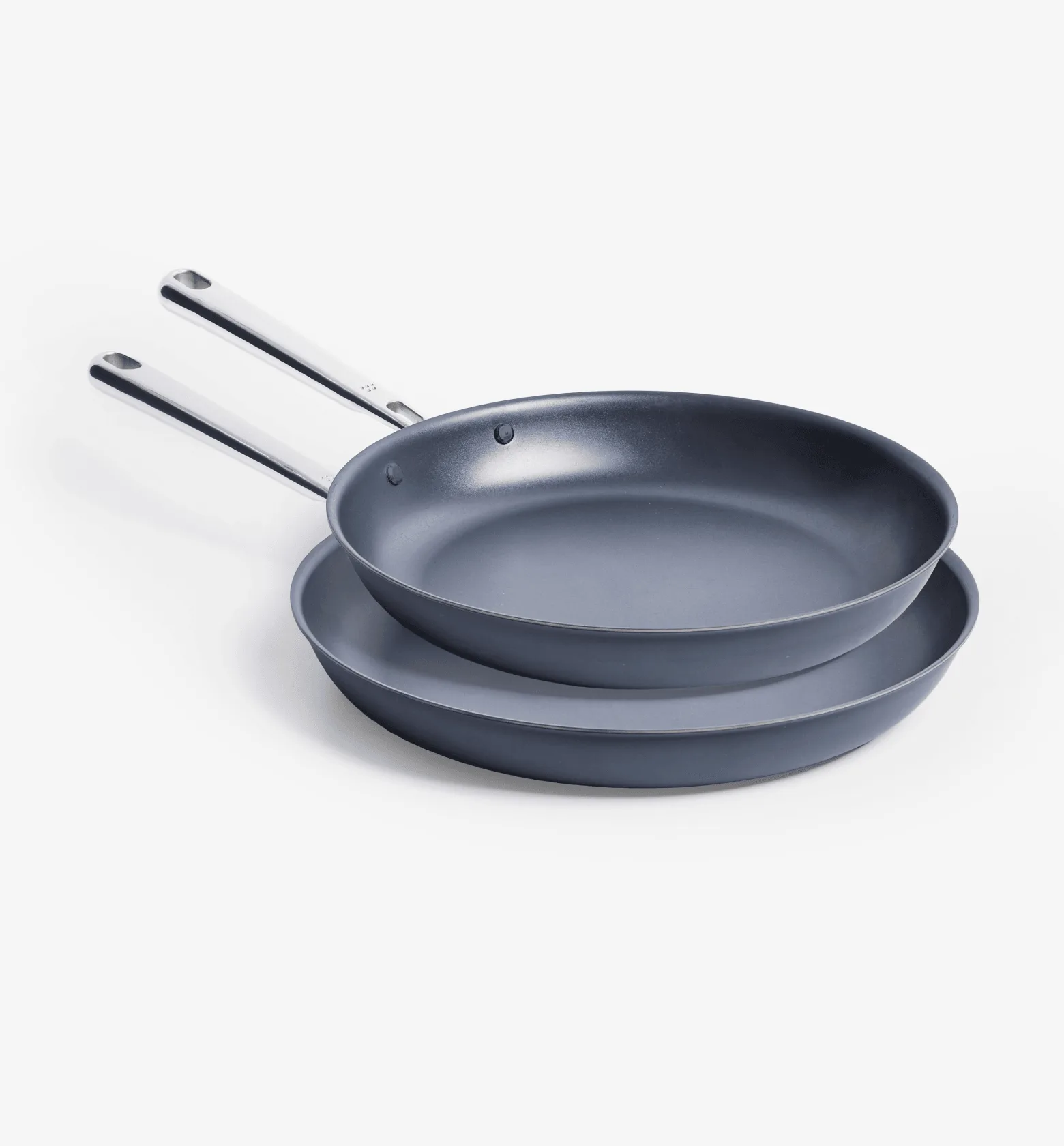
- 10" + 12" Carbon Nonstick™ Frying Pan: Coating-free carbon nonstick frying pan available in 10-inch and 12-inch sizes. Gives you nonstick ease from day one in the two sizes most useful for daily cooking and family portions.
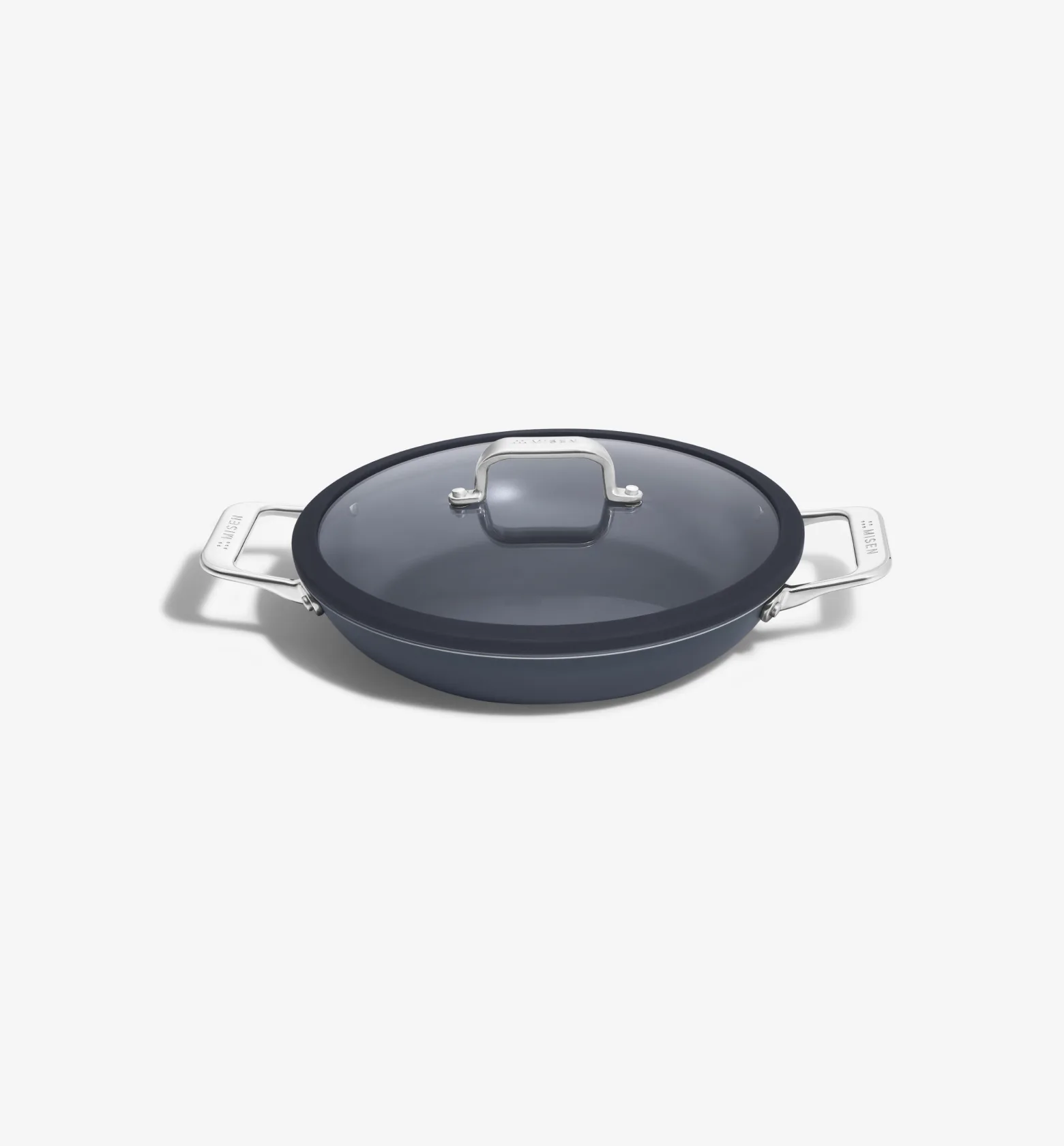
- " Carbon Nonstick™ Round Roaster + Glass Lid: Carbon nonstick round roaster with glass lid and two handles, available in multiple sizes. Adds a covered, oven-to-table option when your pan size decision is really about roasting and serving, not just stovetop searing.
Who each size fits
Best for
- 8-inch: singles, couples, and anyone who cooks eggs or small portions often
- 10-inch: most households as a first or only pan for daily meals
- 12-inch: families of three or more, steak searers, and batch cooks
Not for
- 8-inch: family-sized sautés or searing large cuts
- 10-inch: cooking for a crowd or searing a very large steak
- 12-inch: single eggs or small portions where a smaller pan is easier to handle