Quick answer
Choose a sleeping bag temperature rating based on the comfort rating, not the limit or extreme rating, and match it to the coldest night you realistically expect. If you sleep cold, add 10–15°F (5–8°C) of margin. A quilt paired with a sheet and a supportive pad often gives more usable warmth per ounce than a heavier bag alone.
Temperature ratings are the most misunderstood number in camping gear. They are not a thermostat setting, and two bags with the same rating can feel very different on the same night. The rating is a test result under controlled conditions, not a promise for your body, your pad, or your campsite.
This guide explains what the numbers mean, how to choose a sleeping bag for your trips, and when a quilt or a sheet-based system makes more sense. You will also see how specific products fit into those decisions so you can match a system to your sleep style instead of guessing.
Comfort, limit, and extreme ratings: what they actually mean
Most sleeping bag ratings list three numbers: comfort, limit, and extreme. The comfort rating is the temperature at which an average cold sleeper stays comfortable. The limit rating is for a warm sleeper curled up. The extreme rating is a survival number, not a camping target. If you only remember one, remember the comfort rating.
Manufacturers test with a standard mannequin wearing a base layer on a specific pad. Your metabolism, clothing, hydration, and pad change the result. Treat the comfort rating as a starting point, then adjust for how you actually sleep. A bag rated to 20°F comfort may feel right for a cold sleeper at 30°F, while a warm sleeper may push it to 15°F.
- Use the comfort rating for planning; ignore the extreme rating for comfort decisions.
- If you sleep cold, add 10–15°F (5–8°C) of margin to the comfort rating.
- If you sleep warm, the limit rating is a more realistic reference.
Match the rating to your trips, not to a single coldest night
Start with the lowest overnight temperature you expect on your typical trips, not the record low for your region. If most of your trips are summer weekends at 45–55°F, a 30°F comfort bag will be too warm and heavy for most nights. A 40°F comfort quilt or bag is often the better match, with a warmer layer for the occasional cold snap.
For three-season backpacking where nights range from 25–40°F, a 20°F comfort rating is a versatile middle ground. For winter or high-altitude trips below 15°F, you need a dedicated cold-weather system and a pad with a high R-value. The rating only works if the rest of your system supports it.
- Write down the lowest expected overnight temp for your next three trips.
- Choose the rating for the middle of that range, not the coldest outlier.
- Plan to layer a liner or extra clothing for the rare cold night.
Your sleeping pad changes your rating more than you think
A sleeping bag insulates on top; your pad insulates below. If your pad has a low R-value, you will feel cold no matter how warm the bag is. For three-season use, aim for an R-value of 3 or higher. For winter, aim for 5 or higher. This is why a quilt system with a supportive pad often outperforms a heavier bag on the same night.
The Ultralight Mattress uses an offset air cell structure and starts at just 17 ounces, which makes it a strong pairing for quilts and lightweight bags. The catalog notes it gets its softness from the air cells, not from under-inflating, so inflate it firmer than you might expect. A firm, supportive pad keeps your insulation lofted and your body off the cold ground.
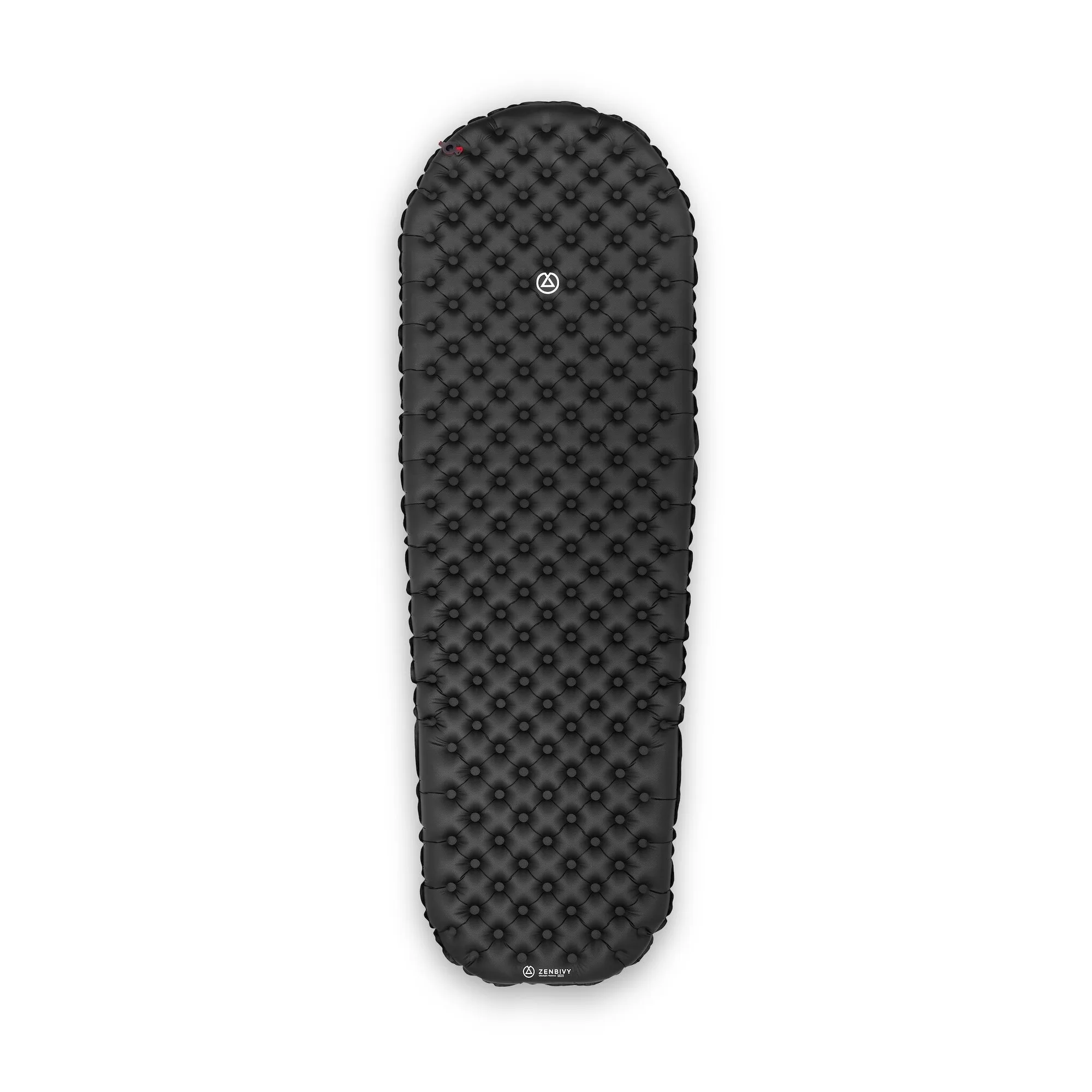
Ultralight Mattress
- Check your pad's R-value before blaming your bag for being cold.
- Inflate air-cell pads firmer than you would a foam pad.
- Pair a quilt with a pad that matches the expected ground temperature.
Quilts, sheets, and convertible systems: when they beat a traditional bag
Quilts save weight by removing the insulation you compress underneath you. They work well for side sleepers and anyone who feels restricted in a mummy bag. The trade-off is that quilts need a draft-management strategy, usually a sheet or a strap system, and they demand a warmer pad because there is no hood or back insulation.
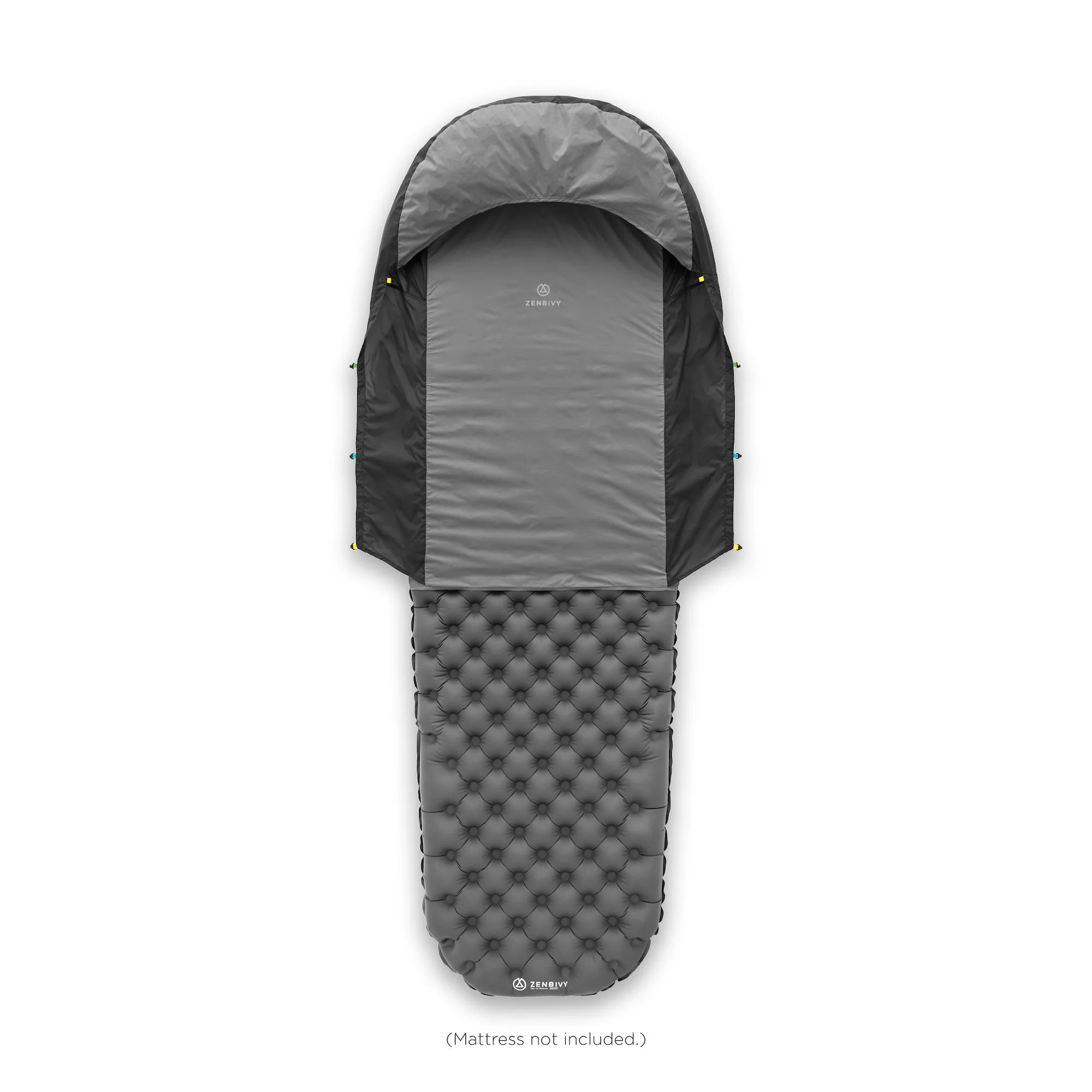
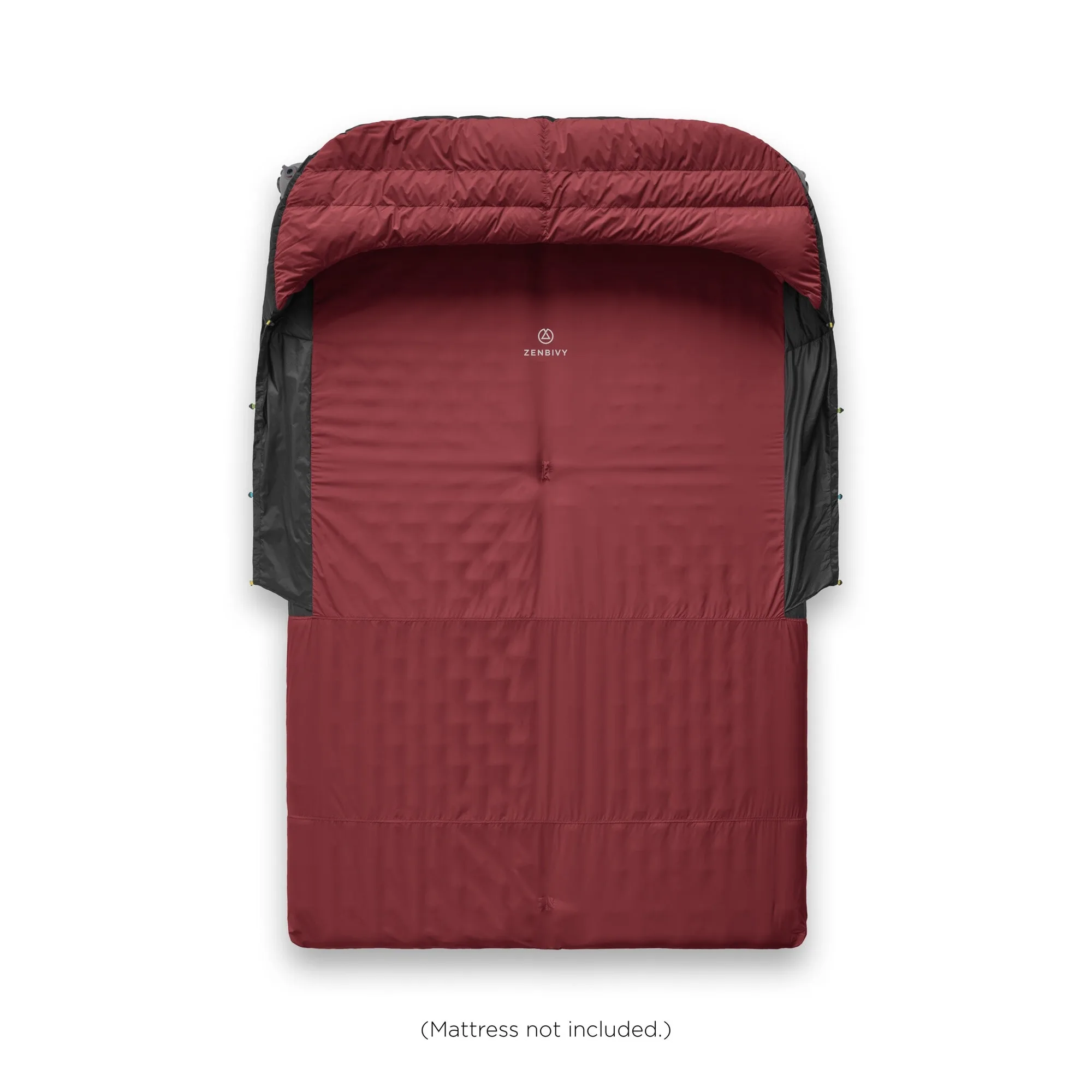
A sheet-based system solves the draft problem while keeping the quilt's freedom of movement. The Fast Sheet is built for minimalist backpackers, blocks drafts, and pairs with any Zenbivy quilt to create a very light sleep system. It starts at just 3 ounces, so it adds almost nothing to your pack. For couples, the Light Double Sheet joins two mattresses and insulates your head, which removes two common cold spots at once.
- Choose a quilt if you sleep warm, move a lot, or want to save weight.
- Choose a sheet if you want quilt freedom without drafts.
- Choose a traditional bag if you sleep cold or want a hood and a full enclosure.
Fill power, lining, and shells: how they affect warmth and comfort
Fill power measures how much space down occupies per ounce. Higher fill power gives more warmth for less weight, but it costs more. A 650FP duck down bag like the Core ZipBed offers dependable warmth and strong value, while a higher fill power bag saves weight for the same rating. The trade-off is price and, for some, durability.
Lining and shell fabrics affect comfort more than warmth. A soft 50D Pongee lining feels plush against the skin, while a 25D Pongee lining saves weight and still feels soft. A 20D nylon shell keeps pack weight down. If you prioritize comfort at camp over the absolute lightest weight, a softer lining is worth the small weight penalty.
- Pick fill power based on your weight budget, not just the temperature rating.
- Choose a softer lining if you sleep in minimal clothing.
- Choose a lighter shell if you are counting ounces for long carries.
Fit and shape: why the same rating feels different
A bag that is too large has extra air to heat, and a bag that is too small compresses insulation. Both make you colder. Mummy bags are efficient but restrictive. Quilts and semi-rectangular bags feel roomier but need draft control. Your sleep position matters: side sleepers often prefer quilts or wider bags, while back sleepers do well in mummy shapes.
For couples, a double sheet system can be warmer than two separate bags because it reduces the gap between sleepers and blocks drafts. The Light Double Sheet securely joins two mattresses and insulates your head, which addresses two of the biggest heat losses in a shared setup. The trade-off is that it requires two compatible mattresses and a quilt for each sleeper.
- Lie in the bag or quilt in your sleep position before buying.
- Check shoulder and hip girth, not just length.
- For couples, consider a double sheet instead of two separate bags.
Decision rules for choosing your temperature rating
- Rule 1: Plan around the comfort rating: Use the comfort rating as your baseline and ignore the extreme rating for comfort. If you sleep cold, add 10–15°F (5–8°C) of margin. Your target rating should feel slightly warm on your typical trip, not just barely survivable.
- Rule 2: Match the rating to your three most common trips: Choose the rating for the middle of your expected overnight temperature range, not the coldest outlier. Use layers for the rare cold night. A 20°F comfort rating covers most three-season backpacking from 25–40°F.
- Rule 3: Fix your pad before you change your bag: A pad with an R-value below 3 will make any bag feel cold. Aim for R-3 or higher for three-season use and R-5 or higher for winter. If you are cold, upgrade the pad before buying a warmer bag.
- Rule 4: Choose the system shape for your sleep style: Quilts suit warm sleepers and movers; sheets add draft control; enclosed bags suit cold sleepers and those who want a hood. Match the shape to how you sleep, then adjust the rating.
- Rule 5: Trade weight for comfort only where it counts: Higher fill power and lighter shells save weight but cost more. Softer linings add comfort with a small weight penalty. Spend your weight budget on the pad and the rating first, then on fabrics.
Product facts that matter for temperature rating choices
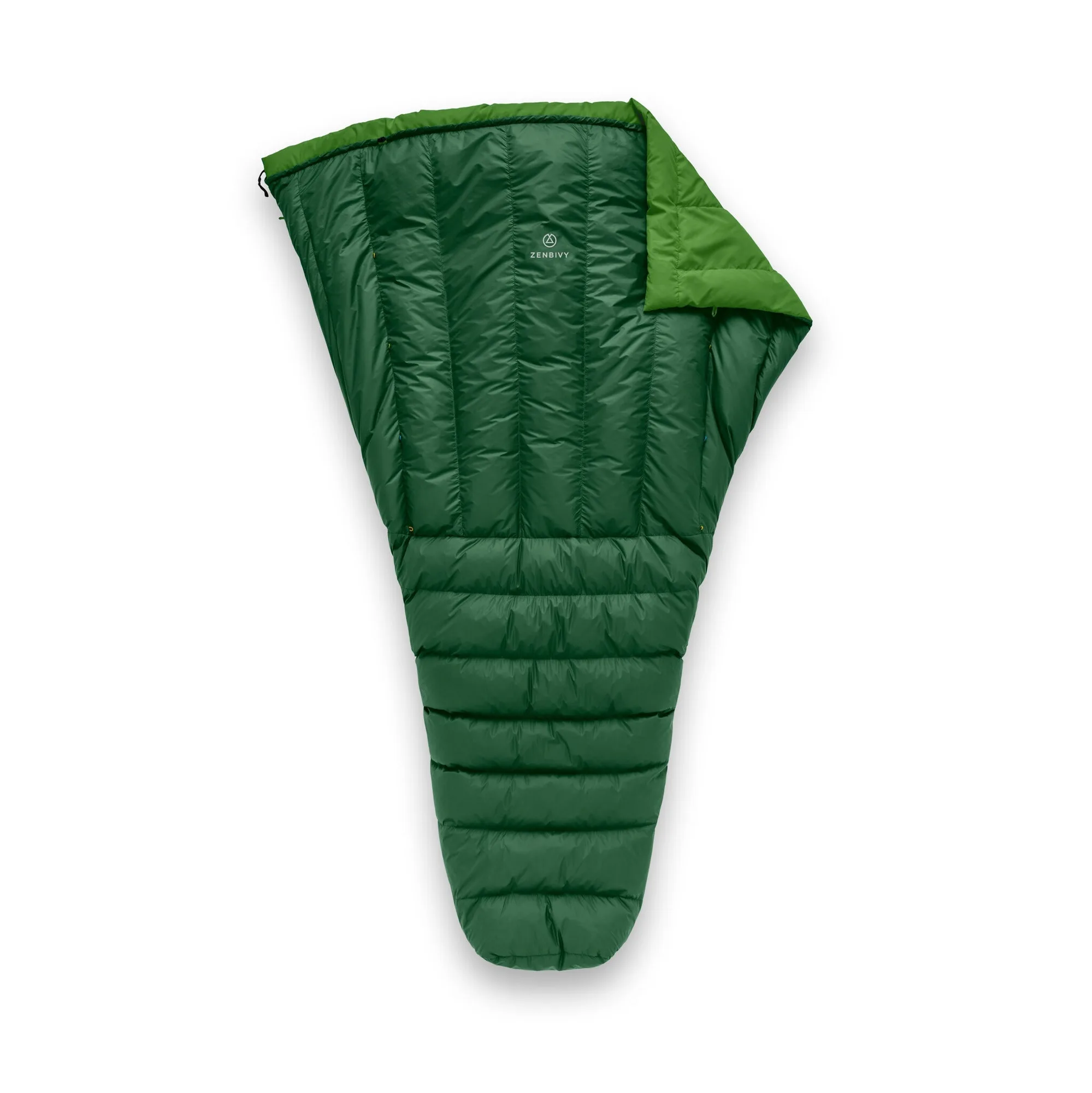
- Core Quilt: The Zenbivy Core Quilt is the simplest, softest, and most affordable backpacking quilt, featuring a soft 50D Pongee lining for premium comfort. A good entry point if you want quilt freedom and a comfortable lining without paying for ultralight fabrics. Pair it with a sheet for draft control.
- Light Quilt Convertible: The Zenbivy Light Quilt Convertible features an ultra-soft 25D Pongee lining and a patented draft-free convertible footbox for adjustable warmth and maximum versatility. The convertible footbox lets you vent heat on warm nights and close it on cold ones, which widens the temperature range one quilt can handle.
- Core ZipBed: The Zenbivy Core ZipBed is the zippered version of the Core Bed, with a soft 50D Pongee liner, a lightweight 20D nylon shell, and 650FP duck down insulation. A traditional enclosed option for sleepers who want a hood and zipper convenience. The 650FP down balances warmth and value.
- Fast Sheet: The Fast Sheet is built for minimalist, ultralight backpackers, blocks drafts, and pairs with any Zenbivy quilt to create the lightest possible sleep system, starting at just 3 ounces. Adds draft protection with almost no weight, making a quilt system viable in cooler conditions without switching to a heavier bag.
Who should choose which rating and system
Best for
- Three-season backpackers who want one versatile system for 25–40°F nights
- Side sleepers and active sleepers who feel restricted in mummy bags
- Backpacking couples who want to share warmth and reduce drafts
- Minimalists counting ounces who will pair a quilt with a sheet
Not for
- Winter campers facing below 15°F who need a dedicated cold-weather bag and a high-R pad
- Sleepers who want a hood and full enclosure without adding a sheet or straps
- Car campers who prioritize space and durability over pack weight
- Anyone unwilling to verify pad R-value and sleep clothing
Choosing a sleeping bag temperature rating comes down to three moves: use the comfort rating, match it to your most common trips, and fix your pad first. Then pick the shape that fits how you sleep. If you want a system that adapts across seasons, a quilt with a sheet and a supportive pad gives you more usable range than a single heavy bag.