Quick Answer
The right sketchbook depends on your primary medium. Pencil artists need smooth, heavyweight paper (at least 80 lb) to avoid ghosting and tearing. For mixed media, choose a sketchbook with 100 lb or heavier paper and lay-flat binding. Always match the paper finish to your tools: hot-press for detail, cold-press for texture.
Paper Weight: The Foundation of a Good Sketchbook
Paper weight is measured in pounds (lb) or grams per square meter (gsm). Lighter paper (60-70 lb) is fine for dry media like graphite and colored pencils, but it will buckle under wet media. For ink washes or light watercolor, look for 80-100 lb paper. Heavyweight paper (100 lb or more) resists warping and allows layering without bleed-through.
If you work primarily with dry pencils, a 70-80 lb paper is a practical balance of portability and durability. Heavier paper adds bulk and weight, which matters if you carry your sketchbook daily. For mixed-media practice, a 100 lb or higher paper is worth the extra heft.
Binding and Layout: How the Sketchbook Opens Matters
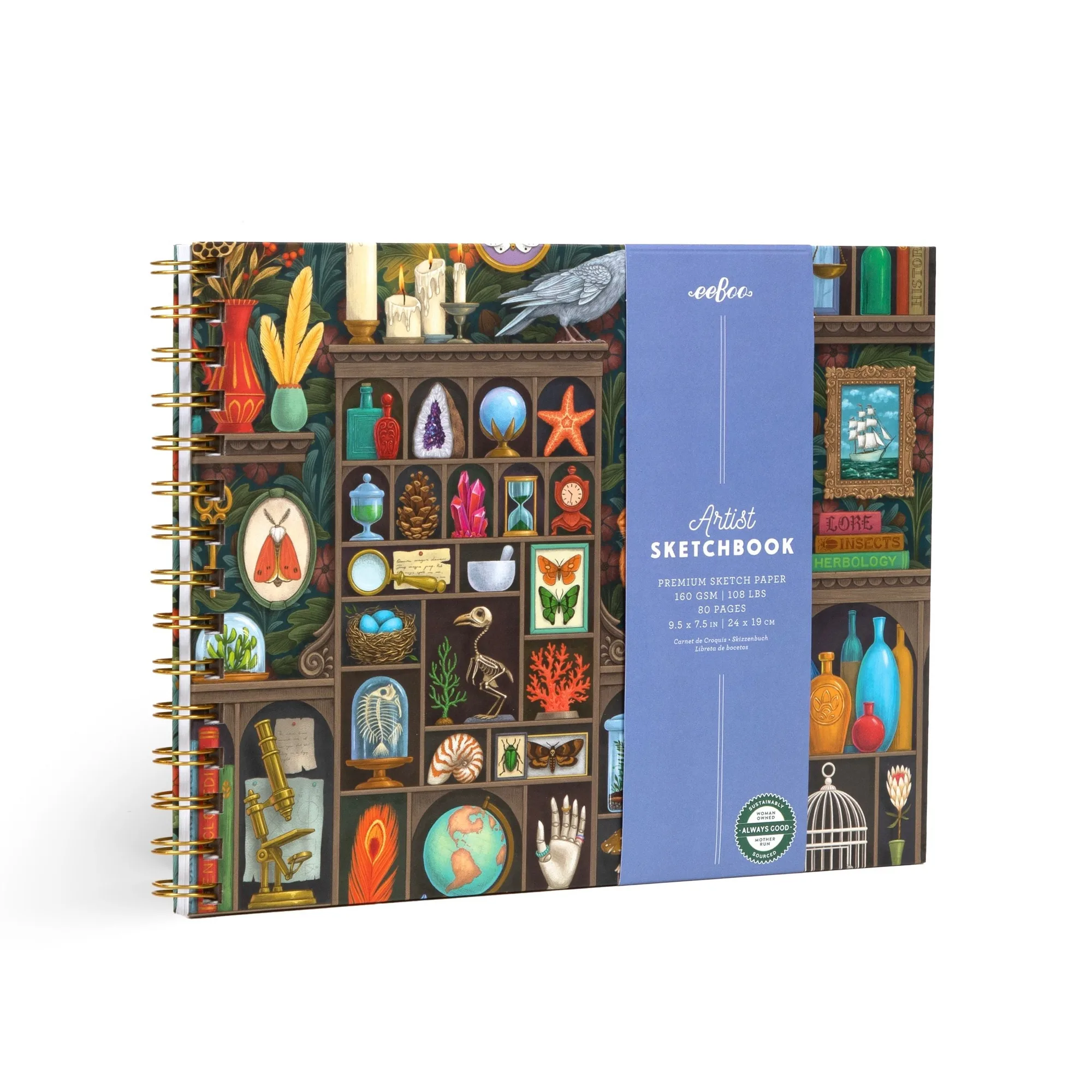
Spiral-bound sketchbooks lay flat on a table and allow you to fold the cover back, making them ideal for plein air or on-the-go sketching. Hardcover sketchbooks with sewn binding also open flat and protect pages better, but they are heavier. Glued or perfect-bound sketchbooks are lighter but may not stay open without a weight.
For artists who work across spreads or need to scan pages flat, a lay-flat binding is essential. If you only draw on one side of the page, a glued binding is acceptable and often more affordable.
Paper Finish: Smooth vs. Textured
Hot-pressed paper has a smooth, hard surface that suits detailed pencil work, fine-liner pens, and calligraphy. Cold-pressed paper has a slight tooth that grips graphite and colored pencil layers, giving drawings a more textured look. Rough paper is best for wet media and pastels.
If you switch between pencils and light ink washes, a medium-texture (cold-pressed) paper is the most versatile. For pure pencil sketching, smooth hot-pressed paper allows for crisp lines and easy erasing.
Decision Rules for Choosing Your Sketchbook
- Match Paper Weight to Your Primary Medium: Dry media (pencil, colored pencil, charcoal): 70-80 lb paper is sufficient. Wet media (ink, light watercolor, marker): choose 100 lb or higher to prevent bleed-through and buckling. Check the paper weight before buying. Lighter paper saves money but limits your medium options.
- Choose Binding Based on How You Work: Spiral or lay-flat sewn binding if you need the book to stay open hands-free. Glued binding is acceptable for one-sided drawing and lower budgets. Test the binding in-store or read reviews about lay-flat performance before purchasing.
- Select Paper Finish for Your Tools: Smooth (hot-pressed) for detailed pencil and pen work. Textured (cold-pressed) for layered graphite or colored pencil. Rough for wet media and pastels. A medium-texture paper is the most versatile if you switch between dry and light wet media.
Sketchbook & Pencil Pairings That Work
- Flora's Double-Sided Pencils: 25 double-sided, artist-quality colored pencils in a beautiful floral tube. Includes silver foil design on every pencil. Conforms to ASTM D-4236 safety testing. These double-sided pencils give you 50 colors in a compact set, ideal for sketching on the go. The artist-quality pigment works well on smooth, heavyweight sketchbook paper without excessive wax bloom.
- Butterflies Luxe Journal: 112 journal pages with 81 lb matte, archival paper. Dot grid and lined interior. Features iridescent foil edge gilding and sustainably sourced materials. The 81 lb paper is thick enough for pencil and light pen work without ghosting. The dot grid layout helps with composition and lettering, making it a practical choice for artists who combine sketching with journaling.
Which Sketchbook Fits Your Style?
Best For
- Pencil and colored pencil artists who want smooth, heavyweight paper for detailed work
- Mixed-media sketchers who need 100 lb+ paper and lay-flat binding
- Artists who carry their sketchbook daily and prefer spiral or sewn binding for durability
Not For
- Artists who primarily use heavy watercolor or acrylic paint (look for dedicated watercolor paper instead)
- Budget-focused beginners who only draw in pencil (a lighter 70 lb spiral sketchbook is more economical)