Quick answer
Choose a closed-end nylon coil zipper for skirts, dresses, pants, and handbags; choose an open-end zipper for jackets and cardigans. Match the zipper length to your finished opening plus seam allowance, and match the teeth size to your fabric weight. For lightweight fabrics, a #2 or #3 nylon coil zipper glides smoothly without adding bulk.
Start with the zipper type, not the color
The first decision is whether the zipper needs to separate completely. Closed-end (non-separating) zippers stay joined at the bottom and are used where the two sides should not come apart, such as skirts, dresses, pants, and purses. Open-end (separating) zippers split into two halves and are used for jackets and other garments that open fully. Getting this wrong means the garment will not function, no matter how well the zipper matches the fabric.
Match teeth size to fabric weight
Zipper teeth are numbered, and the number roughly indicates size and strength. A #2 or #3 nylon coil zipper is lightweight and flexible, which makes it a good match for dresses, skirts, and lightweight bags. A #5 molded plastic zipper is heavier and better suited to jackets and outerwear where the zipper will take more stress. Using a zipper that is too heavy for lightweight fabric can cause the fabric to pucker or the zipper to feel stiff.
Measure the opening, then pick the length
Zipper length is measured from the top of the tape to the bottom stop, not from end to end. Measure your finished garment opening and add seam allowance before choosing a length. If the exact length is not available, buy a longer zipper and shorten it from the top, or adjust your pattern to fit a standard length. Always test the zipper in the opening before sewing it in permanently.
Check the slider and tape details
The slider type affects how the zipper behaves. An automatic lock slider holds the zipper in place when you let go, which is helpful for pants and skirts. A non-lock slider slides freely and is common on lightweight zippers. Zipper tape material also matters: polyester tape is durable and resists stretching, while cotton tape may shrink. If the product listing does not state the tape material or slider type, treat that as a limitation and choose a zipper where the details are clear.
Consider the project and wear
Think about how the garment will be worn and cleaned. A zipper that will be pulled frequently, such as on a everyday jacket, benefits from a molded plastic or metal zipper with a sturdy slider. A zipper on a delicate dress that is worn occasionally can be a lightweight nylon coil. For children's clothing or bags that get rough use, choose a zipper with a stronger teeth size and a reliable brand such as YKK.
Decision rules for zipper selection
- If the garment opens fully: Choose an open-end (separating) zipper. For jackets and outerwear, a #5 molded plastic zipper provides the strength and separation needed. Open-end zippers are for jackets, cardigans, and coats.
- If the garment stays closed at the bottom: Choose a closed-end (non-separating) zipper. For skirts, dresses, and pants, a #3 nylon coil with an automatic lock slider balances flexibility and security. Closed-end zippers are for skirts, dresses, pants, and bags.
- If the fabric is lightweight or delicate: Choose a #2 or #3 nylon coil zipper. Its flexible coil glides easily and adds minimal bulk, preventing puckering on fine fabrics. Match small teeth to light fabric.
- If the zipper will take heavy use: Choose a larger teeth size, such as #5, and a reliable brand like YKK. This applies to jackets, bags, and children's wear. Heavier use calls for bigger teeth and a sturdy slider.
Product facts
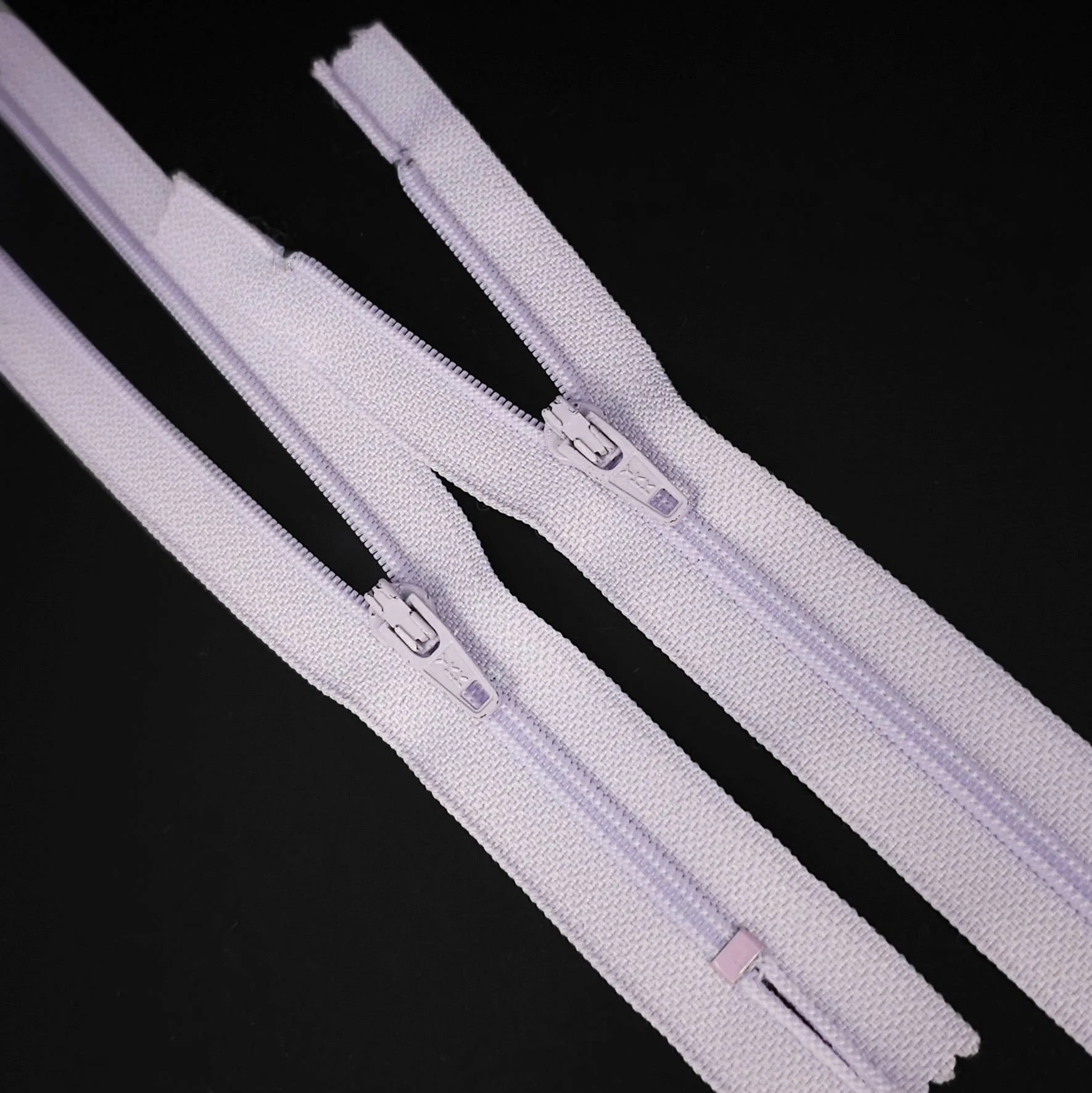
- YKK | Closed End Zipper | Nylon Coil | #2 | Purple | 9 3/4'' - 24.5 cm | SS392: YKK closed-end nylon coil zipper, #2 teeth, purple, 9 3/4'' (24.5 cm). Non-separating, one-way. A lightweight, flexible choice for dresses, skirts, and handbags where a low-profile zipper is needed.
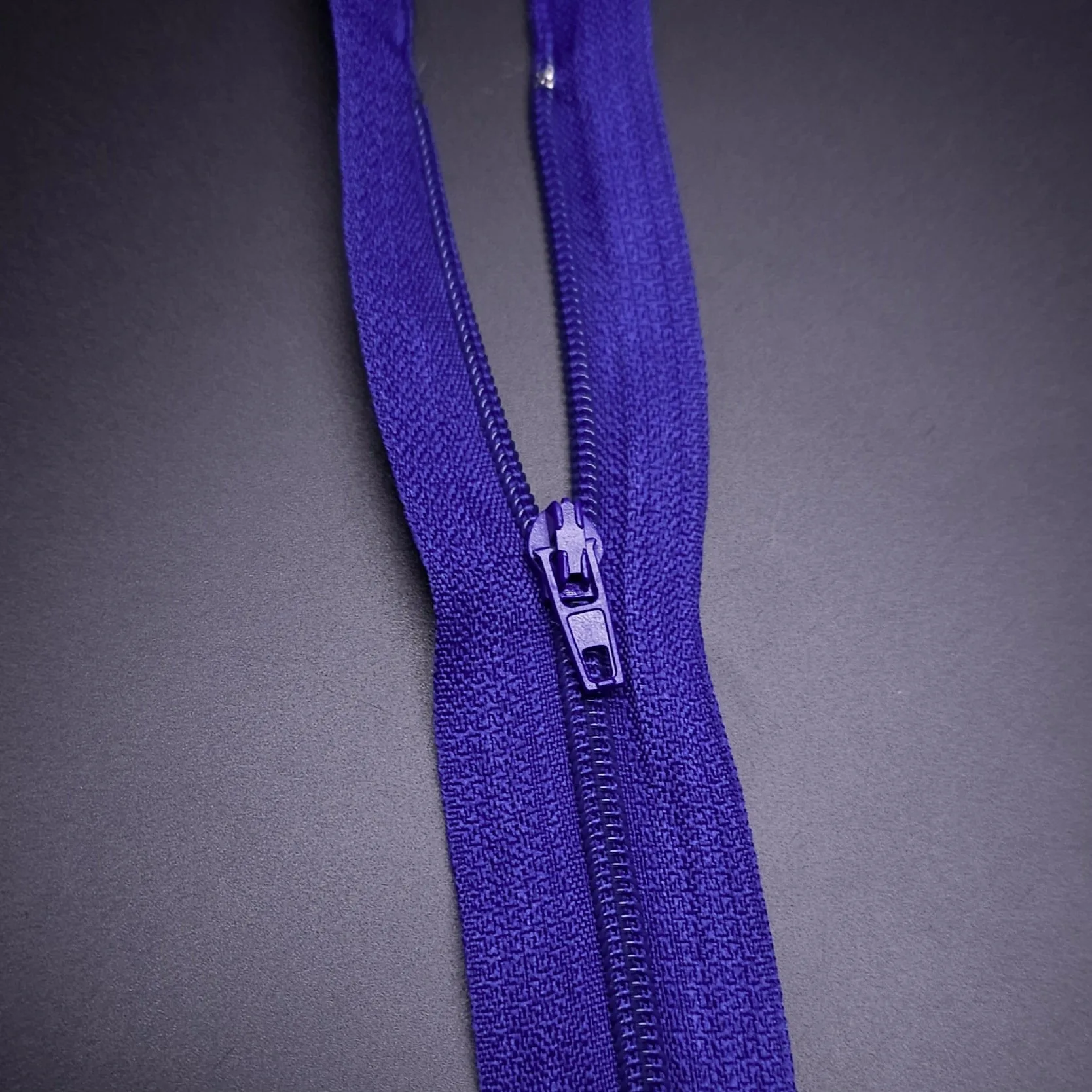
- Closed-End Nylon Coil Zipper #3 | 15" / 38 cm: Closed-end nylon coil zipper #3, 15'' (38 cm), with polyester tape and automatic lock slider. The automatic lock slider helps hold the zipper closed, which is useful for pants and skirts that bear tension.
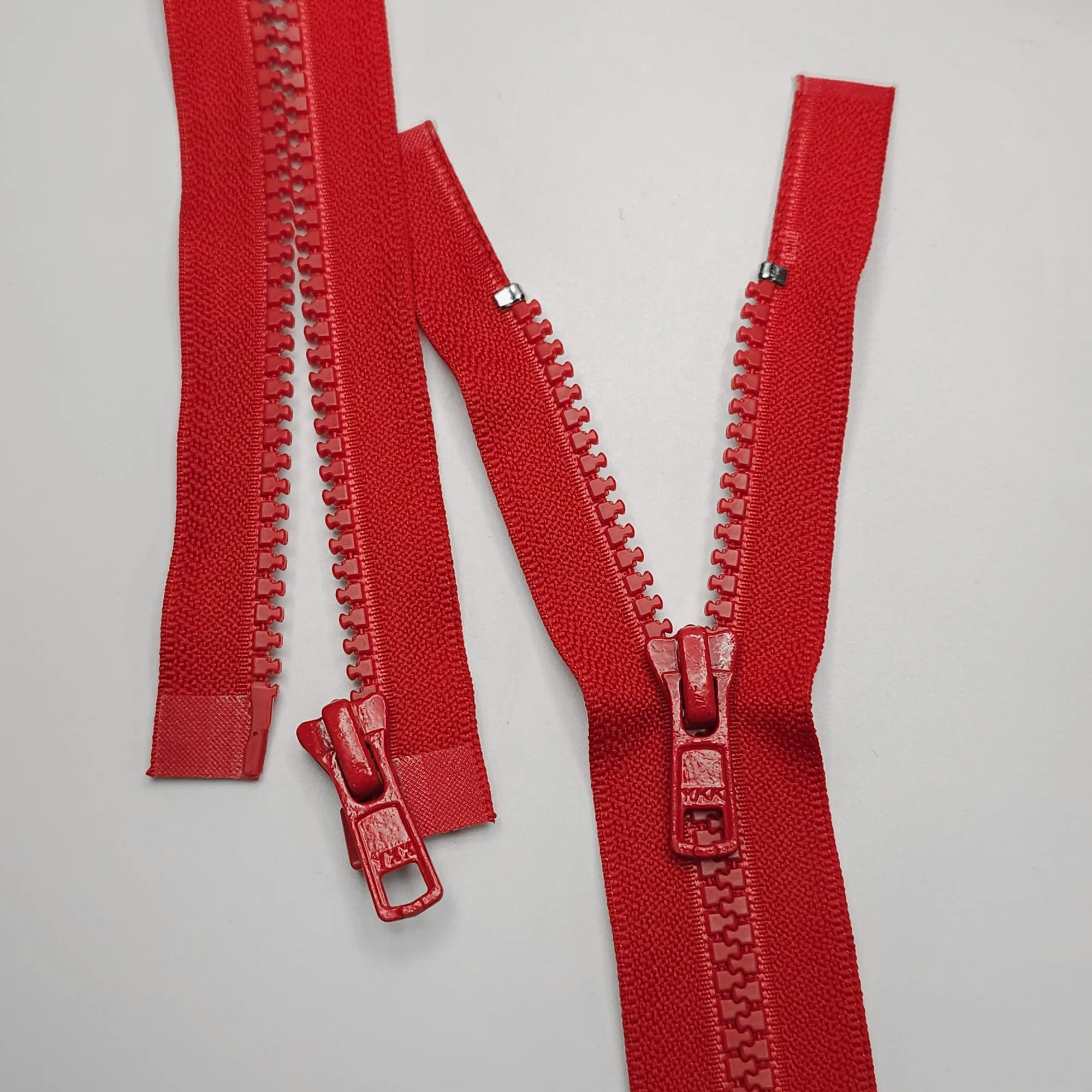
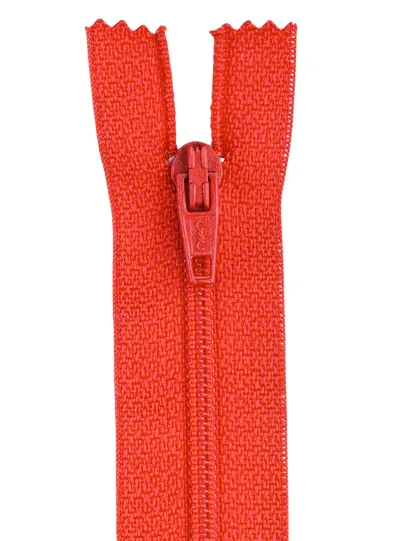
- YKK Open End Zipper | Molded Plastic | Red | #5 | 30'' - 76 cm: YKK open-end molded plastic zipper, red, #5 teeth, 30'' (76 cm). Separating, one-way. A sturdy option for jackets and outerwear where the zipper needs to separate completely and handle heavier use.
Best for and not for
Best for
- Sewists making skirts, dresses, pants, and handbags who need a closed-end zipper
- Makers of jackets and outerwear who need an open-end zipper
- Anyone working with lightweight fabrics who wants a flexible nylon coil zipper
Not for
- Projects that require a separating zipper but where a closed-end zipper is chosen
- Heavy-duty applications where a #2 or #3 zipper would be too weak
- Garments where the zipper tape material or slider type is unknown and critical to the design